
The Melanie Avalon Biohacking Podcast Episode - #372 - Zaldy Tan
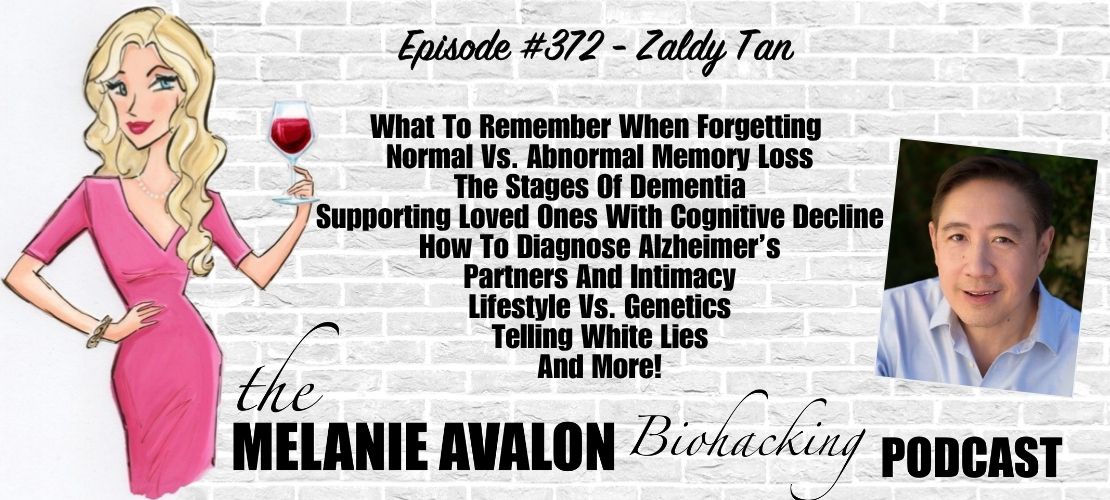
Dr. Zaldy Tan is the Director of the Memory & Healthy Aging Program at Cedars-Sinai Medical Center, ranked by the US News and World Report in 2024 as the best hospital on the US West Coast and among the top hospitals in the country. He holds the Carmen & Louis Warschaw Endowed Chair in Neurology and is a professor at the David Geffen School of Medicine, University of California Los Angeles. Dr. Tan was the founding director of the Memory Disorders Clinic at Harvard Medical School/Beth Israel Deaconess Medical Center. Dr. Tan performs aging and dementia research that has been covered by The New York Times, Time, CNN, The Wall Street Journal, NPR, The Washington Post, The Chicago Tribute, Reuters, ABC News, and NBC News. He regularly speaks at major national and international conferences and is the author of Age-Proof Your Mind and What to Remember When You Are Forgetting.
LEARN MORE:
Book: https://amzn.to/3UzxKsR
SHOW NOTES
SPONSORS & DISCOUNTS
PURVINE:
PurVine makes it easy to discover organic, lower-alcohol, and lower-sulfite wines that match your personal preferences. Easily scan bottles, take personal notes, save wines, get personalized recommendations, earn rewards, and more!
Go to PurVine.app and use code MELANIEAVALON for 10 welcome points.
IONLAYER:
Nicotinamide Adenine Dinucleotide (AKA: NAD+) is a true powerhouse when it comes to optimizing our health! This remarkable molecule plays a key part in many cellular processes, including energy production and DNA repair. NAD+ levels are depleted with things like stress, aging, alcohol, lack of sleep, and of course, too much partying . By supporting and maintaining healthy NAD levels, we can potentially unlock a multitude of benefits for our well-being. From increased energy and improved cognitive function to better metabolic health and even potential longevity, NAD supplementation can make a significant difference in how you feel and age. IonLayer provides easy, affordable access to NAD+ patches!! I think this is the easiest, most affordable, optimal way to boost your NAD+ levels! (They also make glutathione and B1 patches!)
Get $100 off with code melanieavalon at melanieavalon.com/ionlayer
FACEBOOK: Join Melanie's Facebook group for a weekly episode giveaway and to discuss and learn about all things biohacking. All conversations are welcome! IF Biohackers: Intermittent Fasting + Real Foods + Life
INSTAGRAM: Follow Melanie on Instagram to see the latest moments, products, and #allthethings! @melanieavalon
AVALONX: AvalonX Spirulina is out now! AvalonX supplements are free of toxic fillers and common allergens (including wheat, rice, gluten, dairy, shellfish, nuts, soy, eggs, and yeast). They are tested to be free of heavy metals and mold and are triple-tested for purity and potency. Get on the email list to stay up to date with all the special offers and news about Melanie's new supplements at avalonx.us/emaillist! Get 10% off at avalonx.us and mdlogichealth.com with the code MELANIEAVALON. Plus, text AVALONX to 877-861-8318 for a one-time 20% off code for avalonx.us.
FOOD SENSE GUIDE: Get Melanie's app to tackle your food sensitivities. Food Sense includes a searchable catalog of 300+ foods, revealing their gluten, FODMAP, lectin, histamine, amine, glutamate, oxalate, salicylate, sulfite, and thiol status. It also includes compound overviews, reactions to look for, lists of foods high and low in these compounds, the ability to create your own personal lists, and more.
EMF: Stay up to date on all the news on Melanie's EMF collaboration with R Blank, and get the launch specials exclusively at melanieavalon.com/emfemaillist.
TRANSCRIPT
Zaldy Tan
It's totally normal to forget certain things that are insignificant, the details of things. The pathology is when you have trying to- starting to forget things that are, are important and are really significant in your life.
Consciously or unconsciously, our minds are sorting through the barrage of information that comes our way every day, and then picks out the ones that it feels is going to be more useful or has more meaning.
Melanie Avalon
Welcome to the melanie Avalon Biohacking Podcast, where we meet the world's top experts to explore the secrets of health, mindset, longevity, and so much more. Are you ready to take charge of your existence and biohack your life? This show is for you. Please keep in mind, we're not dispensing medical advice, and are not responsible for any outcomes you may experience from implementing the tactics lying herein. So friends, are you ready to join me? Let's do this.
Welcome back to the melanie Avalon Biohacking Podcast. Oh my goodness, friends, what an honor it was to have Dr. Zaldy Tan on the show today. He is the director of the Memory and Healthy Aging Program at Cedars-Sinai. He's also a Harvard-trained specialist, a professor of neurology, and was even the founding director of the Memory Disorders Clinic at Harvard. He's on the show today for his new book, What to Remember When You Are Forgetting. And friends, I so treasured this book and this conversation. I've done a lot of episodes on cognitive decline, Alzheimer's, dementia. What I love about this episode is it goes deep into what it is like to actually experience losing your memory, and in particular, what you need to think about for yourself or as family members, and all the practical things you need to consider. If dementia at all affects you or any of your loved ones, I cannot recommend this book enough. We touch on so many topics in today's episode, including what is actually normal when it comes to memory loss, because yes, it actually is normal to forget some things, the different types and stages of dementia, how to diagnose Alzheimer's, the role of lifestyle and genetics in cognitive decline, even things like should you tell white lies to people who have lost their memory, and how should romantic partners handle intimacy. The show notes for today's episode will be at melanieavalon.com/remember. Those show notes will have a full transcript as well as links to everything that we talked about, so definitely check that out. I can't wait to hear what you guys think. Definitely let me know in my Facebook group, IF Biohackers: Intermittent Fasting + Real Foods + Life. Comment something you learned or something that resonated with you on the pinned post to enter to win something that I love, and then check out my Instagram Find Me Friday announcement post, and again, comment there to enter to win something that I love. All right. I think that's all the things. Now without further ado, please enjoy this fabulous conversation with Dr. Zaldy Tan. Hi, everybody, and welcome back to the show. I am so incredibly excited about the conversation I am about to have. It is with a legend. So I am here with Dr. Zaldy Tan. He is the, wait for it, director of the Memory and Healthy Aging Program at Cedars-Sinai Medical Center. He also holds a chair in neurology. He's professor at the David Geffen School of Medicine at UCLA. He was the founding director of the Memory Disorders Clinic at Harvard. Basically, all the things.
Melanie Avalon
He's been all over the news, and he has an incredible new book out. It's called What to Remember When You Are Forgetting: How to Live and Thrive with Memory Loss, Alzheimer's, and Other Dementias.
And friends, what I absolutely loved about this book, because we've done quite a few-- We've interviewed a l- a lot of people on the show about Alzheimer's and dementias and cognitive decline, and those interviews have all been incredible, and they've primarily focused on either prevention or the medical side of everything. This book touches on that. The focus, though, which I absolutely loved and I have not read in any of these books to this extent, was really the experience of the person with cognitive decline, with dementia, and the experience of the family members with them. So basically, the stages that they go through, the symptoms to look for, and how to live your best life even if you have this diagnosis. And it's-- I think it's so, so practical, and it's going to benefit so many people, especially given the stats on dementia. So we will touch on as much as we can in this episode. I, I thoroughly enjoyed the book. It really got me thinking about a lot of things. So Dr. Tan, thank you so much for your work and everything that you do, and thank you so much for being here.
Zaldy Tan
It's such a pleasure to be here, and thank you for the very kind introduction, melanie. I hope your listeners will learn something new today about themselves or their loved one, and, and that will be, uh, helpful for them.
Melanie Avalon
One of the things I, I really, actually really loved about the book is you tell personal stories of different patients that you've worked with. And, and some of the stories were-- I mean, they're so unique and really touching, and they really make you think about all the different ways that these conditions can manif- manifest in people.
Like, I think my favorite was, like, I don't know if it's a favorite, but the one I really appreciated was the woman who her... You know, she got diagnosed with some form of dementia, and then her c- her kids wanted her to, you know, like travel and be with the kids and all this stuff, and she was like, "No, I always actually wanted to be in show biz," and she, like, actually started pursuing that once she got the diagnosis. And I was like, "That's so cool." So you really paint a picture for all the different ways that it can go, and I... It really does come down to, I think, like, knowledge and agency and... But to get things started, so your, your personal story, what got you interested in, in memory and healthy aging? Were you always interested in it? What path led you to what you're doing today with all of that?
Zaldy Tan
Yeah, melanie. So I've always been interested in, in h- in healthy aging. I feel like it's one of these things that are often kind of overlooked in our current healthcare system because our Health system, no matter where it is, whether, you know, in LA or elsewhere, it's really focused on sick care, right? It's not healthcare.
So in a sense, my interest in healthy aging really started during residency and really looking at how people age. There are people who are, you know, in their 80s, 90s, and are really healthy cognitively and physically, really engaged, and really living life to the fullest. And then you have people even younger, 60s, 70s, who are in and out of the hospital with chronic disease. And of course, one of the most common one is, uh, is Alzheimer's disease. Two of my aunts developed dementia relatively early in life, uh, so that got me really interested on, on, uh, in, in memory and Alzheimer's and, and really how the brain works, which is really fascinating. Even now, we have new discoveries that are really surprising everyone and, and ending up in the news, right? So there's so much more to discover. The mysteries of the brain seem really endless, so that's really what's keeping me going.
Speaker 3
I'm really, really fascinated by memory in general. It's actually appropriate enough timing that the episode that's airing today, like right now while you and I are recording, was with Dr.
Tommy Wood, who just wrote "The Stimulated Mind." We talked about memory with him as well, and there was a similar concept that came up in his book that also came up in your book, which was... 'Cause I think people, especially as they're getting older, get very nervous about getting some sort of dementia, and if they-- if you start forgetting something, it's like, "Oh, you know, is this a sign that I'm getting dementia?" So for listeners, what is normal when it comes to what you actually forget or remember, especially as you age? Like, is it normal to forget things? And if so, what type of forgetting is normal?
Zaldy Tan
Yeah. So forgetting is absolutely normal, and we do it every day, and that's part of our physiology. Because if you imagine, if you have photographic memory and you remember everything that happened to you, everything that was said, everything that you heard and saw, your mind will be just cluttered with useless information, right? So in a sense, consciously or unconsciously, our minds are sorting through the barrage of information that comes our way every day, and then picks out the ones that it feels is going to be more useful or has mean- more meaning to us, and that is the one that tends to be transformed into long-term memories that we can access later on.
So how it does that is really mysterious because, you know, there are things, for example, if you, it- it-- you could be in the same party, uh, with your friend or partner, and you would remember something really random, and then your partner is like, "I never heard that," and you were standing right there, right? It's because our brains are unique, right? So what's, what's interesting for you may not be interesting to the person who is standing right next to you. So their brain may interpret the information differently and choose to hold on to different things than what your brain holds onto, and I think that's what's fascinating. And also, our recall of that specific thing is also edited and, you know, interpreted by the, by the brain and our minds, right? So you could-- Uh, there are false memories, you know, but there even, even memories that are real could be interpreted in a very different way and recalled in a different way than how, uh, it actually happened. So I think that's the beauty of it, but it's... To talk-- To answer your question, as you get older, there are things that do change in our memories, in our minds, right? So it's, you know, totally normal to forget certain things that are insignificant, the, the details of things. But you know what the pathology is when you have-- you know, uh, you're trying-- starting to forget things that are, are important and are really significant in your life. For example, doctor's appointments or, you know, having lunch with, uh, with a close friend or paying your bills, you know, losing your way when you're driving around town. So those things are, are really important. Taking your medications is another one, or, or your finances. Those things anyone could agree are important. But you know the trivial things like, you know, you forgot the name of a contractor that you met, you know, three years ago, and you saw him in a supermarket, and you couldn't remember his name. Is that the sign of dementia? No. Your brain decided that this is not someone that is worth remembering and keeping and, and, and occupying real estate in your mind, so it flushed that information away. So there's definitely normal forgetting and abnormal forgetting.
Speaker 3
Okay. A- amazing.
I have a, a specific example question about that, but really quickly, one of the things I liked in the book that you talked about was the Baker paradox. So basically, this idea that you can-- And I kept thinking about this for so long. I was like, "That's really interesting." So basically, you more likely remember that somebody is a baker, but if their name is Baker, you, like, can't remember that as easily. That's so interesting to me.
Zaldy Tan
It is, and that is one of the most fascinating things that the brain does, right? Because everything is context. So the word baker, you know, could be the name of a person or it could be their occupation. But somehow, when, when you say that, you know, this person is a baker, you remember that. It's like, "I, I don't remember your name, but you're that baker that I met in the party," right?
And then, but if they say, "I'm, you know, John Baker," you are not likely to remember the baker. So it's not really the word that makes it more or less possible that you, you're going to remember it, but it's really the context of that word. That's why we always say people who don't-- who f- who claim that they're not good at names is to picture it, right? Picture it and relate it to that person in, in whatever way you can, and the more you're likely to remember their name later on.
Speaker 3
Okay. So my, my specific example, 'cause this literally happened to me yesterday, and I was I was thinking about this, 'cause you were talking about misplacing things and, you know, w- to what extent that's normal or not. I noticed yesterday-- 'cause there's, like, misplacing things, like, where you can't- Like find your keys or whatever, and then you find them, and it, and it completely makes sense where they are. You know, you just for ev- for whatever reason you can't find them, but they're in a sensible place.
But then there's the type where you put something in a place that doesn't make sense. And so like yesterday, I realized I was really distracted and thinking about something else, and I had-- I was putting things away, and I, I put things in, like nonsensible places, and then I couldn't find them because then when I went to go find them, I was like, "Oh, I..." Like, I thought that was my laptop, but really it was a box, so I put it where my laptop was. Like, it didn't make sense. And so then I was just like reflecting on-- 'cause that, that would be presumably doing something in the moment that doesn't make sense. But if the problem is not remembering... How do I articulate this? If the problem is not remembering what you just did, why would it also cause issues with putting things in nonsensible places? 'Cause presumably, in the moment, shouldn't you know what you're doing?
Zaldy Tan
Yeah. So, you know, the example I gave in the book is, you know, you're changing a light bulb, and you're using your, let's say, your phone as a light source, and then you, you know, put on the-- and then because you need two hands to accomplish this task, you put your phone on top of, let's say, the fridge or the kitchen cabinet. And then you come, you come down the ladder, and then, you know, five minutes later, it's like, "Where's my phone?" You don't, you don't remember where it is because you put it on top of the, the refrigerator, right? Which is beyond your eyesight, so you, you will spend maybe hours looking for it because you don't remember.
So because the, the-- in that example, which I think similar is to what you said, is that it, it didn't register. Remember, memory is encoding, storage, and retrieval, right? Any memory, whether you meet a new person or you are trying a new skill or a dance move, it's encoding, storage, and retrieval. Now, if the encoding part fails, meaning you are setting the phone down at a weird place because y- but your focus is on the light bulb, and maybe, you know, half of your mind is thinking about, you know, what you're going to do this weekend or, you know, some, some problems that you're dealing with, so it's occupying your mind, then that act of putting that phone in on top of the fridge never got encoded, okay? So meaning even though you manually did it, you, you didn't, uh, that didn't make it into your memory, so it, it, it never happened, right? So it's like you may like, "How did that end up there? Oh, that's right, I put it there. I, I can't remember I, I did that." So s- s- the same thing goes for memory for intentions. This is when a very common thing, Melanie, when you go into a room or you go into the fridge and you open the fridge and it's like, "Why did I come here? What was I supposed to do?" You know? Typically, when that happens, people were doing something else or thinking of something else while they're, you know, walking to towards the fridge or walking into the room. They-- those memory for intention sometimes fails because something else took over your thought, and then that initial, you know, thought that, that I'm going to go to the fridge to, to get a glass of water has been flushed out by something else that occupied your mind that was more compelling at that moment.
Speaker 3
Okay, gotcha. So that's why in the book you say, you know, especially when evaluating memory, it's more telling if people forget things when they're not stressed or distracted or anything like that, 'cause all of those factors could come into play for memory encoding.
Zaldy Tan
Absolutely. Not stressed, not distracted, not sleep deprived, not, you know, drunk, not sleepy. Because all of these factors that I just mentioned can affect your memory. Even, even young people, healthy people, when you subject them to any of these, they can forget. That's what your original point was.
There is normal forgetting. What happens is that the, the only problem is that if you, there were none of these, and then you're not distracted, you're paying attention. You ask, uh, someone, you know, "What are we doing this weekend?" "Oh, we're going to go to that barbecue, and we have to remember to bring some appetizers." "Okay, that sounds good." And then, you know, two, three hours later, "Well, so what are we doing this Saturday?" That could be pathologic, right? Especially if that person acknowledged it, listened to it, wasn't distracted, and then totally went away. That could be a potential problem.
Speaker 3
There was one-- speaking of, you know, evaluating the memory, 'cause you talk about going to memory clinics and getting evaluated and tested, and every now and then when I'm reading a book, I actually laugh out, laugh out loud, and I laughed out loud because when you, you were saying, um, you were saying part of that is that there's like this test and make sure that you don't study for the test beforehand. And I was like, "Oh, goodness." 'Cause if I was going to a memory clinic, I would definitely like study the test ahead of time.
Okay, so to lay a foundational view of all of this, 'cause I think it, it's interesting when it comes to dementia, Alzheimer's, and everything, I mean, for me, the, the, the family experience I have is my grandmother had a stroke and then started getting dementia, so I'm guessing she-- it was vascular dementia. That, that's really the only experience I have in my family, so I, I don't really-- My, my point is I haven't really been worried about it for myself. I, I know people who have, you know, have had personal relationships where it's been very draining and very taxing, and they're very worried about getting it. Like, it's on their mind, no pun intended, like all the time. And then I think there's like the happy medium where people are concerned. So what is the actual-- what are the stats on dementia and then also the different types? Like, how, how likely are-- is it that a- any given person-- I mean, and I know there's like genetics and, and, um, lifestyle and everything, but just the stats. What are different types and the stats so people know what we're dealing with here?
Zaldy Tan
Yeah. You know, memory, I, I always say, is not black and white, right? There are a lot of grays. And that's where the confusion or concern happens. Sometimes the concerns are valid, sometimes it's not. There are people who should be concerned who are not, and there's people who shouldn't be concerned and who are.
But I think everyone should have a healthy appreciation and observation of their own memories without obsessing with it, right? So I think the important thing to think about is, as you pointed out, your family history. So if you have a first-degree relative, like your parent or your sibling who had dementia, that-- we know that that increases your risk of developing dementia. Grandparents are not first-degree relatives, so in a sense, the heritability of that risk becomes less clear, less direct. But it doesn't mean that it, it doesn't increase your risk, right? Because, you know, obviously, you know, you share some of the genes, but it's not as much of the genes as your parents. Family history is only one factor. When we look at the data, about fifty-five percent of the risk for Alzheimer's disease is genetic, forty-five percent is environmental. The forty-five percent environmental is really where the excitement is, right? Because that is where you could make a difference in terms of, you know, whether you get it or not, or you delay it five years or ten years from now through your healthy living and all of the things that we know are-- can make a difference in terms of your own risk.
Now, when the, the person should, should come to the memory clinic or a memory specialist, it really depends on the situation. People who are in their thirties, forties, typically when they have forgetfulness, usually it's the result of things we've talked about, you know, uh, stress, being, uh, not having good sleep, or, you know, consuming alcohol, and this, uh, which disrupts sleep, and oth- other factors that may be causing the memory to be not functioning as well as it, it should. But when you get to your fifties, sixties, seventies, uh, you really have to keep in mind that one of the things that it may be is early Alzheimer's disease. And that's one thing that only a memory specialist can really find that out in, in the early phases, because we have neuroimaging scans, we have cognitive testing, we have blood-based biomarkers. There's a lot of things now that one, one can do to distinguish normal aging from, uh, the earliest signs of Alzheimer's.
Speaker 3
And so to that point with Alzheimer's, and I've-- I'm really, really fascinated by it, and I actually interviewed, and this would be a whole tangent, but I interviewed Charles Piller, the, th- the investigative journalist who really brought to front all of the fraud in the Alzheimer's studies and data. That was a really interesting um, interview.
So I'm really, really fascinated. So for example, like early versus late onset Alzheimer's, I would presume with the early form, because it happens without these different lifestyle factors being as much of a play, like it, it clearly is very genetic, that that would speak to more easily like the root cause of it. Like is, is early onset Alzheimer's even technically the same thing as late onset, or are they very, very similar manifestations of different things?
Zaldy Tan
So they're the same in the sense that they're both caused by these abnormal proteins, amyloid and tau, that accumulate in the brain and then spreads from the short-term memory center to the rest of the brain. But what's different is the genetics, as you pointed out.
So early onset Alzheimer's disease, and this is defined as getting, you know, confirmed Alzheimer's disease before the age of sixty, sixty-five or so, has more of a genetic than environmental component to, to its cause. So there are genetic mutations that we typically test for in some-- if someone comes in with, with early onset or what we also call young onset Alzheimer's, because we wanna make sure they know what their risks are if they decide to have biological children, or if they already have biological children, they may wanna know what their risks are if they decide to, uh, procreate. So in a sense, that's something that is different in terms of the contribution of genetics ver- versus environmental. Late onset after the age of sixty-five, seventy, that's more like a fifty-fifty, fifty percent genetic, fifty percent environmental. So the, the con-- the relative contribution in terms of cause is slightly different, but the progression could also vary. Like early onset or young onset Alzheimer's tend to, tend to progress a little bit faster, but still the treatments are similar.
Speaker 3
Okay. Gotcha.
And then the, um, and I know there's the problem of, what is it? What's the phrase? Like when you have a hammer, everything looks like a nail. I, I was really interested reading about the, is it frontotemporal types of dementia? Because you said there was the, the one type, and this is a, a much rarer form, a much rarer type of dementia, but you said there was one form where people like behaviorally start acting, just doing really crazy things. And I was talking with my friend and I was like, "This kinda sounds like your ex-wife. Maybe that's what was happening there." But, um, so these other forms of dementia is, is really the only... So like when we use the word dementia, is, is the thing that is the common factor that people in their mind are-- Like, is memory the common factor, or is it that people in their mind are things are going off? Like what-- why are these all called dementias? Like what does dementia actually mean?
Zaldy Tan
Yeah. So great question. Dementia is just a generic term for any neurologic condition that produces impairments in cognition and eventually function. So cognition, if we take that into consider- consideration, is more than memory. When we think of dementia, we think of memory loss. But in reality, there are certain dementias that memory is not the cognitive function that is most affected. So I think I consider the mind as like a symphony. If you think about an orchestra, right, in a classical music, there's the string section, there's the percussion, you know, there's a, a whole set of musicians that, uh, produces, uh, beautiful music together. But if one of them had a broken string or is kind of off in his or her You know, percussion. Then it messes up the whole orchestra, right? So in a sense, if you think of it that way, you know, the mind is made up of memory, which is very important, but there's also attention/concentration, there's executive function, uh, which is in charge of planning and sequencing things. There's like, uh, different types of memory even within memory. There is, uh, verbal memory, there's visual memory, there's procedural memory. So the mind is infinitely more complex than we typically give it credit for.
So, you know, there are certain dementias, for example, frontotemporal dementia, where the main issue is not memory, but it's really the loss of inhibitory control, specifically in the frontal lobe. The frontal lobe of our brain is responsible for impulse control, for, for impulse, uh, for motivation, for planning and sequencing. So those things are typically in the frontal lobe, which as it, its name suggests, it's in the frontal part of the brain below our forehead. That is where these things happen. So if, if you have frontotemporal dementia or frontotemporal lobar degeneration, what happens is that th- those inhibition-- inhibitory controls are lost. So people will be not motivated to shower or to go to work. They could manifest as disinhibition, meaning saying inappropriate things about people's body image or racist things, or start kissing babies, ra- you know, random people's babies or ha- hugging strangers. So things that are, that society tells us is unacceptable, right? But then that's, that's a dementia as well. So it, it goes to show you that it's not just memory. There's a type of dementia called posterior cortical atrophy, where you could be bumping into walls and, and, you know, uh, dropping, you know, uh, certain things because, uh, your, your vision and your, your ability to estimate distances can get affected. So dementia is really a hodgepodge of different neurologic conditions, but a lot of people use Alzheimer's disease and dementia interchangeably because Alzheimer's is the most common form of dementia, responsible for about 70% of all dementias, but certainly not the only type of dementia.
Speaker 3
Okay. Thank you. Yeah, my... I mean, I made the joke about my friend, but I actually was serious because I-- his ex-- like, went from being relatively normal to, like, just wouldn't shower and, like, started acting really erratic, like, ongoing. So that's why I was thinking about that.
Okay, so a huge-- I have-- This is a huge question I've had about this for a long time. So your book talks a lot about the experience of the person with dementia and also the experience of the family members. So presumably, the mind-- 'Cause you, you just mentioned that, you know, there's the m- mind is like a symphony and there's all the different ways that it could kind of, you know, get off in whatever way. How much-- 'Cause if you're living in your mind, I'm assuming your mind-- I'm assuming your perception of your mind thinks it's doing what it should be doing. And what I mean by that is how much for the different types is the person actually aware of what's happening? I'm, I think of how-- I think of dreams, for example, where, you know, in dreams, crazy stuff can happen, and you just are like, "Oh, that's normal. You know, that ma- that totally makes sense." But it's 'cause you're in a dream. So for the, for the person going through this, and this also would tie into what you talk about, like having the hard conversation and denial and everything like that, yeah, how much is the person aware of what is happening?
Zaldy Tan
So typically not aware, right? They only become aware of it when somebody points it out to them that their memory has failed. So for example, if, you know, re- re- they're repeating questions in conversations. A lot of us are very polite, especially even if it's our parents or grandparents, uh, we'd be like, "Oh, yeah, they're just old. They m- they m- maybe she didn't hear me," or, "Maybe she forgot that, uh, she already told me that story." But that's actually very important to bring up to the person, right?
It's like, "Oh, Grandma, do you remember that you already told me that question?" Uh, or that, uh, "Tell me that story," or, "You already asked me that question." Because then it makes the person be more aware, right? That, "Hmm, this, this, uh, you know, my grandson or my grand- granddaughter is not the first person who told me about that." So it makes them more aware that there has been some telltale signs that the memory may be failing. But of course, they would not know un- unless, or, or for example, if they forgot something. Let's say they forgot their passport and they're in the airport. Obviously, they will figure out that they, they are forgetting that. But to rely on the person to realize that they're becoming forgetful and to seek help really is unlikely to happen. So it's really important to make sure that people are aware that this is happening.
Speaker 3
And once you-- 'Cause, 'cause like I said, you have a, a really extensive section on, you know, how to have the conversation with the person and, and tell them what might be happening and who should be involved. How often, though, do people actually remember that conversation?
Like, are you gonna have to have that conversation, like, all the time, like, ongoing?
Zaldy Tan
No, not... In the early phase, they still remember, uh, something important like that, right? So this is the thing. If you sit them down, and as, as I mentioned in the book, make sure you decide who's the right person to talk to the individual about their memory, right? If you're the grand- grandson or granddaughter, or even if you're son or the daughter, you may not be the right person.
It might be the spouse, right, or the partner or somebody. Because they might dismiss it, right? It's like, "You don't see me. You only see me once every two months. What do you know?" You know? So I always say, you know, talk to other people. So if this person has a partner and be like, "Hey, do you-- have you noticed this in her or him? Because this is what I notice." Although be cautious, uh, especially partners or spouses, notoriously, they tend to, you know, you know that saying, uh, you're always, uh, the last one to know? Because they kind of, uh, sweep it under the rug. Partly, I think unconsciously, because they don't want- To admit that their partner may be failing because that's a major threat to their current existence, right? So it may take-- So if there are several siblings, it may-- you may need to bring in your, your siblings and say, "Hey, could you visit mom today?" And then, and or see them more of- see her more often, see what you're seeing, what I'm seeing, and then, and then, you know, approach it that way. So you won't have to have the conversation over and over, but I think it does need preparation. I, in fact, tell s- write in the book that to write down the specific circumstances that you-- that there were some failings in the memory, so it's harder for them to deny or accuse you of making mountains out of a molehill. So it's important to have a specific thing and, of course, to do it in a very loving and gentle way so it not embarrass them. Because if you embarrass them or put them on the spot, they can just shut down, right, and accuse you of being ageist or trying to have a secondary gains from having this conversation. So yeah, so having preparation and making sure the right person is there and you have specific examples is really key.
Speaker 3
Yeah. Something that was so interesting that you pointed out is that especially when it comes to treating dementia and, in particular, Alzheimer's, you pointed out how when we make advances with, like, cancer research, for example, we will maybe, quote, "get back" or, you know, increase the progno- the diagnosis by, like, a couple years, and that's a big win, which it is.
And then you point out that it's so hard to even evaluate that with cognitive decline, dementia, Alzheimer's, because it happens over such a long period of time, and it can be so slow to even manifest that how do you even know, like, if you made a change or not because of, like, just how long of a time the, the whole thing covers. Because aren't people getting this and developing this before they're even symptomatic?
Zaldy Tan
Yeah. Yeah, absolutely. When, when you say a thing, if you're, uh, referring to the amyloid and tau, yes, ten or twenty years those abnormal proteins, amyloid and tau, could be sitting in your brain before you even notice the first sign of, uh, memory change. So for sure, it develops very, very slowly, and that's why it's easy to ignore, and a lot of people end up going to the memory specialist quite late in the course of the disease.
And that's something that's really sad because the available treatments that we have are only approved for people in the earliest stages. So I encourage people to, if they have a concern, to s- talk to your primary doctor, or if that primary doctor doesn't listen to you, go to a memory specialist because you really want to know where you stand and, you know, at least have a baseline evaluation for the future, especially if you have, uh, a strong family history.
Speaker 3
It's kind of interesting that it's not-- like, people get annual physicals, and it includes, you know, X, Y, Z, and then you're supposed to get a colonoscopy at certain ages, you know, a mammogram at certain ages. It's interesting that it's not part of the protocol, like, for everybody to get this at some point that, that would be appropriate, the memory test.
Zaldy Tan
Yeah, because it's so time-consuming, right? Also, people tend to deny, you know, important things that they're observing in themselves or someone close to them. There is this denial, power of denial.
You know, that may change soon, Melanie, because now we have blood-based biomarkers that have recently become approved by the FDA that we can check someone's blood just like we're checking for cholesterol or diabetes, and we could measure the amount of amyloid and tau in their brain and have a reasonable estimation of their-- the likelihood that they are starting to develop these abnormal proteins in their brain. Of course, these are imperfect tests because they're so new. I don't recommend that people go out and demand this test from their doctor or seek it out themselves because currently we don't ha- yet have any treatment to prevent people who are biomarker positive but asymptomatic from progressing into symptomatic Alzheimer's. So I would suggest that they get a cognitive evaluation, and if everything is fine to just observe it and be more vigilant. But if it's abnormal, that's the time to get an amyloid PET scan or a blood-based biomarker because really no one test can tell you whether you are starting to have Alzheimer's. It's really a combination of history, physical neurologic exam, neuroimaging, and, uh, blood tests.
Speaker 3
Yeah. To that point, what do you think is going on with the correlation between amyloid and, you know, the actual symptomatic or asymptomatic presentation of, of dementia?
Like, you know, people might have cognitive decline and dementia with, you know, relatively less amyloid, or they might have-- they might die and never have any symptoms, and yet they had a lot, lot of amyloid. So, like, what, what do you think is actually happening there?
Zaldy Tan
Yeah. So you're absolutely right. There are people whose brains are studded with amyloid if you-- when you image them, their, their brain, and they have no signs of Alzheimer's, meaning they're golfing, they're babysitting, they're, you know, dancing, and they don't have dementia. I always tell my patients, whether we talk about cancer, heart disease, diabetes, stroke, we are a combination of risk and resilience, right? So risks, you know, sometimes outweigh our resilience factors, but sometimes it does not, right? So someone whose head is full of amyloid, it's possible that they have resilience factors. You know, for example, education is known to be protective. It doesn't mean that you have a PhD or an MD that you'll never even get Alzheimer's, but you may need a bigger load of the amyloid to get you there, you know, to get you to be symptomatic. So it's really important to think of that balance between risk and resilience.
So if you have a family history of Alzheimer's disease, the best thing you can do is build up your resilience. You know, if you're, if you're young, stay in school. If you're older, make sure you learn something new every day. Make sure you get a good night's sleep. Make sure you eat a healthy diet, a Mediterranean diet if possible. Control your blood pressure, especially in midlife and beyond, and your LDL and your diabetes. You know, all of that stuff is so important in building your resilience because there is evidence, as you pointed out, that people who have amyloid in their brain, they don't all get Alzheimer's. And this is again going back to my point about the blood-based biomarkers, which is all the rage. I wouldn't recommend that people get it unless they have symptoms that have been confirmed by a clinician, because some people will s- will get positive amyloid, but they will never get Alzheimer's, and that information is just gonna be in their minds and their medical records for no reason.
Speaker 3
Okay. The trajectory and the agency of the person. So one of the patients that I really identified with... Oh, and I, and I'm also just thinking, you're talking about education. I feel like this podcast is probably a good thing for my brain.
It's probably pretty preventative. Um, I'm constantly learning things. So one of the, one of the people that you profiled in the book, he was, like, a high-performing, you know, career-driven man, and it was really hard for him to come to terms with the idea of not, like, doing his, his career anymore. And I feel like I... Oh, goodness. Like, if, if this h- if this were to happen to me and I was told I couldn't, you know, do my job anymore, I'd, I, I would just... That would be so, so horrible for me. I, I've-- I guess the questions here, a few different questions. One is, what is the role of the legality and the ethics of what a person should, quote, "be allowed" to even keep doing as far as, like, career or driving or whatever it may be? And also, like, how, how long do you... 'Cause you make it very clear that you always want to honor, you know, to the best extent that you can, if it's safe, you want to honor the person's wishes. But you also point out that they might have made decisions about their future when they were in a different state, like a different state of mind. So I guess just how do people deal with the, the ethics and the morals and the legality of people who want to be doing, you know, honoring their wishes and people who want to be doing things, whether it's driving or having a career or whatever it may be?
Zaldy Tan
Yeah. Very tricky one because in someone's, uh, with someone with Alzheimer's disease or other dementias, in their mind, they'd be like, "I'm a perfectly good driver. I haven't ran over anyone. I haven't had an accident in, in 30 years, so what's the problem," right? And of course, if you were this person's loved one, you'd be like, "Well, that's the whole point why we want you to stop driving, because you have Alzheimer's disease and, you know, you might get lost, or you, you may not be aware of the safety." So those are kind of things that you really have to weigh, right? Honoring someone's wishes and desires is one thing, but safety is another. And of course, safety first, right?
With that said, though, safety is not black and white. It's a range, right? So there are, you know, ultimate safety perhaps is to just stay home, you know, watch TV, eat, sleep, you know, rinse, lather, repeat, right? But again, that's gonna make this person's cognitive decline faster because, you know, you are depriving them of socialization. You don't-- You, they have no social connections. They're not doing any physical activity, et cetera. So life is full of risks, right? But you need to figure out what the risks are and whether the risks are outweighed by the potential benefits or not. So, you know, someone who is, for example, a bus driver or a pilot or a doctor, a surgeon, or a dentist, or a daycare worker, I mean, their work can put... I-if they're not able to do their work properly, these types of individuals who have this type of work can put others at risk. So that's important that, that others not be put at risk. Now, if they're a librarian or they're a docent at, uh, the museum or, you know, they are working at a gift shop in the hospital, I mean, what's the worst that can happen, right, if their memory failed them suddenly? So it's all about balance between fulfilling their wishes, continuing to be productive and busy, but not to the point that you're putting other people at risk.
So in the book, I talk about Marcel, who is this financial, um, manager. You know, obviously, if he's ma-mana-managing other people's money, that could be a problem, right, if his memory is not doing well. And also, remember, work, while it comes with excitement and passion, it can also come with stress. That's sort of part of that. So individually, we have to decide what level and type of work will fulfill our need for purpose, productivity, you know, engagement, but not, but will not expose us to too much stress that can, again, accelerate our cognitive decline.
Speaker 3
Yeah. That was also a really nice reframe that you gave, which is basically seeing the diagnosis as a gift in a sort of way because you can-- it gives you a chance to, you know, reevaluate your life. And you point out that there are, like, three questions you should ask. It's, like, what aspects in your life gave you your greatest joy? What do you regret the most, and can you fix it? And then what tasks actually n- do you need to do now? And, and by the way, friends, in the book, it, it goes through all the different stages and, and, like, what actually, you know, needs to be done on the actual timeline because you point out people tend to either procrastinate or, you know, be in denial, or they just don't wanna deal with it. But really, like, there are things you, you need to do. So the book is really, really helpful for that.
One of the topics I liked, I was so appreciative that you touched on, 'cause I feel like people don't really talk about this much, but when it comes to the, like, the partners, and you, you mentioned earlier, like, the partner can, in a way, be in denial and might not even realize what's, you know, happening. Two different things here. One was, I'm just wondering how often you've seen this, 'cause you profiled one person who I, I think it was the woman, and when she found out she had it, she actually wanted her husband to divorce her because she wanted him to have, like, basically a second chance at life, even with her condition. Do people do that oftenly? I, I was like, "That's a really big Like sweet story, sad story. Yeah. What, what do you often see with like the partners and how they react when this happens?
Zaldy Tan
Yeah. That's Miriam and Kevin. Obviously, these are not their real names, but these things really do happen.
In fact, one of the things I talk about in the book, Melanie, is that in the early stage, this is, you know, right at the point of diagnosis, have important conversations. Of course, I talk about having conversations about the future, about your finances, about, you know, your living situation in case you're not able to stay at home anymore, what would you like to do? But one of the most important thing is talking about your relationship. If you have a partner or you're married, whether married or not, it's really important to talk about what dementia or Alzheimer's, how, how that, that diagnosis will affect your marriage, right? I mean, in sickness and health till death do us part is a very noble and very, a very idealistic way of thinking about it. But till Alzheimer's do us part is, in my experience, very different, right? Alzheimer's and other dementias take eight to 10 years to evolve from the point of diagnosis to the very end, especially if this affects someone in their 60s, 70s, even early 80s, and the person i- the o- the other part- the partner who does not have dementia may be still wanting to travel to, you know, see their grandkids or work and all, all of that stuff. So being married to someone who have dementia, that really deserves a conversation, you know, ideally with the adult children if, if possible, to see how this, this new diagnosis really will affect their relationship, right? People have needs, you know, whether physical, emotional, intellectual. So just because your partner gets Alzheimer's doesn't mean that your needs go away, right? So how do you fulfill those needs? So if you are someone who's gonna say, "I'm gonna be with my wife no matter what. I swore I'm gonna be with her through thick and thin till death do us apart," well, how about arranging for respite so you can still travel, you know? Not for a month, but, you know, for a week or a weekend you can still-- and then you can have one of your children cover for you, right? Or maybe the, your daughter would like take her mom to her home and spend a nice girls weekend, and in the meantime, the husband can go meet up with his buddies and watch a baseball game or, you know, go out of town for a couple days. So what I'm saying is that all of us are different, right? It doesn't mean that everyone needs to, you know, separate from their spouse, but you have to be honest about what your needs are as a person and you have to ask yourself, "If my partner is no longer able to, to fulfill this, how will I go about this? How do I fulfill that need that I have?" Maybe it's intellectual conversation, right? A lot of partners enjoy talking to each other about politics, about current events, and that's something that you really enjoy over a cup of coffee in the morning. Well, that means that you will need to find that in your friends or a discussion group or a support group. Again, just be creative and, and that really makes it more likely that this marriage is gonna survive the challenges of Alzheimer's.
Speaker 3
I feel like a lot of people when they think of this, they probably think of "The Notebook." I'm assuming everybody's seen "The Notebook." I don't wanna give away spoilers.
But, um, the, the, the experience from-- y- you do talk about how this condition affects like physical intimacy, and you said it, it doesn't affect sexual performance, but clearly if a person is not, you know, if they don't remember who they're with, that, that invites a lot of potential problems in the intimacy department. How should people handle that? And also, and this might relate a little bit to it, so if the person doesn't remember you, you also point out though that like physical touch can-- that people can like emotionally remember people even if they don't like recognize them per se. So, um, yeah, how... what is the role of how people with like intimate relationships should proceed?
Zaldy Tan
I've seen it both ways, Melanie, wherein the someone with dementia, for example, would want to initiate sexual contact and the other person is not feeling it, and then, uh, the other way is that the caregiver who does not have dementia wants to initiate, uh, sexual contact with the person with dementia and the person with dementia is like, "Who are you?" You know? "I don't know you. You're just a friend," even though they've been married for decades, right? That could be potentially problematic, and it really depends on the situation, I think.
Like I said in the book, intimacy is not just, you know, the, the sexual intercourse, right? It could also be holding someone's hand, hugging, kissing, laying n- next, next, next to your partner. So it really depends on what the other person will allow you to do or want to do and you want to do yourself, but nobody should be forced into sexual relations if they're not feeling it. Again, it's a-- individual situations are, are different. Uh, I can tell you that in my experience there are couples who, just like Miriam and Kevin, had a discussion about it and saying, "You know, once I move, you know, if I get advanced enough in my, in my disease that I can't recognize you anymore, I want you to take and move me to a, a nice assisted living facility where I can be involved in recreation, make new friends, you know, uh, be well cared for. But I want you to continue your life, and if you find a partner I'll be happy for you. You know? And I won't be-- you won't be, you know-- you don't need me to be your constant caregiver." So those are some scenarios that have happened, but then again, that conversation has to happen, otherwise you can't just assume that someone will be there forever, right? Because, you know, that may not be what their desires are as well.
Speaker 3
And, and while we're talking about the, the tricky things, um, one other tricky question. So you mentioned earlier in, in the beginning when people are, you know, repeating themselves that you should, you know, point out like, "I've heard this." You know, "Did, do you remember telling me this already?" In the later stages, you talk about like the white lie approach and how sometimes you actually should like go along with what they're saying if they're sa- and then change the subject. At what point do you stop like pointing out things and start just going along with it, changing the subject?
Zaldy Tan
I think in the early stage when someone is still able to form new memories, and they are able to form new memories in the early stage, it's a- it's appropriate to say, "Oh, no, Mom, John is living in New York now, remember? So he won't be, you know, he won't be at, at your birthday dinner because he's in New York, remember?" But in the moderate or late stage, it probably doesn't serve anyone to say, "Mom, John has been li-- your son John is living in New York for two decades now. What are you talking about?" Or, "Mom, you're looking for your, your father. Your grandpa has been dead for 20 years." You know, so those things do not serve anyone, and it's just going to distress them. I always tell my, the caregivers of my patients with dementia, you have to see it from their vantage point, right? It's a neurologic disease, and they are no longer remembering that they're not, not a child anymore. They don't remember a-- they don't re- they think of John, the son, to be, you know, living in, in their, in the city where they live, not someone who lives in New York. You have to just, as I mentioned, say white lie saying, "Oh, John, John can't make it to your birthday party, Mom. He's busy" or, or, "He has an important appointment." You know, so those kinds of white lies are, are more easy for the person to accept rather than to say, "Your father's been dead for 20 years." You know, y- you basically don't want to distress them any more than necessary. And sometimes white lies are important to get them through the day. Honesty is the best policy, except that you're living two different realities, right? In their minds, it's still 19, you know, 70. Anything that happened after that, they will not be able to accept that as a reality.
Speaker 3
That's so true. Yeah.
It's like they're literally in a different reality. Have you thought about if, I mean, God forbid, but if, if you developed Alzheimer's or something, have you thought about how you would-- what you would do, like, yeah, for you?
Zaldy Tan
I have thought about it. I think the important thing is to, you know, I always say to people, best case, worst case scenario, right? Best case scenario, obviously, is never get Alzheimer's. But if you get Alzheimer's, and it's not the worst case scenario, is that you get it when you are in your late 80s, early 90s, where your life expectancy is already, you know, not going to be another 10 or 12 years, right? Because Alzheimer's takes about eight to 10 years to, to develop, to, to, to progress from early to late stage. So a, a lot of pa- patients die with Alzheimer's. They don't die from Alzheimer's, right? Having a bit of memory problems later in life, but that doesn't affect your independence, your enjoyment in life, I think is the best case scenario other than not getting it at all.
Worst case scenario, if you get it in your 60s or 70s, uh, you will probably die from Alzheimer's unless something else gets you. So when I think of it in that framework, the important thing is to identify if I am diagnosed, well, first of all, if, if, if I'm seeing signs of this in myself, I will get an evaluation as soon as I can, right? 'Cause I wanna know what type it is, if there's anything I could do to slow it down, uh, and also be involved in what treatment, uh, options I have, and also to have time to plan, right? Like choosing a surrogate decision maker is so important. Peop- if you ignore it, and then you end up like nobody makes decisions, maybe your spouse or your adult children or your brother or sister, I think that's an extraordinary burden that you're imposing on someone to decide, you know, whether you have that surgery or not, whether you have chemo or not, whether you live in a nursing home or in a, or, uh, hire caregivers at home. Those things you definitely should voice and, and tell someone that you trust that these are my preferences. And also importantly, I trust you to make these dif- these changes or, sorry, these, these, uh, decisions for me when the time comes because I can't anticipate everything that will happen, right? As you said, your mindset may be saying, "You know, I don't want to ever leave my beloved home. I would never wanna see the inside of a nursing home." But what if you, God forbid, had a stroke and you need three people just to move you around? Is that realistic that you're gonna live in a home where perhaps it's three levels and the bathroom is in the second floor? Do you wanna renovate the whole house to build, you know, a new bathroom and a, you know... So there are situations where it's just not practical to fulfill what your wishes are. So you need someone to be able to make those decisions for you in case you're not be able to make it for yourself. And of course, finances, you wanna make sure you have enough savings, you have good insurance, whether it be health insurance or long-term care insurance. But I always say in the book, don't make it be-- even if you have a, a strong family history, don't let it consume your life, right?
Zaldy Tan
Because there is no guarantee that you're gonna get it or not, or, you know, there's no guarantee that another thing will get you, will not get you, right, before then. So always, I think, be aware.
Planning is a good thing, but don't dwell on it is, is my suggestion.
Speaker 3
And, and just really quickly, because you said in the book that it's essentially, like, the pr- the progression is basically like the development of the brain in, in reverse, and you just mentioned, you know, dying with versus from Alzheimer's. If you actually die from Alzheimer's, what are you actually dying from?
Zaldy Tan
Yeah, so in the, in the last few chapters of the book, I talk about a good death, right? And again, if nothing else gets you, meaning heart disease, stroke, cancer, which are also common as we get older, typically people with Alzheimer's pass away from either an infection, you know, so an infection that wasn't caught early because the symptoms, you know, weren't communicated or could not be communicated to the caregiver, and therefore, by the time they get to the hospital, they're in the, you know, they're already septic, what we call it. Their infection has spread to their blood. Or they can get aspiration pneumonia. Aspiration is when you swallow, uh, food or water or even your own saliva, and it goes down the wrong tube. Because the muscles that we use for swallowing are quite complex. There's hundreds of nerves and muscles involved in the simple act of swallowing. So since this is a neurologic disease, Alzheimer's and other forms of dementia, it can at some point affect the swallowing mechanism such that, that food or fluid that you swallow end up in the trachea rather than the esophagus. And of course, that can cause infection because, uh, there's bacteria in our mouths, in the food that we eat, that can end up in the lung and cause pneumonia. That's another common one.
And then, uh, other common mechanism of death is falls. So falling, uh, from down the stairs or tripping and falling and then hitting their head and getting brain bleed is another common one. But again, the most common cause of death in someone with dementia is still heart disease, having a heart attack, a stroke, cancer. But if n- none of these common things get you, typically the mechanism of death is how I described it.
Speaker 3
Okay. Well, to end on a, a happier note, I'm really intrigued by, have you heard of these dementia farms in Europe?
Zaldy Tan
Yes, I've heard of them.
Speaker 3
I wish we had those here. They sound really cool. They're like entire communities where people have dementia, and they kind of just, like, live their life. Like it's all very, but it's all constructed to be very safe and everything, and, and o- it's overseen, but they sound really promising.
Well, thank you so much, Dr. Zaldy Tan. This has been absolutely amazing. Like I said, this book is so, so unique in that, I, I mean, I haven't really read anything like it, where it really, really paints a picture of the patient with these diseases and the family and what to do, and it's so practical, and I think everybody should read it because, you know, I feel like most people will know somebody affected by this at some point. So thank you for the work that you're doing. And the last question that I ask every single guest on this show, and it's just because I realize more and more each day how important mindset is, so what is something that you're grateful for?
Zaldy Tan
You know, I'm grateful for really just every morning that I wake up. Uh, I live in Santa Monica, uh, in California, and I get to walk to the bluffs here and looking at the ocean and do my, you know, walks, uh, during the week. I'm just grateful for nature and the ability to wake up every day and enjoy the sunshine and, and the warm weather and, and really being surrounded by people who care about me and who I care about. And of course, I'm grateful to be able to have work that I find meaningful and purposeful and hopefully help other people. So it's really, you know, the totality of it that I am grateful for.
And no matter, you know, what each person's situation is, I'm sure there is a number of things that if you put them all together, it's really something that is worth being grateful for and being happy about.
Speaker 3
Amazing, and that was a perfect case study for, you know, like a dementia prevention lifestyle. You've got the, the outdoors, the, the purpose, the, the social life, the mind stimulation. So thank you.
Thank you so much again. Thank you for this book. I can't wait for everybody to read it. It's helping, your work is helping so many, so many people, and I, yeah, just am expressing all the gratitude. So thank you so much. This was amazing.
Zaldy Tan
Thank you so much, Melannie, for having me. I appreciate it.
Speaker 3
Have a good rest of your day. Bye.
Thank you so much for listening to the Melannie Avalon Biohacking Podcast. For more information and resources, you can check out my book, What When Why, as well as my supplement line, Avalon X. Please visit melannieavalon.com to learn more about today's guest, and always feel free to contact me at contact@melannieavalon.com. And always remember, you got this.