
The Melanie Avalon Biohacking Podcast Episode - #373 - Scott Hutcheson
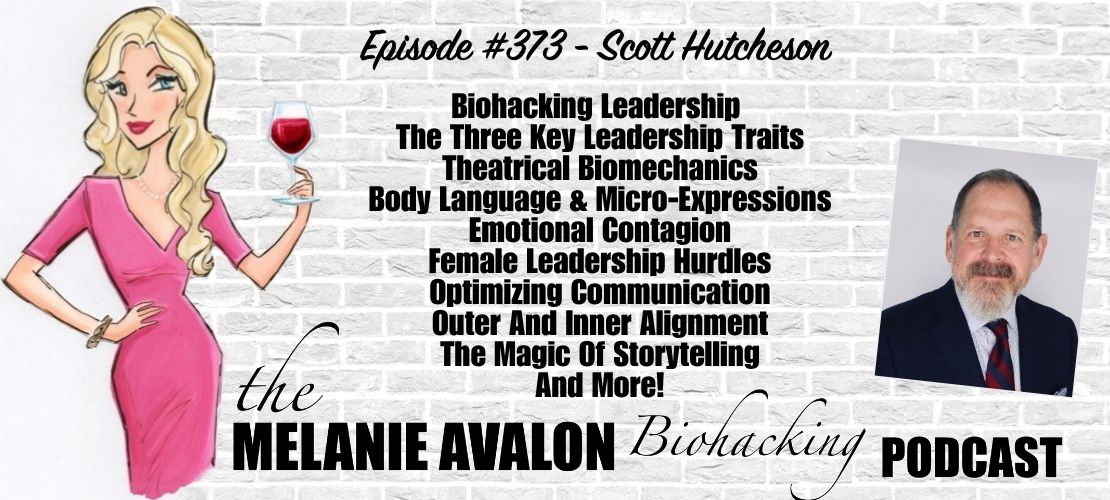
For nearly four decades, Scott Hutcheson has been working at the intersection of behavioral science, leadership, and organizational transformation, helping people unlock their potential, build stronger teams, and design ecosystems that are more adaptive, innovative, and competitive.
His work spans classrooms and boardrooms. As a professor at Purdue University, Scott teaches graduate courses in technology and engineering leadership. Outside the university, He's partnered with federal agencies, Fortune 100 companies, startups, foundations, and networks of changemakers—collaborating with nearly 5,000 leaders from 147 countries.
Clients and students often describe his style as approachable, thoughtful, and grounded in real-world insight. One student recently said, “You make complex ideas feel intuitive—and relevant to the challenges I’m facing right now.”
At heart, Scott is fascinated by how human systems behave, why some teams thrive while others stall, and how leaders can signal just the right mix of warmth, competence, and gravitas to bring people together and create shared value. That curiosity drives everything he does: from his writing, to keynote talks, to training sessions built around practical, evidence-based tools.
When Scott isn't working, you’ll likely find him walking his dog in the historic neighborhood of Ulen, Indiana, traveling with his wife Lisa, visiting with their two adult sons Henry and Oliver, or BBQing on the back patio...very likely listening to Yacht Rock!
LEARN MORE:
Book: https://amzn.to/3UzxKsR
SHOW NOTES
SPONSORS & DISCOUNTS
PURVINE:
PurVine makes it easy to discover organic, lower-alcohol, and lower-sulfite wines that match your personal preferences. Easily scan bottles, take personal notes, save wines, get personalized recommendations, earn rewards, and more!
Go to PurVine.app and use code MELANIEAVALON for 10 welcome points.
IONLAYER:
Nicotinamide Adenine Dinucleotide (AKA: NAD+) is a true powerhouse when it comes to optimizing our health! This remarkable molecule plays a key part in many cellular processes, including energy production and DNA repair. NAD+ levels are depleted with things like stress, aging, alcohol, lack of sleep, and of course, too much partying . By supporting and maintaining healthy NAD levels, we can potentially unlock a multitude of benefits for our well-being. From increased energy and improved cognitive function to better metabolic health and even potential longevity, NAD supplementation can make a significant difference in how you feel and age. IonLayer provides easy, affordable access to NAD+ patches!! I think this is the easiest, most affordable, optimal way to boost your NAD+ levels! (They also make glutathione and B1 patches!)
Get $100 off with code melanieavalon at melanieavalon.com/ionlayer
FACEBOOK: Join Melanie's Facebook group for a weekly episode giveaway and to discuss and learn about all things biohacking. All conversations are welcome! IF Biohackers: Intermittent Fasting + Real Foods + Life
INSTAGRAM: Follow Melanie on Instagram to see the latest moments, products, and #allthethings! @melanieavalon
AVALONX: AvalonX Spirulina is out now! AvalonX supplements are free of toxic fillers and common allergens (including wheat, rice, gluten, dairy, shellfish, nuts, soy, eggs, and yeast). They are tested to be free of heavy metals and mold and are triple-tested for purity and potency. Get on the email list to stay up to date with all the special offers and news about Melanie's new supplements at avalonx.us/emaillist! Get 10% off at avalonx.us and mdlogichealth.com with the code MELANIEAVALON. Plus, text AVALONX to 877-861-8318 for a one-time 20% off code for avalonx.us.
FOOD SENSE GUIDE: Get Melanie's app to tackle your food sensitivities. Food Sense includes a searchable catalog of 300+ foods, revealing their gluten, FODMAP, lectin, histamine, amine, glutamate, oxalate, salicylate, sulfite, and thiol status. It also includes compound overviews, reactions to look for, lists of foods high and low in these compounds, the ability to create your own personal lists, and more.
EMF: Stay up to date on all the news on Melanie's EMF collaboration with R Blank, and get the launch specials exclusively at melanieavalon.com/emfemaillist.
TRANSCRIPT
Scott Hutcheson
You don't have to ever make a speech. You don't have to have much of any charisma, but you can have this outsized impact that becomes the keystone for doing remarkable things.
So there are some very basics that most people need to see signaled from a leader in order for them to say, "Yeah, I'll listen to what that person has to say," or, "I'd like to go to work for that person," or, "I'll pull the lever in the voting booth for that person." There are small things that we can do to signal that we are listening. So we may be a good listener, but others are not perceiving that we're a good listener.
Melanie Avalon
Welcome to the melanie Avalon Biohacking Podcast, where we meet the world's top experts to explore the secrets of health, mindset, longevity, and so much more. Are you ready to take charge of your existence and biohack your life? This show is for you. Please keep in mind, we're not dispensing medical advice and are not responsible for any outcomes you may experience from implementing the tactics lying herein. So friends, are you ready to join me? Let's do this.
Welcome back to the melanie Avalon Biohacking Podcast. Oh my goodness, friends, I had the best time today talking with Scott Hutchison for his incredible book, Biohacking Leadership. And before you do anything else, Scott is giving away five signed copies and it is so easy to enter. Just go to scotthutchison.com/melanie, where you can easily enter to win a signed copy. That's S-C-O-T-T-H-U-T-C-H-E-S-O-N.com/M-E-L-A-N-I-E. And we just barely scratched the surface of everything in this incredible book in today's episode. In today's conversation, you are going to learn the three key leadership traits based on thousands of data points, the role of theater, the actor, and theatrical biomechanics when it comes to leadership, how to adjust your body language and microexpressions to have the influence you want on people, the role of emotional contagion, hurdles that females face in leadership, how to optimize your communication, how to align your outer and inner self to be a better leader, the incredible magic of storytelling, including how it compares to facts, and so much more.
Like I said, this is just barely scratching the surface, so definitely go to scotthutchison.com/melanie to enter to win a signed book. Yes, he is giving away five copies, so you have a very good chance of winning. The show notes for today's episode will be at melanieavalon.com/biohackingleadership. Those show notes will have a full transcript as well as links to everything that we talked about, so definitely check that out. I can't wait to hear what you guys think. Definitely let me know in my Facebook group, IF Biohackers: Intermittent Fasting + Real Foods + Life. Comment something you learned or something that resonated with you on the pinned post to enter to win something that I love. And then check out my Instagram Find Me Friday announcement post, and again, comment there to enter to win something that I love. All right, I think that's all the things. As a brief reminder, you can enter to win one of five signed copies of Biohacking Leadership when you go to scotthutchison.com/melanie, and there you can easily enter. And now, without further ado, please enjoy this fabulous conversation with Scott Hutchison.
Hi, friends. Welcome back to the show. I am so incredibly excited about the conversation I am about to have. You will know right away when you hear the title of this book why I am so excited, because it is about two topics combined that I am absolutely obsessed with. So I am here with Scott Hutchison. His newest book is called Biohacking Leadership: Leveraging the Biology of Behavior to Maximize Your Impact.
Melanie Avalon
And Scott, he's a professor at Purdue University, and he has been working for a long time on the intersection of behavioral science, leadership, and organizational transformation. And friends, so the two words are biohacking and leadership. Obviously, biohacking is a passion around here. And then leadership is something that I'm actually ... I don't talk about it a lot on this show, so that's another reason that I'm really, really excited to dive into this, especially with the biohacking lens approach to it.
But leadership is something that I have always been fascinated by, and it's been important to me. So, like, growing up, I was always in the, like, all the leadership camps and all the leadership summits. And I remember in, like, seventh grade, I went to Washington, DC by myself for, like, this leadership young national leaders convention thing. So leadership, I've always been very, very fascinated by. So what better way to really dive into it than with a, a biohacking lens, like I said. And this book is so, so fascinating. So it really provides a new lens for leadership, and I'm sure we'll, we'll talk about this. But it, um, kind of upends or kind of changes the traditional model of a leader for what should it actually look like in today's culture and society. And Scott talks about things like the different, like, animals, keystone species that we can learn from, the characteristics that they have that apply to leadership. He talks about the role of storytelling. He talks about three characteristics of leaders that they almost have, and then the different ways to, quote, "biohack" and get there. So many things. I had just the best time reading this book. I took away so much. Can't wait for you guys to hear about it as well and get it. So Scott, thank you so much for being here.
Scott Hutcheson
melanie, it is so nice to be here.
Melanie Avalon
So I have so many questions for you. But first of all, one of ... I did not expect this going into the book, but one of the things that made me really happy is I am, when I say that I'm a theater, like, freak, I'm obsessed with theater.
I majored in theater at USC in California. I go to shows literally every week. And so not only do you apply the-
Speaker 3
... skills of the actor and, like, the stage actor in particular to leadership, but you, like, you have, like, a theater background. You're, like, in the... right? In that world.
Scott Hutcheson
I do. So I have an undergraduate degree in theater as well, so that is something that we have in common.
Speaker 3
Amazing. Do you go to shows and stuff?
Scott Hutcheson
Not as much as I would like to, but I do try to see as, as much as I can. I am really wanting to see Death of a Salesman with Nathan Lane and Laurie Metcalf right now, so I'm gonna figure out a way to sneak off to New York to see that one.
Speaker 3
You should. You should do it. Yeah.
So I was real excited to... I was not expecting that to be part of this book, so, so when that was coming up I was like, "Yes, we're in a good place." Um, but speaking of, so your personal story, and I'm just thinking about this in real time right now, because a leader, like, the concept of a leader, you are leading something. Like, the end goal, in theory, I w- I would presume is not to be a leader, although I guess maybe it is. Maybe if you're a president, your end goal then is to be a leader. Did you always want to... Were you always interested in the dynamics of leadership or, yeah, where did that come from in your personal life, and what do you think about this concept of a leader?
Scott Hutcheson
Yeah, no, it was not, it was not on my radar screen at all, but it, it turned up on my radar screen in the theater. So my interest in theater was directing, and I'd, I'd been in shows in college, but directing is what I wanted to do, so after I graduated I became kind of an itinerant director. I'd, you know, go to Knoxville, Tennessee at a community theater and get a show up and running, in places like that. And I was doing a community theater production. And you know, community theater is a bunch of, uh, amateurs, right? They've got day jobs, and you run into people of all stripes. And one of my cast members was a, was a scientist at a nearby research laboratory, and I just had the, the best time getting to know him. And as we would have discussions, you know, after rehearsal or backstage, he said, "You know, you know, I think there's a lot of lessons from theater that we could apply back at our research lab, because theater is, like, the most collaborative of all the arts, and I'm just amazed at what can be done when people, you know, work together collaboratively.
And gosh, we're having a hard time figuring out how to collaborate back at the lab." So what he asked was, "Would you be interested in doing a, a workshop or two at the lab?" Melanie, if you've ever been a starving artist, you'll know my first question: "Does it pay?" And he, he said, "Yeah, it pays," and I said, "Then let's do it." And that was seriously my only motivation. And so we, we did a couple of workshops really bringing kind of the simple rules of improv into this room of scientists and engineers and physicists who were working on some really interdisciplinary, big, global challenges related to climate change and energy. And it worked really, really well. And that, I had no idea that that would change the direction of my profession, but it did because I kept getting opportunities like that where we were taking kind of, you know, the simple rules of improv that govern really kind of something pretty complex. Those same sort of rules were helping at the lab to help them make interdisciplinary breakthroughs.
Speaker 3
Wow, I love that. And, and actually, yeah, I f- I feel like 'cause when you say improv, it's funny, so in my entire history of acting... So, so I did, like, community theater all growing up, so I, I completely know what you're talking about.
Wait, by the way, what was your favorite show that you ever directed?
Scott Hutcheson
You know, I did, I did Glass Menagerie, and I, I really love small cast, heavy drama kinds of stuff. You know, I've done my share of big musicals, but I r- I really like that small ensemble, heavy material, thus my interest in seeing Death of a Salesman.
Speaker 3
Nice. Awesome.
Yeah, so I did a, you know, a ton of different, all different types of theater growing up. I actually only did improv, I did it in LA, I did I- IO West, and I just remember thinking that the "yes, and" concept from that was so applicable to life. Like, you know, 'cause in, in improv basically you don't ever say no 'cause, 'cause you don't know what's gonna happen, so you always say, "Yes, and" is the, is the idea there. Was that one of the, one of the things that you integrated into it?
Scott Hutcheson
It was. So remember they're, they were doing, like, interdisciplinary stuff. So this was a research lab that was set up during World War II to be part of the network of labs that were making the bomb. And so they started out just, like, you know, getting specs to build something. And, you know, Cold War was over by, by the '80s when I was working with them, and so their mission had changed, where they were addressing, as I said, like, climate change, energy security.
Well, well none of that rests in any single discipline, so that's why you had to bring together people with lots of different expertise. And that's one of the things that we worked on was yes, and thinking. And it, it, it proved to be remarkably successful. And I would learn later that there is a type of innovation called recombinant innovation where you are taking things that exist, whether it's technologies or expertise that exists, but they've never been connected before. So intuitively I understood that, and I think the scientists understood that, but w- we experimented with it and then later figured out, "Oh, this is actually a thing." But we used some of the rules of improv to kinda make it happen. So that was a lot of fun.
Speaker 3
That is so cool. I love that.
I actually have a, since we're talking about it, I have a very specific question from, from that section of the book, because in the book you talk about, you know, this theatrical biomechanics idea and what, kind of what we're talking about right now with applying the work of the actor to a leader. And one of the things you talk about is how, like, s- certain acting techniques where actors use Their external body to inform their inner emotions, essentially. So, you know, using your physicality to then create this inner feeling. And you talk a lot throughout the book, not just in that section, but the importance of w-with, with a leader, the importance of aligning the inner self and, like, motivations and thoughts and their, and your external presentation of that to the, you know, to the, to the world. So my, my question there, because you really make it important, m-make it known that it's important to be in alignment as a leader. So your inner world reflecting and being in align with your external. So first of all, I mean, I would love to hear more about that, like how we can do that practically. My question about it is if you are using... Like, if you're using your external body to kind of get there or encourage that internal state in yourself, is that disingenuous or is that out of alignment? Like, how do you, how do you do the physicality aspect of a leader if you are not feeling it entirely already? Like, like, just basically how do you get in alignment and where does, like, the role of genuineness come in?
Scott Hutcheson
This notion of theatrical biomechanics goes all the way back to a contemporary of Stanislavski named Meyerhold. You know, Stanislavski, most people have at least heard that name, you know, method acting, think Brando and you know, that brand of acting. And Stanislavski said, "If you just have the emotion inside, it'll spill out." Well, Meyerhold said, "Well, but sometimes you need something outside to trigger the emotion inside." And so it was really this... And Meyerhold said, "Every, every actor is, is two people. There is the originator of the idea, and then there's the executor of the idea." And that became really true for me in a production of Romeo and Juliet, and I wasn't directing that one, but I was in it. So those that might remember, Mercutio is, is one of Romeo's good friends who has this playful duel with Tybalt, who is Juliet's cousin, and this playful duel becomes very serious and Tybalt kills Mercutio and then Romeo revenges Mercutio's death and then sets up the whole thing. But as we were w- as we were rehearsing, the guy playing Tybalt said, "You have to make me mad." And I said, "I am mad." He said, "But I don't get a sense that you are mad." So I was mad in my head, but I was not showing him mad. So you know, he, he didn't know what was in my head, so I had to externalize what mad looked like in order to motivate him. So that was the first time I understood, oh, there is both this inside out and this outside in to acting. And then you, you, you fast-forward to how does that apply to leadership? Well, it applies to every human behavior. I mean, you could say the same phrase and you could say it a gazillion different ways when it comes to how you color the words, what expression you have on your face, what is your body language saying or saying when, when your words are saying something else. We've all experienced this notion of like, I'm kind of getting mixed signals. You know, whether it's from a friend or whether it's from a boss. Well, often we mean that, well, their, their words don't match their behavior. So that's where this notion of, well, every leader is two leaders as well. There's this I might have a really great strategic mind, but no one can see me think. So I have to externalize my ability to think like a leader and I do that through the same things that we all use to do that, through gesture and tone of voice and consistent actions. So it is sometimes the outside that signals what's inside. So the other part of that though, a-another lesson from theater is wh-when I would direct a show really early on before we were even thinking about costuming, I would ask my performers, "Hey, what kind of shoes would your character wear? And let's start wearing those shoes in rehearsal." And anyone that owns more than a couple pairs of shoes know that you just feel different. You know, my wife feels different in a, in a pair of heels than she does in her running shoes and I feel different in my flip-flops than I do my, you know, my wing tips. So we, we, we put on something, whether it's a really well-cut suit or a pair of shoes, it, it, it changes the way we think about ourselves.
Scott Hutcheson
So these external things, whether it's something we put on or the environment in which we are in or the way we're using our body has to align with what's inside. So that's when I came up with this notion of, well, there, there are some leadership biomechanics too. So in my teaching and in my training, we, we work on some of that kind of thing as well.
Speaker 3
A few specific questions about it. One, so I guess 'cause you just mentioned that, you know, this is something that p-people can implement as leaders.
Has that... So like that physical presence, has that evolved or changed from like the traditional view of a leader, like in the past compared to now? And does it depend what you're leading as far as to, you know, like what you would wear or what your physicality looks like? Or are there some-- Or is it-- Or they're the same basic things that you do regardless of the leadership situation or time that you're in?
Scott Hutcheson
Yeah, I, I f- first of all, I, I think that it has changed and I hope it changes more. So what do I mean by that? So I, I'm old enough to remember, you know, the Dress for Success book that came out in the '70s and, you know, you get out of school and go to, you know, get your first big boy or g-big girl job and someone might give you that book. And it was really surface level stuff. And that was also the same time when, when we began to talk about executive presence, and, you know, that was all about you need to have charisma, and, you know, here are all these studies that, you know, tall, good-looking people will do better than, you know, short and stocky and, and regular-looking folks. Well, I hope we've gotten well beyond that, but we still know there is something to that.
But how do we, how do we express our authentic selves at the same time leveraging some of, of, of those sorts of, sorts of insights? So there are some very basics that most people need to see signaled from a leader in order for them to say, "Yeah, I'll listen to what that person has to say," or, "I'd like to go to work for that person," or, "I'll pull the lever in the voting booth for that person." And it's really kind of three things is like, are you safe? Are you a safe person? And then second is, do you have something of value to offer? You know, do you have expertise, or do you have resources, or do I feel like if we work together, we can accomplish something that we will both find value in? And then third is, is the ability to, to bring people together to create something of shared value. So that, that kind of leads us to the three biodynamic channels that emerged in, in this model of, of leadership that I feature in the book, warmth, competence, and gravitas.
Speaker 3
Awesome. Okay.
And just to, like, ask a little bit more about that because I am, I am fascinated by... Something I'm fascinated by is the evolutionary drive behind why we do what we do, and then on top of that, whether or not that's a good thing, how we judge it, et cetera. So I, I'm really... So, like, the things that you mention, like being attracted to leaders who are, like, tall and good-looking, what would be the evolutionary reason behind that?
And is that something that... Like, are some of these just so evolutionarily driven that maybe we can't escape it to some extent?
Scott Hutcheson
Yeah, I mean, I think we all are... Well, well, first of all, there's a, an area of science called human ethology, and that is really the biology of behavior, and that is present in all social animals, so any animals that kind of live in community, whether it's other primates or, uh, schools of fish. And, and we have... Of course, our, you know, our DNA has, has evolved, but so have our behaviors.
Groups that have learned to live together are constantly balling- balancing collective interests and individual interest, and we see what happens when that pendulum swings one way or another too far. So it is this sort of interplay. I need to do things that are good for me, but I also need to do things for the... that are good for the, for the broader community because if the community falls apart, I'm out to the, to the wind as well. It's this constant sort of, of, of yin and yang of, of collective interest and individual interest that we're all sort of, sort of balancing.
Speaker 3
Would evolution select for individuals that fulfill their individual wants and desires as much as they can without tipping the, tipping the community?
Scott Hutcheson
Yeah. Yeah. I think that's, that's exactly the right way to think about it.
And the other insight from, you'd mentioned in your intro this notion of keystone species, so th- this, this also kind of goes back to theater as I was... Some of those discussions with the, uh, with the scientist, we would talk about the production was a production of Amadeus, and the character of Salieri is, is despite the, the name Amadeus being in the title, Salieri is the really star of that show, and he's, he, he's on stage the entire time. And so our Salieri had, like, wonderful stage presence. Like, you just can't take your eyes off of him. Just there was something about him that, that, that really drew the eye. But we would also talk about, yeah, but how's his backstage presence? So sometimes that is embodied in the same person, you know, a performer that is just terrific on, on screen or on the stage, and gosh, they are the glue that holds it together, but sometimes those are separate. It doesn't even have to be a cast member. It could be the, the costume master or mistress that, that has that backstage presence but never gets on stage, and they're the ones that hold the, the, the ensemble together. So this, this notion of it is both kind of onstage presence, but it is also backstage presence. And, and someone with that backstage presence can be just as impactful on the performance of, of the collective. And so that drew me to look at, you know, there are actually some species that play that role. They're not at the top of any food chain. You know, they're not the lion who's the king of the jungle. You know, it's the, it's the lowly beaver, and a beaver simply just builds a dam, but in building the dam, the beaver creates an entirely new ecosystem, right? A s- a stream ecosystem is very different than a pond ecosystem. So when a beaver builds that dam and now we have a pond, an entirely new ecosystem emerges. You know, the other beaver relatives show up, and with those beaver relatives comes additional species and, uh, flora and fauna. And so infrastructure building is one of those kind of keystone leadership abilities. You don't have to be in front of anyone making any speeches, but if you can build infrastructure, whether that's relational infrastructure or physical infrastructure, that has a keystone-like role. A- and we introduce a couple of others, the, you know, the, the, the gray wolf who, who, who Changes an ecosystem by kind of pruning the species that might be doing overpopulation. The lowly sea star in a coral reef is kind of this master of diversity. You remove the sea star and all the other sometimes even tiny creatures begin to die. So those are, those are three like keystone species, you know, infrastructure builders, you know, network pruners, and then kind of keepers of diversity. So those are just ex- examples. You don't, you don't have to ever make a speech, you don't have to have much of any charisma, but you can have this outsized impact that becomes the keystone for doing remarkable things.
Speaker 3
Yeah. I, I loved that part of the book, and it's funny, I had a major flashback. I wonder if you came across this when you were researching the sea star, because I hadn't thought about that. I, I used to go to Florida all the time growing up, this place called Sanibel Island, and, um, you used the example of the sea star, how they're regenerative, like they can regrow their appendages. So that's a good example of, you know, resilience and recovery.
They always told us growing up that when you pick one up, it's gonna lose its arm. Do you know if that's true? Did, did you come across that when you were researching?
Scott Hutcheson
I did not, but I wasn't looking for it. But that's, that's really interesting. But it'll grow, it'll grow another one.
Speaker 3
I know. I need to, I need to fact check 'cause I just know like always growing up it was like, "Don't pick up the sea stars 'cause they're gonna drop off their arm." It's like, um, so that's... Yeah, no, I love that. Okay, just one other... one little thing about the, while we're still talking about the... or before we leave the, the physicality and the, your inner, outer experience. I've had this question. Ever since I learned about microexpressions, something has haunted me, which is... And by... So the microexpressions I'm talking about are like when you, when you meet somebody and there's... they, they give like an express- like a really quick microexpression at the beginning. Is that something that you can control or is that something that... I feel like when I first heard about it, it was like you can't control it. You're just gonna, you're just gonna do that. So my, my question is, um, how much can you control your own microexpressions? Is it, is it more that your microexpressions that you're controlling or is it your, your expressions after that?
Scott Hutcheson
I think, I think j- becoming aware of, of the fact that even the smallest microexpression sends a signal, and one of the reasons that I settle on this notion of, of biohacking is because what I encourage leaders to do is ex- is experiment. Try these small experiments, gather data for yourself, and see what happens.
So if I can, if I can take just a, a bit of a, of a, of a side, uh, side road that's not in my bio, but six years ago I was diagnosed with diabetes, and it was running... it ran in the family, and it was probably a question of, you know, when, not if, and I finally got that diagnosis. So once I did, I, I wanted to understand the biology of that disease and what... You know, you can never get rid of it, but you can manage it through behavioral change. So I, I began experimenting with my own behavior. Of course, not only, you know, what you ate, but when you ate and when and what kind of exercise you got and how you manage stress. And, you know, you could get a continuous glucose monitor and get feedback every minute and determine, like, uh, we were talking before, I'm headed to Spain later today, so I know that my blood sugar levels will be a little bit higher just because of the stress of travel. Well, knowing that, I can kinda anticipate and manage that. So I have learned to manage my diabetes through behavioral change. So I didn't know it, but I was really kind of biohacking diabetes and I'm, and I'm, and I'm happy to say that when I got the diagnosis, my A1C was like 11, and today it is five point... it is five point one.
And it's been five, it's been five point one for four years, and I'm not on any metformin or insulin or anything. But I'm really, really regimented. I have learned these behavioral habits that now I don't even have to think about anymore. So it... That... And that came through experimentation of trying things. "Well, that didn't work. Ooh, that does. Ooh, that little 15-minute walk after dinner, even if it's a low-carb dinner, well gosh, it keeps my blood sugar even steadier than it otherwise would've been." So I tell leaders s- same thing. You know, if you are not getting the response that you had hoped for when you gave your team update or when you sent that memo or when you interacted with a, with a client, I, I have a whole subset of training that we call biohacking sales. We are attuned to pay attention to how people are showing up, and that includes microexpressions. So we coach our leaders and my students to, to, to pay attention to this. So one of the things we talk about is we talk about the, the biomechanics of the face, and there is really great research that says we do a really good job of reading microexpressions, often subconsciously. So there's research where they're, where they show, um... they'll show two political candidates for half a second each, and even if... a- and they would show these to research participants who didn't know these candidates. Like, they might be running for a local office, you know, 10 states away.
Scott Hutcheson
But they, they say, "All right, face one, face two. Which one's gonna win?" And then you, you know, you click. And of course they do this with hundreds of people. Well, as, you know, as very statistically significant, very statistically significant, they were able to pick the person who would win simply by their face.
In another study, they showed doctor-patient interactions to research subjects. No words. You just saw how a, a doctor was interacting with a patient, and then they rated how likely that doctor would be, uh, sued for malpractice. And, and just by watching that interaction, they could pick which ones were more likely to be sued for malpractice. And tho- back to those faces that they would show, sometimes if you ask people to... Or, or well, well, what is it about that face that made you say that person would be elected? I don't know. I just, I just kinda knew, kind of intuitively. So it all goes back to these, these sort of microexpressions, and the research identified that most of us walk around with, with, with one of three faces: an open face, a closed face, or a neutral face. Each of those faces are perceived differently. So ag- again, just photographs, an open face. Think about it. An open face is typically a relaxed face. There might be a, a slight smile. The brows might slightly be lifted. That opens up the eyes a little bit more. When people see a face like that, they're much, much more likely to say, "Oh, that person seems friendly and trustworthy, and I'd like to get to know that person more." A bit of a furrowed brow sends a different signal, and even when it's almost imperceptible. And then that neutral face, like, that makes us uneasy 'cause we just, we just can't tell what's going on behind the eyes with that person.
So again, I ask, I ask leaders to experiment, and, and I've experimented. A- as I said, I'm getting ready to take a flight. So I remember I was reading a research article on, on the, the biomechanics of the face on a flight, and I had a, a layover. I had to move from, you know, one terminal to the other, and my mode of travel is just eyes cast to the ground. I got a hat on, maybe a hoodie. Don't bother me. I just go from point A to point B. I'm not mad, but I probably look mad. So I said, "I'm not gonna do that today. I'm going to have eyes wide open. I'm gonna make eye contact with people I see. I'm gonna consciously try to be more open with my face." And Melanie, oh my gosh, it wa- it was a bit overwhelming because I'm mostly an introvert, but the signals I was getting back, I mean, I was getting smiles back, and people were making eye contact with me.
I got better service from my barista. I got a nice smile from the flight attendant. I... It w- it was, it was remarkable. And I thought, "Man, I wish I would've known this in my 20s. I may- maybe I would've gotten more, more dates." But, but that was an experiment. And I said, "All right. Well, that's exhausting for me. That's..." I'm not that kind of gregarious sort of person. But there are times where I kinda need to turn that on a little bit.
Scott Hutcheson
So what I, what I tell people, I said, "You need to be who you are, but you need to be able to, to, to modulate your behavior up and down, you know, 10% or 20%." So if all of a sudden, you know, you, you are not this smiley, jokey person and then you are, people are gonna think something's wrong. But, but how can we lighten our approach just a little bit and experiment? Oh, do, do I, do I, do I get more sales when I do that, or do I not? Maybe I went too far.
And, and sometimes that, that, that, that, that closed face is appropriate, right? Uh, I have, uh, grown children, but when they were little, if they had done something that was, uh, endangering them, you know, playing with a light socket or well... or, or whatever, uh, when I warn them, I have a, an, an angry or an alarmed sort of face, and that gets their attention, and they understand, oh, that, this must be a big deal because Dad seems upset. So then after the lesson, then, you know, you hug them and tell them you just want them to be safe. So we do that in, in other parts of, of our life. Why not do it in our leadership relationships? Experiment and see when do I consistently get better results when I do something as simply as pay attention to my face?
Speaker 3
Oh, I love this conversation so much. I am fascinated by this. Do you know what percent of people are, like, naturally the open or closed or neutral?
Scott Hutcheson
You know, I ha- I haven't seen percentages. I would say, though, that, you know, I work almost, not exclusively, but I work a lot with scientists, engineers, like technology, you know, computer scientists, coders. Often, those are very introverted people. Not always, and I don't want to paint too wide a brush, but they're often attracted to that kind of work because you do much of it in isolation, and that's one of the things we've really had to, to work on with our science and engineers 'cause they... Again, I, I'm talking in gener- generalities, but it's usually kind of neutral expression because I think folks like that are also taught leave emotion out of it.
But why? Oh my gosh, you're working, you're working in science. You're doing remarkable things. Share how remarkable you think this is. And so one of the exercises I do, especially with scientists or technologists, I say, "Tell me when you first became enthralled with science or building things or how a computer worked." And it usually goes back to childhood, and man, they get animated when they start talking about that. Like y- I'd love to see a little bit of that come through, right? You, you think you're doing really cool stuff, but I wouldn't know that you think it's cool un- un- unless you tweak your approach a little bit, and then that's contagious. If you think it's cool, then other people are more likely to think it's cool.
Speaker 3
I had an experience. I wonder if it was when I was in the airport. I, I very recently had an experience similar to what you were describing about how... Not, not when you were trying to have an open face, but how normally at the airport you just, you know, are like, "Don't talk to me" type, type face. Very recently, I remember I was going in somewhere, and I, I had the intention of I did not want to talk to people at that moment, and I was thinking about, I was thinking about this concept about like, wow, I'm, I'm literally just by Having a certain expression on my face or walking a certain way or not making eye contact, like, I can, like, give a signal without saying to anybody not to talk to me. I can, like, give out that signal. I'm just reflecting on how interesting that is.
But that's, like, not my default, so I have to... If I want-- If I had that-- If that's my intention, I have to purposely, like, create that vibe. So I, I wonder if, if the thing that we have to consciously try to do, does that mean that's probably not our resting state? So, like, if somebody has to consciously try to, to be open, maybe they're not naturally like that.
Scott Hutcheson
Yeah, then open probably isn't their, their natural state. And i-it's not mine, but I, I now know that, oh, there are times where people need that from me. You know? So one of the things I do is I chair dissertation committees, and that's a really stressful time for a graduate student. And sometimes they just need a listening ear, and they're frustrated, and they just need someone to, you know, to, to let them know it's gonna be okay or that you care for them.
And so, you know, I'm, I kind of, "Well, let's solve this problem." Well, sometimes they don't need me to solve the problem for you. Sometimes they do, but sometimes they, they just need a listening ear. So you know, o-one of the things that we, we, we-- in those three biodynamic channels, we've identified sort of 18, I call them biomarkers, under each one of them. And one of them is, you know, listens well, right? People need to know that you listen well, and that's one of those that, that aligns under warmth. And what we often find is... And, and we've developed some diagnostics where people can kinda do a self-assessment. Say, you know, "How well do you think you listen?" "I think I listen really, really well." And then we do a feedback assessment. Say, "All right. Well, let's have, you know, five people who you work with anonymously tell us, you know, how you rank on these 18 biomarkers." And we'll get to listening well, and people say, a-and you know, it's anonymous and it's average, they'll say, "Oh my gosh, you think you're a 10 when it comes to listening. Everyone else is saying you're a seven." "Well, well, why is that? You know, I, I'm, I'm listening very intently." Well, that's one thing, but, uh, they don't know that. So, so how do you signal that you are listening, right? Asking reflective questions, saying things like, "Tell me more about that," nodding every once in a while, right? Having a, an open, interested face. Th-there are small things that we can do to signal that we are listening. So we may be a good listener, but others are not perceiving that we're a good listener, and that's just, that's just one of these 18.
That's why I say, you know, get some-- biohack your own leadership. Get some data, right? And, and where you are getting data that says, "Oh man, I'm not doing that as well as I thought," try some things. So the book has tons of evidence-based practices. What does listening look like? Well, think, think about people in your own life. Who's the best listener you know, that friend or that relative or whatever. How do you know they listen to you? You've all seen it. And sometimes we, we have to imitate what we've seen others do. That's, that's how we learn anything. I mean, that's how we learned to talk. We, we imitated mom and dad, the s- or the other caregivers in our life, the sounds that they make. We learn to do things by imitating other people. Same with leadership. We witness great leadership behaviors. We witness destructive leadership behaviors. And hopefully we say, "I'm gonna do some of that.
Scott Hutcheson
I love the way that person, that old boss interacted with people, and I'm gonna adopt some of those ways of interacting." And I have also had bosses to say, "Man, if I am ever in that position, I'm not gonna do what that guy did." Right? That's what I mean by biohack this stuff. You know, experiment. Learn what these behavioral signals look like. Try them out. Figure out what is, uh, both, uh, authentic to you or can become authentic to you, you can add to your repertoire, and see what, what gets the performance that you're hoping for.
Speaker 3
Yeah. And just to iterate what you said, listeners, get the book Biohacking Leadership because there are so many specific examples of things that you can implement to actually, you know, practically do all these things. So we're, we're only briefly scratching the surface.
Okay, you, you mentioned a few things which ma-ma-made me think of quite a quite a few other things. So one was the... Okay, you mentioned the word how emotions can be contagious, and in the book you talk about, you know, um, how stress can spread among a team and also, like, positivity and good vibes and, and basically that these things actually can be, quote, "contagious." A question about that is... Well, one thing I've noticed for me is I am... I don't-- I'm fascinated when I meet somebody in a s- in a, I guess, in a negative energy state, and if I am unable to turn that around even, like, a little bit. I don't know. I kinda see it as a challenge. Like unless I'm, like, also not, you know, in a good mood. But I, I really enjoy, you know, trying to have a positive contagious effect on people, and I'm fascinated when I can't. So a few questions from there. One is, and this kind of ties into a few different things, but, um, you give a lot of examples and ways that people can, you know, have a beneficial, positive, emotional, contagious effect on people and how you can have, you know, good conversations and how you can have things land with people and, and be well received. How mu- how much of that is you, like the leader, doing this versus the receiver? Sometimes are people just, no matter what you do, not going to receive any of the things that you're trying to do? I'm just wondering where the, yeah, where the responsibility lies.
Scott Hutcheson
So in terms of, uh, how much of that is the leader versus the other person, so there's pretty consistent research that says The perf-- when it comes to the performance of a team, 50 to 70%, depending on what kind of performance outcome you're looking at, is dependent on the leader. So whether you're looking at engagement or, you know, hitting metrics or job satisfaction or whatever, 50 to 70% of, of that is dependent on the leader.
The leader typically has this sort of outsized impact wh-when it comes... Of course, you know, a, a, a teammate that's a jerk can make things difficult, but a good leader won't put up with the jerk behavior from a teammate and will fix it. So, so I think the leader does have this sort of, uh, outsized impact, thus the, you know, the beaver or the sea star or the, uh, or the wolf. So it-- the, the leader's impact is, is more. The other thing that we, we talk about in the book is that we were, we're all kind of walking around with some cocktail of about four really important neurochemicals that are at different levels. Oxytocin, the bonding hormone, and cortisol, the stress hormone. Those are just two. So when our cortisol is elevated, we know what that feels like, right? We, it feels maybe different for most of us, but it's that anxious feeling. It's that feeling in the pit of your stomach. You're stressed out. When your cortisol is, is flowing, you can't think rationally, uh, uh, as well as you would be if it were lower. Y-you just get kind of locked up in your own head. You, you can't, can't see your way forward. What we do know is that if our, in those moments, if our oxytocin can be spiked, we see a corresponding drop in cortisol. And so think about when, when you are really, really stressed, Melanie, whether it's work or something else, I bet there's someone in your life that you just need to spend time with them, whether it's a phone call or a text or, you know, a cup of coffee with a dear friend and, and, and just being with them lowers your cortisol because it's spiking your oxytocin. So sometimes the stress doesn't go away, but it, it lowers, lowers it just enough that you can kinda see things more clearly.
And so a, a leader can have that impact on, on people as well. So what we ask leaders to think about is, all right, what's the biological state that, that either I, I can anticipate being created when I announce this big change management initiative, you know? Or maybe something was forced upon us and people are stressed. Or maybe it's just kind of one person. Like you call someone in for a meeting, and that's not something you typically do, and they're gonna come in stressed because they think they're in trouble. Maybe because the tape in their head says, "Gosh, when I got called into the principal's office, it was never about anything good." And so one of the first things you want to do is to lower that stress. So how, how do you welcome them into the office? What kind of face do you have? Do you sit with a, a desk between you or do you pull a chair around? How do you set the tone?
Scott Hutcheson
Do you start by telling them how much you appreciate them to sort of lower that stress? And you do that through, through spiking their oxytocin, that bonding hormone.
There are times, however, that, that you might need to spike a little bit of cortisol. I work a lot with emerging leaders who are being asked to take on something that they feel like they're not exactly sure they're ready for it. But i-if, if I think they're ready, I will challenge them and, and give them something to take on that will stretch them, and that might create a little bit of stress. But if they perform and they perform well, well, then you spike dopamine, the reward center. I mean, you know, think about a personal best, whether you're weight training or what have you. I mean, I don't know if I can do this, but I'm gonna push through, I'm gonna push through, and then you get that dopamine spike, and then you're, you're, you're craving those, uh, continued, uh, uh, uh, succession of, of personal bests. So understanding that, that, you know, oxytocin, cortisol, dopamine, and norepinephrine, there's a lot of other neurochemicals, but those are the four that, that, that we can, as individuals, we can spike or lower those in, in others. Now, as you said in your setup, is it gonna work every single time? Maybe not. But most of the time, I see that through deciding how to show up, depending on what the kind of emotional outcome I want, that we can sort of orchestrate that.
Speaker 3
Awesome. And, and also one of the tactics to use in that situation as well that you talk about that I had a question about, which was the labeling emotion.
So you talk about, you know, saying, "I sense that per- this person is feeling XYZ," because you're t- you say how it creates like distance between the emotion and the experience. Do we do that just for the other people or would we do that for ourselves? Like if there's-- So if there's like a meeting with a leader and then it's a stressful time or whatever may be happening, is it beneficial for the leader to say, "I'm feeling stressed," or, "I'm feeling frustrated," or does that spark negative emotional contagion by putting that emotion out there?
Scott Hutcheson
Yeah. I mean, I think that, that both are helpful in context. So I'm, I'm a big Mr. Rogers fan, and Mr. Rogers, remember he said, um, "If feelings are mentionable, they're manageable." So he would, he would help children understand what they were feeling. Well, you're-- maybe it's anger. All right. Right? Now we know you're angry.
Now we can figure out why you're angry and how you work through that anger. So one of the things that we, we discuss in the book is this biology of behavior sort of cycle. That we all sort of, sort of do. So when we ex- experience another person, so they send some sort of behavioral signal to us, whether it's a, a, a genuine smile, or whether it's a stern look or a stern word, we feel that first physiologically. So I sometimes ask people, think about a time you worked with a, a leader, a team leader or CEO, and, and gosh, something about working with them just brought out the best in you. What I'll ask is, what feelings do you remember experiencing regularly? Oh, I was inspired, I was listened to, and I felt, uh, I felt heard and seen and, and motivated. And then we'll ask the other question. Think about a time you worked with a leader and, and something about them did not bring out the best. Well, then it's, it's frustrated or angry or whatever. And so then I'll say, "Before you... how did you know you felt those things?" And when they think about it, it's usually something physiological, right? It's that knot in the stomach. It's that anxious feeling. They walk in the room, and I wanna escape the room. Or it's, it's I feel inspired. I feel the hair, the hairs on the back of my neck stand up when they talk about the great things that we're gonna do on this team or in this company. So we, we experience these things physiologically, and then that physiological signal, that physiological sensation sends a signal to our brain, and it's often one of those four chemicals that I just talked about. It's oxytocin, it's, it's dopamine, it's cortisol. And your brain interprets that and says, "Oh, I know what, I know what this is." A- and the f- that, you know, we get to fight or flight, right? So, so we interpret it, whether we verbally say, "Oh, there's a feeling that I associate with that," we know it. And then that impacts our behavior. So naming the feeling is, is helpful to communicate to other people what's going on physiologically. So your question about should a leader admit when they might be fearful or experiencing a, you know, what we might think of as a negative emotion, I think that can be productive. And let me, let me go back to experience I had in COVID, my own president of the university. He would do these video updates after, you know, all the students and faculty, everyone was home, and he would do these video updates, and I remember in one of the video updates he said, uh, "I've had people..." And, and we had made the decision to come back a little bit earlier than many other colleges. And he said, "You know what? I've had people tell me that they're so glad. I'm confident we can make this work." He said, "You know what? I'm not absolutely confident we can make this work.
Scott Hutcheson
What I am confident about is that we will follow the data, that we have protocols in place to identify when there's a spike in cases, and we can reverse course. We can all go back home." So he, he acknowledged the uncertainty, but he leaned into what he was certain about. And did it relieve everyone's anxiety? No. But it lowered a whole bunch of people's to say, "You know, I, I, this may be a little bit more ag- aggressive, uh, comeback plan than I would like, but I get the feeling that he is, he is gonna do what he said." You know, we-- and we had dashboards to look at, you know, cases and, and we had exceptions. And so acknowledging the uncertainty, right? And uncertainty makes us uncomfortable, but then switching it and say, "But here's what I am certain of." So, you know, Brené Brown talks a lot about vulnerability, and she talks a lot about you can be too vulnerable, and it sac- can sacrifice your, your, uh, the perception of others. But I think kind of manage vulnerability to, to let us know that, you know what? We don't have all the answers, but I can guarantee you that we're gonna search high and low for them.
Speaker 3
And that's also a good example, what you just did, of something else you talk about, which is storytelling. It blew my mind because you said in the book that stories are remembered, is it 20 time, 22 times more than facts, I think?
Scott Hutcheson
Yeah. It, it, it's remarkable. I mean, I, I don't I barely got through History of Western Civilization, I'll, I'll be honest with you, in as an undergrad because my professor just taught it as a list of names and dates and that sort of thing. Well, my wonderful roommate was a terrific storyteller. Peter. I'll tell Peter to listen to this, and I gave him a shout-out. So Peter would... I remember we'd get, we'd turn off the lights in the dorm, and then he would tell me the story of Hannibal and the elephants and, and in such vivid detail that it made it easier for me to see, oh yeah, that was happening in, you know, this century, and this is what was going on. But it was because it was embedded within a story.
So there's really great research on, you know, there are particular narrative structures that get repeated over and over and over because they resonate with us. In fact, they, they often spike those chemicals that we've been talking about in the best way. That's why so many plays and movies are three acts. There's exposition, there's conflict, and there's resolution. So we teach our leaders, you know, whether you're giving a scientific pitch or whether you are sharing a customer journey example, have a, a somewhat of a story to it. We teach, uh, like six leaders or six stories every leader should be able to tell, and then we also have six conversations every leader should be able to have, and we storyboard them for them, and most of them include kinda three things that you need to do. So we can all become better at... My own students will tell me, like, you know, they, they, what they find most valuable are the stories I tell about a leader who is living out this thing that we're talking about in a journal article Right? When we can picture someone behaving in that way, then it becomes real.
Speaker 3
I started using... So after I read that, and this isn't really a, it's not a leadership situation, but learning about how impactful stories are for memory, I started, 'cause I do, I do like I'm a big wine tasting fan, and so every time I try a new wine, I try to learn about the varietal, and I've, I have, like, ChatGPT programmed to, like, teach me about the varietal every time I do a tasting, and it was telling me, like, the one, the one thing to remember, like, the one, you know, characteristic to associate with this wine varietal. So after I read that in the book, I told it to start telling me a story, like, make up a story for me to remember the, you know, the varietal with the, you know, whatever fruit or whatever it's associated with, and it really works.
So now when I think of Barbara, I think of Barbie in her car playing with cherries. Like
Scott Hutcheson
So I, I had, I had an opportunity to spend about an hour with, uh, Ken Burns, the documentary filmmaker, like 20 years ago, and we're talking about storytelling. And this is a guy that tells, you know, stories of the Civil War and baseball and, and he said to me, he said, "You know, great stories are about people. They're never about events or places. They're about people." And that's so true. I mean, a story is always about people. And, you know, we can embed it in a time in history, in a, you know, a particular culture, but we will, we will learn the lessons through, you know, the, the lives of the people that we encounter. So stories, great stories are always about people.
And I also tell leaders, "Don't be the hero of your own story."
Speaker 3
Yeah, I was gonna go there.
Scott Hutcheson
Yeah. One exercise we do is like, "All right, does this organization have any values?" "Uh, yeah, I think so. They're on the website," but no one can remember what they are.
So then we, then we, we... And I remember I did that once, and there was a poster in the room with the values, and no one even noticed. It's like, "They're right here. There are seven of them." So then we say, "All right, you know, that one of their values was zeal. You know, we will do what we do with zeal." And, and so I said, "All right, now think of a person who you think lives out that value, right? Someone you've met in, in, you know, at this, in this organization. And, and what did they do that, that they came to mind that they do their work with zeal? Now, all right, share that story." So, so that simple structure is that's one of the six stories every leader should be able to tell. You state the value. "You know, zeal is important in our organization, and, you know, when I hear the word zeal, I think of Melanie 'cause Melanie just loves her work. One time, I was, uh, on a business trip with Melanie, and you would not believe the conversation she was able to have with a customer over drinks. You know, she was just infectious, and made the work that we do sound so appealing, and I just so appreciate that about her. And I've learned three things from what I've seen Melanie do, and now I'm trying to, to do those things as well." So people will re- will remember Melanie, you know, selling the, you know, the, the customer over drinks be- with her zeal, and then they remember, "Oh, yeah, zeal. That's one of our, that's one of our, uh, our values," because it's embedded in a story.
Speaker 3
Yeah, and I love to emphasize what you just said about the, the h- I liked how you talked about the hero's journey, but then you emphasized you are not the hero. Typically, the he- the leader should not be the hero.
Scott Hutcheson
Usually, yeah. Right.
Speaker 3
Yeah. Like you said, it could be, like, the company or the team or even the product.
Scott Hutcheson
Yeah, absolutely. Absolutely.
Speaker 3
Awesome. Awesome.
Okay. I... Question I'm very, very curious to know, so you mentioned earlier the three things that are needed for a person to look up to or respect a leader, and how you correlated those to warmth, competence, and gravitas, which are the three, the three aspects of your model that you talk about all throughout the book, and how people can implement them. You said that originally when you were creating the model, that there were five things. I was wondering what the other two were. Or was it those three plus two others?
Scott Hutcheson
Warmth and competence were a part of it, but gravitas was, was not. It was groundedness and decisiveness. And so in the, the way that you, you kinda do this in a, in an academic setting is, you know, you s- kinda scour the literature to say, "All right, well, what are... People have written a lot about leadership, and there's a lot of qualities that people have associated with, with leadership. Do they kind of cluster in any sort of way?" So we came up with iterations of a model, and then you go out and you sort of test it. You, you know, you randomly survey people, like, you know, think of a really effective leader and, and, you know, and think of an ineffective leader and, and to what extent did they exhibit these things? And, and so round and round after that with graduate students, we would refine the model and say, "Well, you know, def- decisiveness doesn't seem to correlate as, as well as the others, so maybe it's not decisiveness, you know, but these three or four elements within decisiveness do. And when we cluster those three or four together, does it, does it, is a, a better scriptor, descriptor something else?" So we eventually settled on a model that, oh my gosh, every, every time we would test it, it would resonate. People would associate leaders as being effective when they were consistently hitting these, what we now have it whittled down to is 18, I call them biomarkers.
And when they consistently signal those 18, I, I, I, I say, "Gosh, I'm, I'm really interested in, in, in that person. I'm, I'm buying what it is they're selling, whether I wanna work for them or pull the lever for them." And then those 18 cluster together, and when you roll them up, their overall signal is warmth. And when you roll up these six, the overall signal is competence. And then gravitas needs a little bit of an explanation because Isaac Newton kinda screwed up the definition Before he used the w-, b- before he started talking about gravity, gravitas was a quality that the Greeks used to describe people. But when Newton started using it, we began to associate it with, uh, with gravitas being heavy and serious. But really, that's not what gravitas means. My favorite ancient definition is a poetic one, and it is, "Feet firmly planted on the ground, but with angel's wings ready to take flight." So it is, it is heavy, but it li- it is light at the same time. So my metaphor is it is actually... Newton wasn't as far off as, as we thought. It is planetary gravity. So a leader with gravitas can bring people into their orbit and create shared value together, just like a large celestial body like the Earth has a moon that orbits it. It's not, it, it, we didn't pull it completely into us to create another Grand Canyon, right? We channeled its inertia, and now it, it circles us. So, so that's... So we have to start with warmth. People have to know we're safe. Leadership competence means I, I can help us organize our work that we need to do together. And then gravitas says, and we can create something of shared value together that maybe neither of us could accomplish on our own.
Scott Hutcheson
And we find consistently when leaders exhibit the behavioral signals that align with warmth, competence, and gravitas, they are not only perceived of as being effective, they are effective, and they have a significant impact.
And so what we also teach is that think of these as a, as, uh, sliders on a, on a sound mixer. There are, there are times where you really need to dial up warmth, but there are times when you need to lead with competence. And there are some times when you need to, to lead with, with gravitas. So knowing how do I, how do I mix that board differently depending on context and depending on the outcome that we are experiencing in our team or, or our organization?
Speaker 3
Gotcha. Okay. So the, so the 18... So like you mentioned, because in, in each section there's, like, the six ways to biohack it. So those, those three sets of six are the 18 things that you found?
Scott Hutcheson
Yeah. That's right. That's right.
So, you know, I think about, uh, you know, I'm mentioning my diabetes. We, we all, we all get blood, blood drawn every now and then. So I, you know, I get a pretty extensive panel. I get some extra stuff done like, um, you know, inflammation and that sort of thing. And so that's what we try to build for leaders. So we have a, a diagnostic, both, uh, uh, a self-assessment, how consistently do I send these signals? And I told you we do a 360 as well. And we give people what really looks like a blood test result on how you're doing on these 18. And just like I get blood drawn every three months, and I'm able to see what's going on with my lipid panel and my A1C and, and the other things. So we can, we can do that with leaders, too. We have data, and when we see that something is lagging, then we have a whole bunch of evidence, evidence-based practices to help them improve in that area. You know, just, just like w- just like I do on my, uh, blood work when I see something that's off and whether it's a new medication that I might need or a new way to eat or move or sleep.
Speaker 3
No, it's, it's so, that's so interesting because literally after I read this, I was like, "What I want to do is I want to write these 18 things down, and then I want to rank them in order of what I think I personally am best at and, and worst at." Like, I wanted to, like, I wanted to, like, go through it.
Scott Hutcheson
We can do greater than that, Melanie. If you want, we'll follow up, and, and you can take the assessment.
Speaker 3
Oh, that, that would be awesome. Yeah. I'm, I'm so, so, so curious. For you, what do you... What is one that comes really naturally to you, and what is one that you had to work on the most?
Scott Hutcheson
Yeah. So of these three, you know, the, the larger categories, warmth, competence, and gravitas, weirdly, I think gravitas is what I have led with for most of my life. I remember when I turned 45, one of my good friends who's known me forever, we were together that night, and he says, "Scott, I think you've always been a 45-year-old man." 'Cause I just kind of acted this way even in high school to bring... You know, I could bring the jocks together with the theater kids, and we could create change on campus.
And when I turned 60 , I, uh, I sent him a text and I said, "I think you were wrong. I think I've always been a 60-year-old man." So, uh, warmth for me is the one that I had the most difficulty with and going back the way I walk around the airport, right? But I had to figure that out pretty quickly because my wife needed a, a lot more warmth than what I was naturally able to give her. And I, I kind of faked it till I made it, you know? And now I don't have, I don't think about it anymore. I know what she needs from me, and I can give her that, and then she's made adjustments to, to, to what I need. So, you know, it, it's, it's not being who you aren't. It's recognizing, oh, that's a, that's a little bit harder for me. I have to work a little bit harder on that, especially when there's someone in my life that's important to them. And I, I've also mentioned I have two children. Well, I, I'm not the same dad to each of them. I'm fair, and I'm equitable, but one of them needs something slightly different from me than the other. One may need more sort of, you know, competence, and the other needs a lot of warmth. So I've got them all in my, you know, in my toolbox, but I, I'm trying to become more self-aware to say, all right, w- what, what takes me more effort and then what is natural? When do I need to kind of go back on my defaults and stretch myself?
Speaker 3
Since you mentioned your wife, I, I just, I just have to ask, um, the men versus women and being leaders and going back to the beginning of the conversation when we were talking about just the evolutionary drive behind things and, you know, why we interpret things the way we do, and we used the example of, like, you know, looking to leaders who are, like, tall and good looking. Do women Is there a, even if it's subconscious, even if we don't agree with it consciously, is there a lingering... I- is it harder for women to be leaders?
Scott Hutcheson
Unfortunately, I think that it still is. I mean, all you have to do is look at the data. How many females are leading Fortune 500 organizations? Of all the people who have ever been elected to Senate, Congress, or president, how many have been females? Right? So we have this long history of a male-dominated history and culture, and we haven't had enough examples of what another kind of leadership can look like.
And, a- and, again, I'm painting with very broad brushstrokes here. But, like, I have had women who w-were, who, who... When we-- e-even when we talk about kind of the biodynamics of the voice. I remember I had one young woman who had a really high speaking voice, and she disclosed, she said, "I think that is holding me back. People perceive me as being kind of childlike and being girlish and not mature enough." And she said, "How do I change my voice?" I'm like, "I, I wish you didn't have to change your voice, and I, I really don't want you to, but I understand if you think you have to. And, you know, that's not what I do, but there are people that can help with that." And I felt awful for her, but she felt it was holding her back, so she wanted to lower her voice a whole octave. We've just not had enough examples of what traditionally more f-feminine leadership can, can look like. Is it better today than it was 20 years ago? Maybe a little. But one of the exercises that I do in class is there's this great conversation between Indra Nooyi, who led PepsiCo for a number of years, and Doug McMillon, who just recently stepped down as CEO of Walmart. And they're about 15 years apart, so Indra is, uh, older than Doug. She's of Indian descent. Doug is a, you know, a, a white kid from Arkansas, I think. And so it's a, it's a almost an hour-and-a-half conversation done at Stanford, and I have my students evaluate them both through this lens of, of leadership biodynamics, the one with competence and gravitas. And they're both effective, but they're both very different. And one of the reasons I love it is because most students, male and female, walk away and saying, "Indra Nooyi is amazing." And she just, she just is. PepsiCo recruits significantly from Purdue, and I've had a lot of students that went to work for PepsiCo, some of whom worked closely with Indra Nooyi, and she's, she's just amazing. And in many ways, she looks... She makes Doug McMillon look like a kid in, in this, that she's just so warm and so competent and just has this sense of gravitas. Th-and this, this conversation was probably 15 years ago. Doug, I, I think, has matured quite a bit. But, you know, he's, he's an effective leader as well. But when we see more examples, what, what does-- what, what do women leaders... What can they look like?
Speaker 3
Yeah. I'm, I'm really, really... Like I said, especially since I've been so fascinated by leadership since I was very young, I'm, I'm just really, I'm really curious about it, and I'm really curious where it's gonna go in the future.
One more, one more question about questions, because I, I just have to ask. In this section, you have a section on how to have helpful conversations, and you talk about Socratic questioning and strategic questioning. And because so much of what I do is asking questions, you know, I'm a podcaster, um, so I'm very much fascinated by questions. I was just wondering what the difference is between, between those two. I'm, I'm really intrigued by questions and their purpose in a conversation.
Scott Hutcheson
Yeah. So let's, let's t-talk briefly about sort of strategic questions. So another discipline that I helped develop is a strategy discipline, so str-strategic doing is what that's called, and that was a title of another book that I co-authored. And we talk about some questions are more strategic than others, and a strategic question is often what we refer to as appreciative and generative. And so think about, um, Steve Jobs did a great job of this. So Steve Jobs, you know, in 1969, 1970, he's walking around Silicon Valley, and he, and he's saying, "What if computers were small and personal?" And so you would, you would s- you know, I... What do you think a small and com-personal computer might do for the world? He didn't know, but it was a, it was a question he was thinking about a lot.
And then, you know, because computers were not small, and they were not personal, and that's how Apple... He, he attracted others who say, "Now, that's really interesting." It's hard to imagine that that was not something that people thought about, but computers looked like refrigerators back then, and all, all... no one had one in their home. Fast-forward a little bit later, and the question that he asked was, "What if you could have 1,000 songs in your pocket?" And that was the precursor to the, to the iPod. You know, it's just, "What if you could have 1,000 songs in your pocket?" When the best thing we had was, like, a Walkman, where we could have maybe 24 songs in our pocket or clipped to our belt, right? And so that kind of question, it's, it's also an ecosystem phenomenon. That becomes a potential watering hole around which other species will become attracted to. So just like that beaver in the pond, when Steve Jobs says, "What if computer..." or, "What, what if you could have 1,000 songs in your pocket? Who wants to come play and figure out what that might look like?" We have this wonderful network map in that strategic doing book of all the companies that were involved in the design and the production of the first iPod. And it's like, it's competitors. It is, um... Kate Spade was around that table. And I'm thinking like, "Why in the world would Kate Spade...?" But, but think about it. I mean, she could probably see, uh, the potential for accessories. We could probably say, you know, we know Jobs thought about electronic devices as wanting to be sleek and sexy, and who better than a fashion designer to invite to the table so they could both perceive value. And she was just one of, like, you know, dozens of partners that would come together. No one was getting a contract yet or anything, but they all came together to, to d- co-design what that would look like. So that's a very strategic kind of question. So strategic questions typically start out with things like, you know, what could we do? Or what, what might it look like? Rather than less strategic questions of which one should we, or who should? Strategic questions sort of open up the aperture to possibilities, and that attracts other species, if you will, other expertise, other assets around that watering hole, and wonderful things can start to happen.
Speaker 3
Gotcha. Awesome. It's funny, I always have a Kate Spade iPhone cover. That's what I always use.
So I'm glad she was around that table, 'cause she makes good iPhone covers. Oh, my goodness. Okay, this has been absolutely amazing. So we are doing, Scott, you were so kind, a signed book giveaway. So listeners can enter to win. You're gonna give away five signed book copies of Biohacking Leadership, which I cannot recommend enough, and it's super easy. You just go to scotthutcheson.com/melanie, and there's an easy form there to enter.
So that's S-C-O-T-T-H-U-T-C-H-E-S-O-N.com/M-E-L-A-N-I-E. So listeners, I cannot recommend that enough. On Amazon, it says this is the first book in a three-part series. Are you still doing two more books?
Scott Hutcheson
I am. So the next one is Biohacking Teams, and the one after that is Biohacking Organizations. So that, those are the next two books from the same publisher, Wiley.
Speaker 3
Oh, awesome. Yay. Well, w- would love to have you back for that. I definitely wanna check all those out.
So you've mentioned, like, the assessments and the things that you do and the work that you do with people. So can people work with you, or what is... what are the resources out there?
Scott Hutcheson
You know, not only do I, do I teach, I do coaching and, and training and work with, with leaders in organizations, uh, outside the university. So people can go to that same website, scotthutcheson.com, and find me.
I'm also pretty easy to find on LinkedIn, so if you're a LinkedIn user and want to, uh, connect, I would love to do that, and happy to, uh, have a, a discussion with anyone that thinks we might do something cool together.
Speaker 3
Awesome. Awesome.
So listeners, we will put all of that in the show notes. Again, scotthutcheson.com/melanie to enter to win a signed copy of the book. And so I do have one last very quick question for you. It's super easy. But before that, was there anything else you wanted to, that we didn't touch on that you wanted to leave with listeners?
Scott Hutcheson
No, I think we covered a lot.
Speaker 3
Awesome. Awesome.
Okay, so last question that I ask every single guest on this show, and it's just because I realize more and more each day the importance of mindset. So what is something that you're grateful for?
Scott Hutcheson
I am grateful for the month of June. June's one of my favorite months.
My, uh, mother was born on June 2nd. My son was born on June 15th, so has a birthday coming up. And it's not hot yet, and we're, we're, we're after the, you know, the rains of May. So I just love the month of June, and I love the color of yellow in the month of June.
Speaker 3
That's one of the best answers ever, and it's a good reframe for me, because June I get... I'm not a heat girl, so I'm like, "Oh, no." But that's a good reframe.
The color yellow in, in the month of June.
Scott Hutcheson
And that's my mom's favorite color, too, so I always think of, uh, my mom on June.
Speaker 3
Thank you so much, Scott. I, I cannot thank you enough for your work. It's, you know, truly changing so many people's lives, and I obviously love the lens that you're bringing to it with the whole biohacking thing. And, and like I said, there's just so much incredible practical things that people can implement to up their leadership game. So thank you.
This has been delightful, and would love to talk to you again in the future.
Scott Hutcheson
All right. Sounds good. Thank you for having me, Melanie.
Speaker 3
Thank you, and safe travels to Spain.
Scott Hutcheson
All right. Bye.
Speaker 3
Bye. Thank you so much for listening to the Melanie Avalon Biohacking Podcast.
For more information and resources, you can check out my book, What, When, Why?, as well as my supplement line, AvalonX. Please visit melanieavalon.com to learn more about today's guest, and always feel free to contact me at contact@melanieavalon.com. And always remember, you got this.