
The Melanie Avalon Biohacking Podcast Episode - #374 - Deb Schachter & Whitney Otto
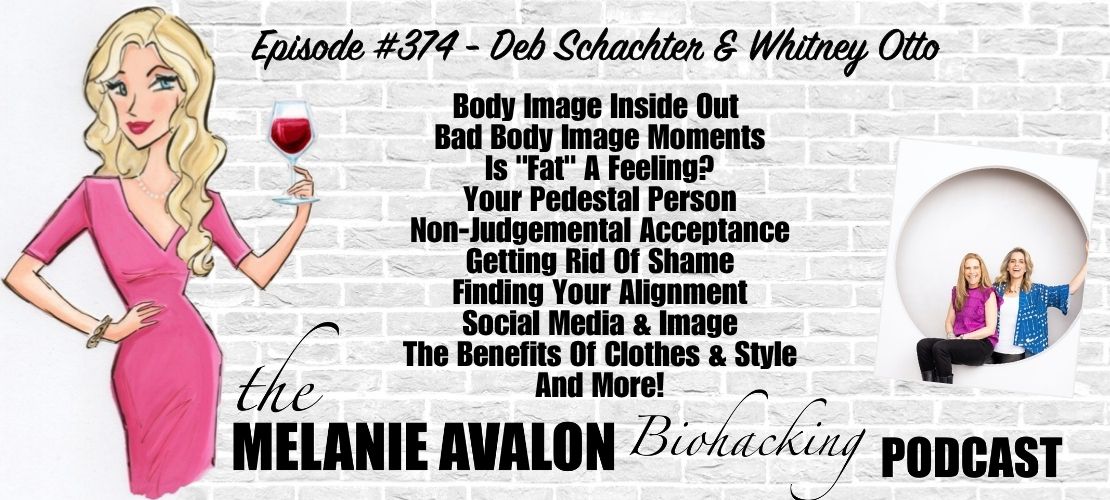
Deb Schachter is recognized as one of Boston’s leading clinicians in the areas of body image and eating disorder recovery. She has spent her 30-year career helping people unpack their body’s story and all of the wisdom it has to offer. She brings authenticity, curiosity and compassion to her work and emphasizes the profound power that connection has in the healing process. She integrates humor and mindfulness into her workshops, individual and group work and is inspired by how unique the growth process is for each of us. She believes wholeheartedly that we all have great wisdom inside and has seen how her confidence in her clients translates into change. Deb also trains other therapists and health professionals on how best to approach body image with their clients and staff. Blending together her grounded east coast sensibility and her playful west coast spirit, Deb has developed a language and an approach that is accessible to all.
Whitney Otto is a US world rowing champion and 2000 Olympic alternate who pivoted her skill and passion into helping individuals and teams achieve their goals through leadership development and clinical intervention. She holds a BA from Brown University, an MA in counseling psychology from Lesley University, and a Professional Coaching Certification from The Coaches Training Institute. Her clinical perspectives are informed by over a decade of experience treating eating disorders. Her inspiring and collaborative style was further honed through years of experience serving as a Master coach for physicians, elite athletes, entrepreneurs and C-Suite executives. Whitney serves as a Master Performance Coach and consultant at Valor Performance, and coach for R3 Continuum serving Senior level clients at Deloitte. Whitney also serves as Group Guide for CHIEF. She is the co-host of UNTRAINED, a podcast that launched in January of 2023 focusing on giving the tools and mindsets needed to help corporate executives “untrain” from toxic mindsets and perspectives that result in professional success at personal expense.
LEARN MORE:
Website | IG | LinkedIn - Deb | LinkedIn - Whitney
Book: https://amzn.to/4ehys4w
SHOW NOTES
SPONSORS & DISCOUNTS
PURVINE:
PurVine makes it easy to discover organic, lower-alcohol, and lower-sulfite wines that match your personal preferences. Easily scan bottles, take personal notes, save wines, get personalized recommendations, earn rewards, and more!
Go to PurVine.app and use code MELANIEAVALON for 10 welcome points.
IONLAYER:
Nicotinamide Adenine Dinucleotide (AKA: NAD+) is a true powerhouse when it comes to optimizing our health! This remarkable molecule plays a key part in many cellular processes, including energy production and DNA repair. NAD+ levels are depleted with things like stress, aging, alcohol, lack of sleep, and of course, too much partying . By supporting and maintaining healthy NAD levels, we can potentially unlock a multitude of benefits for our well-being. From increased energy and improved cognitive function to better metabolic health and even potential longevity, NAD supplementation can make a significant difference in how you feel and age. IonLayer provides easy, affordable access to NAD+ patches!! I think this is the easiest, most affordable, optimal way to boost your NAD+ levels! (They also make glutathione and B1 patches!)
Get $100 off with code melanieavalon at melanieavalon.com/ionlayer
FACEBOOK: Join Melanie's Facebook group for a weekly episode giveaway and to discuss and learn about all things biohacking. All conversations are welcome! IF Biohackers: Intermittent Fasting + Real Foods + Life
INSTAGRAM: Follow Melanie on Instagram to see the latest moments, products, and #allthethings! @melanieavalon
AVALONX: AvalonX Spirulina is out now! AvalonX supplements are free of toxic fillers and common allergens (including wheat, rice, gluten, dairy, shellfish, nuts, soy, eggs, and yeast). They are tested to be free of heavy metals and mold and are triple-tested for purity and potency. Get on the email list to stay up to date with all the special offers and news about Melanie's new supplements at avalonx.us/emaillist! Get 10% off at avalonx.us and mdlogichealth.com with the code MELANIEAVALON. Plus, text AVALONX to 877-861-8318 for a one-time 20% off code for avalonx.us.
FOOD SENSE GUIDE: Get Melanie's app to tackle your food sensitivities. Food Sense includes a searchable catalog of 300+ foods, revealing their gluten, FODMAP, lectin, histamine, amine, glutamate, oxalate, salicylate, sulfite, and thiol status. It also includes compound overviews, reactions to look for, lists of foods high and low in these compounds, the ability to create your own personal lists, and more.
EMF: Stay up to date on all the news on Melanie's EMF collaboration with R Blank, and get the launch specials exclusively at melanieavalon.com/emfemaillist.
TRANSCRIPT
Whitney Otto
What happened emotionally that I am suddenly focused on something that I do have, feel a sense of control over, that I can, quote, unquote, fix? What happened in my day, in my psyche, that might also be contributing to this?
Deb Schachter
What's happening in our bodies and what we perceive will happen relationally if we're in certain bodies can be the most powerful thing there is because r- relationships are the most powerful thing there is. We can feel so much shame about how much it matters what we're wearing, and the reality is that pressure is about all these other things.
Melanie Avalon
Welcome to the Melonie Avalon Biohacking Podcast, where we meet the world's top experts to explore the secrets of health, mindset, longevity, and so much more. Are you ready to take charge of your existence and biohack your life? This show is for you. Please keep in mind, we're not dispensing medical advice and are not responsible for any outcomes you may experience from implementing the tactics lying herein.
So friends, are you ready to join me? Let's do this. Welcome back to the Melonie Avalon Biohacking Podcast. Oh my goodness friends, what a powerful conversation I had today with Deb Schachter and Whitney Otto. I had been dying to do an episode on body image, but I needed to do it with the right people, with the approach and mindset that I agree with, that would actually be helpful, and not force you to be all happy and positive all the time or not have certain feelings. Deb and Whitney's approach is so incredible. It is all about curiosity, discovering where your body image issues actually come from so that you can have the healthiest relationship with yourself possible. I cannot recommend their work enough.
Definitely check it out, and we talk about so many things in today's episode, including what to do when you have those bad body image moments because, yes, they happen; whether or not fat is a feeling; what you can learn from who you identify as your personal pedestal person; the pervasive role of shame; why you should embrace clothing, style, and all the things, including how to do a closet audit; the effect of social media on our body image and mental health; and so much more. The show notes for today's episode will be at melonieavalon.com/bodyimage. Those show notes will have a full transcript as well as links to everything that we talked about, so definitely check that out. I can't wait to hear what you guys think. Definitely let me know in my Facebook group, IF Biohackers: Intermittent Fasting + Real Foods + Life. Comment something you learned or something that resonated with you on the pinned post to enter to win something that I love, and then check out my Instagram Find Me Friday announcement post, and again, comment there to enter to win something that I love. All right. I think that's all the things. Without further ado, please enjoy this fabulous conversation with Deb Schachter and Whitney Otto. Hi, friends. Welcome back to the show. I am so incredibly excited about the conversation I am about to have. What I'm really, really excited about is this is a topic that comes up tangentially and every now and then on various episodes, and yet I have definitely not done an entire episode dedicated to the topic and never personally gone into it and thought about it this deep. And this is something that I know I personally have struggled with historically and currently, and probably will, probably will ongoing, and I think a lot of people do as well, and that is the concept of body image. And what better people to talk to about this than Deb Schachter and Whitney Otto. They are the incredible authors of Body Image Inside Out: A Revolutionary Approach to Body Image Healing.
Melanie Avalon
They have really incredible bios. So Deb is recognized as one of Boston's leading clinicians in the areas of body image and eating disorder recovery. She spent a 30-year career helping people unpack this.
And Whitney is actually a US World Rowing Champion and a 2000 Olympic alternate, and she pivoted her skill and passion into helping individuals and teams achieve their goals through leadership development and clinical intervention. And they both talk about their stories in the book, which I definitely want to, um, touch on because they have some really, I don't know if the word, right word is cute, but, um, the, uh, wait, it's Crazy Raisin and, um, what was the other one? Crazy Raisin-
Deb Schachter
Fat Tamp.
Melanie Avalon
Yes, and Fat Tamp which-
Deb Schachter
Our dear pals, yes.
Melanie Avalon
Yes, so we'll have to talk all about those. I love this book, and I'm always ... I don't know if I'm hesitant, but I'm, I'm always intrigued and curious when I approach work about body image because I feel like there are so many different, so many different ways that you can approach it and recommendations that you can make. And sometimes I just know in the past when I've read stuff on body image, I've almost felt a little bit defensive at times when I hear about how I should or, you know, should not feel about it, and I just need to, like, accept myself and, like, and all the things.
And this book is very nuanced, very supportive, and it goes into so many topics. So they talk about what body image actually is, where it comes from, what creates it, why it lingers, how we actually should engage with it. There's tons of exercise that you can implement, and there's just so many topics that I'm fascinated by, so things like shame and jealousy, and there's even a really epic section on clothing and, like, how you should handle your closet, and there's just so much in here. So I'm really excited to see where this conversation goes. And Whitney and Deb, thank you so much for all that you do, and thank you so much for being here.
Deb Schachter
Thank you for having us. It's, it's such a delight when someone's read the book to hear the feedback and to hear the way that it's landed for you. It's, it's really moving to hear you talk about it.
Melanie Avalon
No, I, I really, really loved it, and I was kinda hinting at this with the defensive reaction I've had in the past to things, and I think a huge part of that for me is, not to go into, like, a very technical thing right at the beginning, but I'll, I'll tell you my biggest obstacle with body image, and then I would love to hear a little bit about your personal stories and, and what brought you to, you know, writing the book and everything. For me, I think the biggest obstacle with me for body image is Like I said, I've struggled with it a lot.
I'm kind of a control freak and a perfectionist, and I, and I talk to my therapist about this a lot. I genuinely feel happiest when I'm happy with my body image and when I feel good about my body and when it is a way that I like it to look. I, I genuinely feel happy about that. So when I have a negative body image, I almost see it as a good thing because I'm like, "Well, I need to be working towards the state that I wanna be in." So i- it's, it's like this weird thing where I, like, support myself having a negative body image in a way 'cause I feel like it's leading me towards what I wanna be, if that makes sense.
Whitney Otto
It gives you hope. You know, if, if my body image is bad, then if I can change it, manage it, fix it, then, then that gives me hope that things are gonna get even better. Is that accurate?
Melanie Avalon
Yeah. It's, it's kind of like being... It's like if I'm in a place where I don't have a good body image and I'm... And I would love to talk about what you talk about in the book about how it's really crazy how tran- like, how temporal body image is, like, and how quick it can change when, like, you c- you couldn't have changed that much in that amount of time, you know?
But basically, so if there's something I'm not happy about am- about myself in a given moment that's body image related, I just kind of see it as objective data. Like, "Well, Melanie, you should do better so that you can be the body image that you like." So it's kind of like stop complaining, I don't like this, and I'll be happier when I fix it.
And it's just always little, little things that are, you know, I feel bloated, or I feel, like, inflamed, or I feel... You know? And it's like how much can you actually be changing in that amount of time?
Whitney Otto
We always say, like, that's sort of w- how we can prove our own approach, right? That it, it... That much of it is an inside-out experience because how else could you go from a good body image in the morning and a terrible one in the evening when your body can't possibly change that much.
Melanie Avalon
Like, that fast. I know. It's very good, like, objective data.
Deb Schachter
It is, and yet there is so much that we can learn about what happens that makes that happen. What happens to make that happen.
Whitney Otto
Right. So we, we, we are trained to be curious about, like, how much salt did I have, and what did I eat, and what are my hormones doing?
And you know, we're trained to look at that data, but we're not trained around the data which, which we get got curious about in- which is all throughout our book, which is like what happened emotionally that I am suddenly focused on something that I do have feel a sense of control over, that I can, quote-unquote, "fix" to feel better? What happened in my day, in my psyche, that might also be contributing to this?
Melanie Avalon
It's so true and that, especially 'cause I mentioned me being a control freak, that part really landed with me. When you... Coming back to that about what people are controlling, like, feel- like, feeling like you can't control life and so you can control how you feel about your body, and doing so will somehow magically control your situation as well.
Like, I think that's what we delude ourselves into.
Whitney Otto
Yes, 100%. And, and that even, you know, as an author, right, like, we still have our own bad body image moments, right?
It's still a very old habit, but what we can do now is say, "Ooh, this is so interesting. Why am I feeling so negative about this body part? Why am I feeling so uncomfortable in my skin? What else might be causing me to feel this way?" And you know, we call them the body image muscles, but, but those are skills that we can practice alongside. You know, it doesn't need to be mutually exclusive, right? Like, you could still do whatever it is you wanna do to, quote-unquote, "fix," but you could also, in a parallel universe, say, "Hmm, I'm noticing that I'm really critical. What else might be going on, and what else might I need?" So I'm jumping right into the body image muscles, but that- that's what we want people to be able to practice, to have in their brain, that can accompany them when these moments spike.
Melanie Avalon
Yes. And I imagine... Well, actually, do you... I, I feel like there's a, um, the go-to answer for this, but I actually will be curious.
Is it a lot worse now with social media, or do you think it's always been pretty, pretty prevalent?
Deb Schachter
So, you know, there's a lot we could say. I mean, honestly, a lot of this data that we kind of discovered along the way and ultimately led to the book, you know, preexists social media.
Whitney Otto
That's true.
Deb Schachter
Yeah, yeah. A- and, and you know, the sort of the gift and curse of social media is that it's giving us a platform to really explore a lot of this stuff. And you know, even some of the themes that you mentioned, whether it's jealousy, whether it's, you know, body perfection, all of that, I mean, uh, what we hope is through the, the same tools that we offer, whether people are on social media or not, can really apply to social media, and that there's- there can be a real bridge to understanding more about what, you know, I would almost say people's relationship with social media in the same way that we talk about your relationship with body image. And that's something we really try and, you know, encourage people to think about, is thinking about some of the, the questions that we bring to the table around this, like alignment, and connection, and all the different ways that we think about what's happening in our emotional life and how does that im- inform our body image.
And what is happening in our relationship to these images that we're taking in, to, you know, the pictures that we share with people, and what's happening, what's the, what's... We, we call it... I- I, I love the term sort of dimensionality. Like, what's happening in those layers that we can really understand more? So rather than seeing it as sort of like one thing just affects the other, that there's so much dimensionality in there, and I think it, you know, we really hope to continue to help people to, to feel a little bit more equipped to look at that relationship with, with social media.
Whitney Otto
So if a, if- If we go with the biohacking metaphor, right? Like if I had an Oura Ring that had a bad body image metric, right? Could, could capture how many bad body image moments I had, how big the spikes were, like almost like a glucose monitor, right? If I had something that could capture that, what I would wanna be interested in is when did it get more neutral? When did it get better? When did it get worse? What were the environments? And I'd be wanna be curious about, you know, what social media accounts made it more positive, more negative, more neutral.
What people, what situations, what clothing, right? So it's almost like there is no Oura Ring or, or sensor you can stick in your arm to measure bad body image moments, but we can track them just by bringing awareness to our experiences.
Deb Schachter
And I would actually add on my Oura Ring might actually tell me when I'm on social media in the sense that, you know, we're really interested in how what we take in on social media and how it makes us feel in our bodies. That's something we talk a lot about, is both, you know, what we think about our body, but also what is happening in our body and how that might even affect how we feel about our body.
So, you know, I think everyone can relate to the experience of different reactions we have to when we see these different images and it, you know, it might be a field of poppies and that might make us exhale, but, you know, getting really curious about sort of the, the embodied experience of, of social media and then of course how it might in, in turn really influence our body image.
Whitney Otto
Right. So the kittens totally give me a good body image, right? The, like, most beautiful 52-year-olds th- in the universe, mm, not always helpful.
Deb Schachter
Likely altered in various ways.
Melanie Avalon
So, okay, first of all, that's an incredible analogy with the Oura Ring. Yes, I'm all about it. We should maybe talk offline about developing it.
Um, can you imagine? Actually, that actually gave me some clarity or insight into what I was trying to articulate at the beginning about what I struggle with because I was reading a... I don't know if I was reading a study or if it was, like, in a book, but it was saying that people following social media accounts, the effect that it has on a person's mental health and wellness depends on if they see it as inspiration and, and motivating. Like, I, like, like following, like, fitness accounts, for example. Like, I wanna be this thing, and it's motivating or inspiring compared to do they see it as just making you feel worse about yourself or competition. The interesting, like, layer there for me that I was, that I'm trying to articulate is, for me, I, I tend to be the former, so, like, following these accounts, I, I find them very motivating. I'm like, "Yeah, that's great. I wanna look like that. I wanna work towards that." So on the outside, it might seem like a positive because it's like a positive, you know, motivation thing. However, I still, in that moment, when I have... I still do not accept the negative... When I'm in a neg- uh, when I'm having a body image moment, like the ones you talk about, I just don't accept it about myself. I'm like, "That's not okay." It's like I have this, like, inner control thing that's like, "Nope, this is not okay, so we gotta fix this," and I feel like I probably should be more accepting of myself, but maybe not.
Whitney Otto
Anytime we hear the word should, some antenna goes up. What, what did you wanna say, Deb?
Deb Schachter
I was just gonna say, I, you know, I'm sort of like, "Ugh, let's jump in," 'cause this is, this is it, man. This is-
Whitney Otto
We can deconstruct it with you if you want.
Deb Schachter
Exactly. A- because I really love what you said at the beginning, Melanie, which is, you know, I think, uh, so often we, you know, have gotten the message because there is so much complex, you know, thinking about body image and the impact of all of this. You know, that, that either we sh- and, and none of these approaches, there's nothing wrong with any of these, but, you know, whether it's whether we should positize, positize it or, you know, override it or minimize it or, you know, there are all these different ways we should do something with it. And, and what Whitney and I have really found, I mean, we've been running these workshops for 25 years, is when we lean in, when we go towards what you're kind of describing, like, if there's something h- that, that we really believe there's something happening there. So it's not a matter of whether you should feel a certain way, it's that you do feel a certain way, and, and I, and I would hate for us to miss that.
Um, not saying we're putting you, we're putting you in the, on the therapist couch, but just that that's really where we believe the money is. I often talk about it like it's an indicator light, like on, on your car. And so there's something, there's a lo- we believe there's a loss if you do all this sort of, like, managing it as opposed to saying something shifted. It's worse, and that doesn't mean... I mean, people may have bad body image moments for years, but there are times that it spikes and there are times where it settles more, and we really believe the spikes are data points that you really w- we don't wanna miss because there's some, something really important happening in there.
Whitney Otto
So for example, I just wrote a Substack called Why I Googled Liposuction the night before we launched this book, Body Image Inside Out, right? And the-- obviously, I love a good irony, right? But obviously, I, quote unquote, "know better," right? But my body image was trying to help me with a real big feeling of vulnerability, and it's a very old habit.
"Oh, I know. How about we change this body that's feeling kind of exposed right now?" Right? So what I do is I go, "Oops." I catch myself, right? And then I get curious, like, "Huh, why am I doing this right now?" And then I have the opportunity to say, "Oh, I'm feeling really vulnerable. I'm feeling really scared." And then I have the opportunity to attend to that feeling in a different way. I could, if I wanted to, still continue on whatever fix-it plan for my body I, I chose, but even if we simultaneously practice, "Huh, what else is going on for me, and how can I attend to that?" Because what we have found is that body image is- almost becomes the scapegoat for so many different feelings, particularly because we live in a culture that orients our money, our attention towards all these fix-it Projects, right? And it's very compelling. Our body is, is our constant never-ending lifelong companion. So it is very user-friendly, right, to say, "Hey, just fix me and you'll feel better." And you do feel better. It's just that you feel better temporarily. And like, for example, if I had never s- said, "What's going on for you, Whitney?" that night, I wouldn't have had a chance to sort of comfort myself amidst a lot of vulnerability.
Melanie Avalon
Like with the liposuction example, and this actually relates into what you were saying about like the word should, and I th- I'm gonna th- pull together a lot of different things. I think the reason, going back to the beginning when I said I would sometimes feel defensive with other body image work, this came to me.
It's because if I ever read in other body image work, like, "You just need to accept yourself and feel positive," and, you know, "That's the way you should be," that's where my defensiveness would come out, 'cause I was like, "Well, what if I feel better though when I'm when I change or look different?"
Deb Schachter
Totally. Totally. We just did a big workshop on Saturday with clinicians. It was really cool.
We've gotten really great feedback from that community, and I ended up telling a story about, I talked a lot about, you know, this idea of also being accompanied when we're, when we're having that experience. You know? That all of that is another version of change yourself, right? That really what, what happens when we get activated is there's something really important emotionally that's happening, and so really staying with that experience. And, and that's, I guess that's sort of what I'm hearing in terms of what you're describing around the, around your own kind of response to that like, "Hey, you need to be different." I mean, it's, it's, it's ironic 'cause you're feeling like you should be different, but then they're like, "And you should have different feelings too." And I shared a story at the training where I talked about, uh, I re- recently got a hi- a hip replacement, and, uh, just lots of body image feelings during, before, during, and after, but particularly after in all kinds of different ways. And I talked about what it was like when a really dear friend of mine and I just really talked about like what was happening with my body image. Like places that looked different and felt different, and will I ever be this other version of me? And it was so profound to have, and she knows our sh- our jam and, and really just like was with me. And there was something so, you know, grounding and honestly I'm sure it helped my body image too. You know, that to be, to sort of say, "This is what's happening for my, for me right now," even separate from all the other, all the decoding and understanding is this is a s- this is an uncomfortable place, and I wanna be, I wanna be connected in it. I don't wanna just feel like I n- should be somewhere else.
Whitney Otto
Yeah. So I, I, I love Deb's story, and I lo- I just wanna... The invitation for you, Melanie, is if we take that I should out of the equation and say, "Huh. Okay. If you weren't supposed to feel this, that, or the other thing, like what are you feeling? What is your body feeling?" Because what we find is just being really curious about the specific sensations can lead us to some really rich territory, right? So my stomach feels bloated. Well, what does that feel like? What does it feel like when your stomach feels too big? You know, when we bring some deep curiosity without any judgment, we can discover things that we never would've discovered if we'd just jumped to the fix-it plan.
And that's what I like about, well, fir- what I like about our model is it can be an and, right? Like you can still go to the gym or do whatever you're gonna do, but you can do this first, or you can do this on the way. It's not an either/or. And also, you know, if the whole like accept yourself as you are had worked for us, we never would've written the book.
Melanie Avalon
I love the curiosity approach. I'm, I'm having flashbacks for me personally. I think probably one of the most impactful body, 'cause so you call them-
Deb Schachter
BIMs, the bad body image moments
Melanie Avalon
... Yeah, bad body image moments, uh, the BBIMs, that I had where I actually was, and it was, I, it was prior to reading your book, but it, it was so interesting to me that I, I really was just curious about it, and it's, it's like lingered with me to this day. And it was, it was a day when I felt, I don't know why, but I was ha- it was, my, my bad body image moment was like roaring, and I was just walking around Target feeling like, w- you know when it just becomes like that's all you're thinking about?
I'm like, "Why?" So like I was just like walking around Target thinking about how like horrible I looked, and then like a guy, a guy just like walked up to me and was like, "Excuse me. Can I ask you a question?" And I, and I was like, "Sure." And he, I'm paraphrasing, but it was something like he was like, "You're so beautiful. Like would you like to go out with me?" And I was like, "Whoa." Like, like it was literally... I politely declined. However, it was so fascinating 'cause I was like, "Wow, I can have this experience thinking I'm like the ugliest thing ever, and that's clearly not reality if this random stranger just walked up and asked me out." It was so fascinating, and I just, yeah, I just like marinated in that curiosity. And I actually think back to that moment a lot. It's been very helpful for my journey.
Whitney Otto
Why do you think back to it? And having read our book, what do you make of it?
Melanie Avalon
Yeah. So I think back to it because it, it really helped me realize that this experience I'm having, 'cause when you, when you're in the bad body image moment, at least for me, it feels like it's reality. So it feels like it's real, and this is facts, and this is how you look, and it's not okay, and it's bad.
But really when something like that happens, it shows you, oh, this actually... It's kinda like when you were saying like fat is not a feeling, or is fat a feeling? Both. Yeah, we can talk about that. So it shows you that this experience that you're having that is so negative and unpleasant might not be reality, clearly is temporary, and What is behind it so that you don't actually have to exist in that state, hopefully, going forward?
Deb Schachter
Totally. And one of the things I guess I think about, we talk a lot about this idea about having a relationship with your body image, that there can be some spa- Like, you are not your body image, which is ex- you know, sort of what you're saying, right? Like, and that can f- it can feel like they are totally one and the same. And so that opportunity to kinda, even... You know, I was thinking about that experience with this person. You know, there was a little bit of spaciousness you got, right? There was a little bit of room in there, and, and that can really be pro- profound, and that's part of the, why we have the tools that we do, even it may, if it may not be someone at Target, you know, actually saying something to us.
But how do we get a little bit of space in there? How do we start to see if we can help you get more curious about what's happening if you have a little bit more room and you're not one with your body image? And then the other thing I was thinking, I don't know if, Whit, maybe you wanted to answer this, but we talk a lot in the book about mirroring, and so it made me think about that experience of, of being mirrored well, you know, or sort of mirrored differently. I don't know if you wanted to add onto that, Whitney. I feel like mirrors are really your jam.
Whitney Otto
Well, I kinda wanted to back up and read a little bit from the book about is fat a feeling. Would that be...
Melanie Avalon
Oh, that'd be great. Yes.
Whitney Otto
So because it's, it comes up so often.
Deb Schachter
And fat is a really charged word, so it, it's, it's really c- it's, it's very complex. Yeah. Go for it, Whit.
Whitney Otto
So even, y- you know, we even talk about the word fat in the beginning to sort of say we wish we didn't live in a word that, in a world where fat was such a pejorative word, right? But we're gonna use it because we can't talk about body image without talk, without using this word, right?
So is fat a feeling? We get this question a lot, and it's complex to answer. It's an adjective, just like tall, freckled, or strong, but we wanna talk about how the perceived experience of feeling fat has become shorthand for complex emotions and the sensations that accompany them. Just gonna pause there, right? So often we say, "I feel fat," when we mean... You could ask 20 different people what that means. I- if you, if you really dug down, it would mean 20 different things. So we are gonna dig into the idea of how you feel in your body can become how you feel about your body, right? I'm having ugly feelings can become I feel ugly. I feel so big can be I feel so full of feelings. So for example, I feel so full of feelings can quickly become I feel fat with feelings. How many times have you said to yourself, "I feel badly about my body," when it would've been way more accurate to say, "I feel sad, I feel lonely, I feel confused or hopeless, or just, like, it's way too much"? So when we invite our clients, our workshop participants, the podcasters who are interviewing us to explore what fat means to them through words, art, you end up with very different language, colors, and shapes. So the way we describe our bodies holds a world of meaning, and learning to decode that deeper meaning is what this book is about. And decoding fat, ugly, full, whatever word you tend to use, it can be, is wildly interesting.
Melanie Avalon
And it's so true. I think about, like, the word fat... It's funny, I norm- normally when I'm talking about the problems with the dem- the definition of the word fat, it's in the food world because it's, I think it's so problematic that dietary fat is the same word as body fat.
And so there's, like... And, and now you add on this layer, it's, like, the feeling of fat. Like, this word, we, we, we just, we gotta, we need to do s- we should, like, petition.
Whitney Otto
Right? It's like the Eskimos with all their words for snow. Like, the US has the most definition words for, should have the most words for fat.
Melanie Avalon
We should. I mean, there's that, but we don't like the word should. But it would be nice if there if there was, like, 20 different words for, for fat instead.
Deb Schachter
Well, I think that's part of our wish, is that fat can get translated if, if that's the word that people use.
Whitney Otto
It's like a portal word versus a word.
Deb Schachter
Exactly.
Melanie Avalon
So going back though to your, both of your personal stories, and I mentioned the, the, well, you talked about the fat temp and the crazy raisin. What was your history both with this whole world and what led to, what led, what led to you guys meeting and doing, doing the book together and everything like that?
Deb Schachter
Well, Whitney and I met at a very different chapter of our lives. Whit was in her late 20s. I was in my early 30s. She was coming off the Olympics and a divorce from another Olympian. I was in the midst of God knows, one of my many, many long-term loves prior to meeting my husband. We met over a love of many things. And we didn't yet know that we were gonna love working on body image together, but it, it really just was organic, that part of the conversations we were having about love and all the other things was talking more about our bodies in ways that, you know, while we had both had eating disorders early in our lives, we had never really talked about it before, and there was just something really magical that happened in those conversations that we'd never really talked about in our own therapies. And again, I think part of it was, I mean, this is where all the, the muscles come from, all the really the, the core framework of the book is based on these early conversations in our friendship where we got to not only share what we were feeling about our bodies, but started to really notice that there were other connections and there were other things happening in our lives that were really informing that and were able to laugh about it and cry about it. And at the s- same time, we started to kinda weave that in. At that point, Whitney was still doing clinical eating disorder work, and we both started to kinda just weave it into the work we were doing with clients, and we just found that it really resonated for folks. And so ultimately we started running workshops. You know, small workshops with all kinds of different people and all kinds of different bodies, and a lot of experimentation to really see how could we, how could we have a different kinda conversation? How could we offer people, you know, really what you were saying, Melanie, which is a less shaming, potentially, you know, not only enlightening but Maybe creative, maybe silly. I mean, that's really what, part of what we pride ourself in is there's a lot of goofiness in our approach, and, you know, we really want people to not be afraid, that there's, there's really so much possibility in, in developing that curiosity. So, so I would say that's the, the origin story.
W- do you wanna take over on Fat Temp and Crazy Raisin?
Whitney Otto
Well, I just wanna... I think the one thing I wanna double-click on or, or really highlight is, you know, they always say, like, "Would you talk to a friend like that?" Right? It's like we hold space... Like, I could hold space for Deb's bad body image moments without judgment, with curiosity, with compassion. I couldn't do that for myself, and vice versa.
And we just noticed how different the conversation was when there wasn't all that judgment, and there wasn't all that habitual response, and there wasn't all that criticism, right? We just got somewhere very different, and that, that's the origin story, is like, what happened when we held space for one another's body images as you would a good friend, right? And that's sort of what Body Image Inside Out aims to do, is to help you become kind of that good friend and the person who's having the bad body image moment so that you can be both and learn more about yourself and come out of those just habitual, critical, fix-it patterns that so many of us have been raised in.
Melanie Avalon
Similar to the... It's not the exact same thing, the, the good- as the good friend, but I think something, something that's really helpful for me, and I talk about this with my therapist a lot, it's very powerful to think about other people's perspectives and how it can be so different from yours. And so, th- what I think about for me is, like, like, when it comes to celebrities, for example, there are certain celebrities that I just think are absolutely stunning and beautiful, and I know there are people that don't agree with me or, you know, or think that, like, other celebrities are stunning and beautiful.
So clearly, if we all can have different ideas about what we find attractive, this whole body image thing, again, it's just so, it's so... It's, it's not real. I mean, it is real. The experience is real, but-
Deb Schachter
Tell me what you think about this, Melanie, but one of the ways that we... One of our actually earliest exercises back in the old days, we used to call it the skinny girl, and its origins are this idea that, you know, w- it actually came from me running... I run a lot of groups, and, uh, it came from me trying to convince one of my individual clients to do a group, and her biggest fear was that there was gonna be a skinny girl in the room, which for her, Mel, you know, somebody in a tiny body and the body she could never have and so forth. Ironic, given that it was an eating sort of group.
But, but, but the reason I share it is because what we started to learn and why we ultimately came up with the skinny girl, which in our book is actually now called the pedestal person, but it's this idea that who are we drawn to and why? And again, really getting into the layers of that. So really seeing jealousy as, rather than something we shouldn't feel, and we should love ourselves, and all those things is, okay, so we are drawn to different people, whether it's at the gym, at work, when we're walking down the street, and social media, of course. And really inviting, again, that same curiosity so that we can really unpack that and asking particular questions that, uh, I'm a, um, sort of my big jam is, is a lot of the sensory stuff. Like, what would it feel like to be that person? What does she feel like in the morning? Where does she travel? What does her home look like? Who is she sleeping with? What kind of music does she like? You know, what is it like to... What does it feel like to be that person? And really, again, the body image is the package, but the, or the idealization is the package, but what is happening in the package that you really want? So it makes me think about what you're saying, that body image is, you know, or the, or the idealization or the, or the envy is also an invitation to figure out more about yourself.
Melanie Avalon
Yeah. I'm, I'm so glad we're talking about that.
That's one of my things in my notes I have written down about the jealousy, and I've written down skinny girl at the party with, like, tons of stars. So I'm glad that we're talking talking about this.
Whitney Otto
So Melanie, who is your celebrity crush?
Deb Schachter
Slash skinny girl slash pedestal person.
Melanie Avalon
Taylor Swift.
Deb Schachter
Okay, so can you tell us what is it about Taylor that makes you feel that way?
Melanie Avalon
Like, I could go, this could be a whole podcast.
Deb Schachter
I, I'm sure it has been, but, but, but we've never pedestaled person T- Taylor, so this is good.
Melanie Avalon
Oh, really? Oh, okay.
Well, yeah. Uh, obviously her music, her strength, uh, how she is just such a boss of a woman. I think she's absolutely stunning. I love how she goes against the stereotypes and, you know, fights the potential patriarchy, and yeah, I just, I just, I'm obsessed with her.
Deb Schachter
Well, how interesting. You didn't really say a ton about how she looked, did you?
Melanie Avalon
Well, so I'm, I'm being really... Okay. I, I should just, I, I should say it.
Deb Schachter
There's no should. There's no should.
But if, but if you wanted, I mean, so just to give you some examples, when we do this with clients, like, I'm thinking one of the, one of my faves that we did in the book is, um, one of my clients talking about Michelle Obama arms. And when we started talking about Michelle Obama arms, it wasn't about Michelle Obama arms, right? It was about who Michelle Obama is. It is the way that she moves through the world. Y- I mean, yes, it's about her awesome arms, but it's also about all these other things that come with those arms. So f- if that helps at all. You know, I mean, it often starts with the body, but it o- I mean, it's interesting what you're saying about being a boss and, you know, just all these ways that she's so in her power.
Whitney Otto
Right. And I'm, I'm listening like, "Oh, you kinda sound like you're describing yourself," but, like, where do you not, where do you feel like Taylor has something you don't?
Melanie Avalon
Well, so I guess the reason I'm hesitant is I'm, I'm actually embarrassed to say what I'm about to say, so I will say that. It's a very good mirror, though, for what I was saying at the beginning about- Preferring myself at different body states and, and cor- and by correlation body image states as well.
So Taylor has... Okay, I, I'm so embarrassed to say this. So Taylor has
Deb Schachter
If it helps at all, we, we both have ever-evolving people just like Taylor. They may be a little bit older, but, like, we have the same experience. Like, whatever it means to us is what it means to us, and I'm sure we'd be happy to share.
But just know that you are not alone.
Melanie Avalon
Okay, thank you. Thank you.
Um, so, so Taylor has had definitely her own weight journey. It's, her, it's, she's fluctuated in weight a lot throughout her career. She's been, like, very skinny. She's gained a lot of weight. She's lost weight. It's been a... And she talks about it in her songs a lot, which I really like, actually. So I was... I haven't posted it yet, but I always post a story of my notes before, um, that I, the n- like, the notes for this show, and I always do it to a Taylor Swift song. So I'm gonna post it after this, but I always pick lyrics that reflect the topic. So I picked from the song The Archer because she says, like, "I cut off my nose just to spite my face, and I, you know, hate my reflection for years and years." And she has a lot of lyrics about her body image and how she looks and how she feels, um, which is always weirdly comforting to me 'cause I'm like, if she feels that way and she's Taylor Swift, um, it makes me feel better.
Deb Schachter
But that's part of what makes her Taylor Swift, right? If she were always, you know, sort of like, uh, just not being herself, that's p- what's... I mean, I'm, you know, I'm not a, I'm not a theorist on her, but I'm just, that's part of what makes her so amazing, is that she owns that.
Melanie Avalon
Exactly. And s- and here's the thing that I'm embarrassed to say.
So in her weight... I love her all the time. I do think there are times that aesthetically she looks, that I am more inspired by how she looks-
Deb Schachter
When she's in a certain body?
Melanie Avalon
Yes, and that is very concerning to... I, I don't like her any worse or less. I, I'm obsessed with her. I love her.
I do objectively think she looks better at certain... And she has looked better at certain times compared to other times in her, in her timeline. And so that's how it's kind of like a mirror for how I see myself, where I, I do, like, objectively, I think, like myself better at certain points of my timeline. And so I do that looking at Taylor as well, but I don't ever wanna be like, oh, I, I wouldn't think any less of her at a different state that she's in as who she is, but I do, like, objectively, aesthetically, think she looks better at certain times. And I'm h- I am very embarrassed to say that.
Deb Schachter
Well, I was gonna say, can you just... Would you mind saying a little bit more about why you feel embarrassed about that?
Melanie Avalon
Yeah, because it, it seems so shallow to be like, "Oh, I, I think she looks better at maybe this weight compared to this weight." It just, it feels shallow. It feels like why do I even... Like, why would I even ta- like, fix- not fixate, but why would I even, like, talk about that or think about that when it's, she's so amazing and great. Like, why am I even, like, thinking about that I prefer when she looks, like, this way versus a different way?
Deb Schachter
So if it's okay, I'm gonna just offer you one of my skinny girl/pedestal people, and I don't know if this will be helpful, but mine, and I've heard this from many of my clients, so another, another biggie, a Jen Aniston fan, right? So if you get people talking about what they... If, if they really think she's their person or they think she's, you know, the, the, the hottest thing, that what is it about her?
I'm thinking of one of my clients. I remember her saying, "Well, I just imagine she answers the door and she's wearing these jeans that just, like, hang on her hips and a really cool, like, white tank top, and it's just, there's just, like, an ease to her." So that experience, I mean, that's just a mini example of it, but, like, starting to unpack what might the body look like that may come with a certain life. And I'm not saying it's not about the aesthetic too, but getting curious about, you know, w- what we maybe all imagine, you know, or some of us imagine Jen Aniston looks like when she's, you know, plodding around in her house in her cute little jeans. That comes with all these other things, how it feels to be in those jeans, how it feels to be in that house, whatever we imagine that house looks like or that she always has friends around her or, uh, 18 dogs. So I think there's always more to learn about what comes with that body, and it doesn't necessarily... It isn't just about the shape, and if it is, that's fine too. But I think it's interesting and, uh, you know, I don't know if we will have the time to do it here, but I'd be super curious, like, in that right body or the body that you like the most that she's lived in, what do you, what do you like about it? What do you imagine it's like to be in that particular body, or why do you idealize it?
Melanie Avalon
Yeah, no, that's very enlightening for me. The two thoughts I had about it, I think it's two things. One is that, like what you were talking about with when it's that certain body or clothing or whatever it may be, that it's, like, the vibe of that person. So I think when I see, like, really thin, I, I associate that probably with control and, like, being on point and, like, having everything put together and, like, curating an image that society really likes, and those are probably all thing- uh, those are all things that I want to be. So the, the vi- the, like, control vibe and the idealized society vibe is something that, whether or not that's good or bad, is something that I have always strived for, I guess.
So that's probably a reflection. And then the second point was I do think I historically... I, okay, I know what a lo- I know what a lot of it is, and I don't want to go on a whole tangent about this, but I think when I first started doing, like, when I went to school at USC in LA and I was doing, like, film and theater and I was doing a lot of, like, background work on a lot of different TV shows and things, I was, I always literally got I was really thin and then I always got, like, applauded for that for, for like castings or like clothing and like the wardrobe people and I think I really started getting like dopamine hits from it. And so I think I fell into really wanting to like exist in that state and being scared that somebody was gonna like take it away from me or something.
Deb Schachter
Yeah. So I really feel like this really taps into, in some ways, maybe the biggest discovery of the entire process of writing the book, which is actually the intersection of body image and relationships and really, you know, whether it's on a micro level or a macro level, really how much what's happening relationally can really... Or what's happening in our bodies and what we perceive will happen relationally if we're in certain bodies can be the most powerful thing there is, because r- relationships are the most powerful thing there is, so-
Whitney Otto
'Cause we all, as humans, want belonging, and that thin body of yours got you a lot of belonging, right, in those rooms.
Melanie Avalon
Yes. Yeah. No, definitely.
Deb Schachter
Yeah. I guess I just wanna slow it down and say, you know, what's it like?
I'm not... Again, I don't wanna sound like a therapist, but what's it like to sort of think about that rather than it, what sound, what started as embarrassing is actually about something much bigger, which is about... It, it... The way you were describing it was a feeling. It wasn't just the body, but it was the feeling that came with that body.
Melanie Avalon
Yeah. And it, and it's interesting.
So the two things that I mentioned, and then the embarrassment, it, it helps the embarrassment with the feeling. Like, what is the feeling of it? That, that I feel like I can say and not feel embarrassed about. I still, I still feel really embarrassed to, especially with just like society and, and things I talk about on the show, and, and I feel very embarrassed that I prefer certain aesthetics.
Whitney Otto
I wanna back up a s- a second. I love where you're going, Deb, but I just wanna back up with the shame, because we have a whole section in the beginning, why do I feel so much shame when I think about my body? And shame is one of the things that makes our work the hardest, because it so runs throughout negative body image. So there's a cultural norm for us to criticize ourselves, right? People feel great shame about the fact that they are so self-critical. It complicates body image work because we wanna hide that which makes us feel s- ashamed, right? Like, nobody wants to... People hate talking about body image because there's so much shame in there, right? Like, I'm not supposed to feel like this. It's not one of my values. I'm certainly not supposed to feel that this, any of these feelings about somebody else's body, right? But w- yet we've all been conditioned to do that, and the only way through it is to talk about it. But that's gonna make us feel shame.
So we just wanna really normalize that shame that comes up, and applaud you for sort of pushing through it, because if you don't push through it, you can't get to the conversation that Deb was inviting you into, which is to really explore, like, what is here for me? Shame tends to shut down the conversation before we even get to have it. And we have such a shame-driven culture that teaches us to feel at fault for not, A, not achieving the perfect body, and then to have feelings that we haven't achieved it or we would like it. Right? It's just everywhere. Deb, you wanna say more?
Deb Schachter
No, I think that, I think it was great. And I think, you know, we often start with that because, again, part of what makes it hard, you know, we've, we've figured out the, hopefully, the, the right recipe to get people to talk about body image is they're embarrassed that they feel it.
So yay you, I'm so glad you put it out there because it really gave us, is giving us the chance to really poke around and, and all the things that you're describing are so normal, and we all feel them.
Whitney Otto
Yes. We all feel them somewhere in there. And we all feel things about our Taylor Swifts.
Deb Schachter
Totally. And, and I remember when we first came up with, I'll just say this real quickly, the, the skinny girl exercise, I remember doing it with my family, my extended family. Not everybody had a looker, right? But they might have, you know, like, my cousins who are in New York and are, like, super cool and well-read, and their, theirs was all like, "Oh, it's people who've published 14 articles," and you know, like, it's about whatever is your currency. So we all have these feelings.
You know, again, we live in a culture that supports this and we're, we're visual people, and there's lots of reasons that it, it lands, you know, in the body and about the body and all of that. But we all have envy, and we all have reasons that we have that envy. And honestly, at the end of the day, most of those things are about, you know, being connected, being seen, being understood, being celebrated. But it, yeah, it's super universal.
Melanie Avalon
I love the shame topic and actually, so I, 'cause I'm realizing I have talked about this occasionally on different podcasts and the, the framing I use to talk about it and not be as embarrassed or shameful, and I actually agree with this framing so that's why I'll be curious your thoughts on it.
Okay. So like, the, the show Love is Blind, for example. I don't know if you guys watch that show.
Deb Schachter
I don't watch it. I know a little bit about it, but I know people love it.
Melanie Avalon
I don't know why I'm so obsessed with it. I don't watch reality TV and yet, I, that show I watch every season. I'm just, I just love it.
And you know, the whole concept is, is love blind? Because the, the contestants, they talk to each other and date before they've actually seen each other, and then they get, they propose. So, um, it's all about, like, is love blind and, you know. So I find it really interesting because I feel like evolutionarily we're attracted to people and bo- and different body types and different things from an, I think from an evolutionary perspective, that's something there. Like, it's something that our body knows because it's looking for the best genes to mate with. I'm like- I don't think love is blind. Or, or not, maybe not that it's not blind, but I do think it's important that we are with people that we're attracted to, just from, like, a body perspective. Mm-hmm.
Deb Schachter
Totally. It's funny, it makes me think about, I remember I had this woman in one of my groups, and she was so embarrassed to admit that she felt so differently about her husband depending on what his haircut looked like.
And it's not necessarily... Right, it could be good haircut, bad haircut, whatever, but again, it's almost like b- body image inside out, but somebody else is... You know, sure, the attraction piece, there, not there, we, we all know there can be a strong distinction between those two. But I think there are ways, not only because of, you know, maybe some of the traditional stuff like taller men or, you know, thinner women, but also, like, I remember when we actually broke down the haircut piece, it was about all this other stuff for her. It was about looking more professional, looking more capable. He had really bad ADD, so it really made her sometimes feel like she was the one managing everything. You know, it was about all this other stuff, and I, I guess I can speak for myself and say I know I see my husband differently depending on what else is happening in the relationship and what else is happening for him, and, you know, there are all these different... Uh, to me, it feels like it's just another version of that in a way. Not, again, I don't wanna dismiss the important of attraction, but in terms of what accompanies whatever that physical experience is, and then what that, the meaning that comes with it.
Whitney Otto
It feels like so many body image conversations morph into, like, "But I'm not supposed to ca-" You know, in order to achieve body image, whatever, status, I c- I can't care about appearance. And we think that's bullshit.
Like, we are who we are, right? And we can love beauty, and we can love things be- being attractive, and we can care about how attractive people are. All we're saying is that we can also use these negative moments and these feelings we have to learn more about ourselves. Because, you know, if you've... You know, by the time you're in your 30s or your 40s, you've figured out you're attracted to patterns in people. You're attracted to people who, you know, move through the world in a certain way, and it's not just, like, you like blondes, or you like brunettes, or you like people with curly hair, right? There's so much else going on in who we are attracted to, and we're just saying, this can actually, like, help us learn more about what's going on beneath the surface. But not to negate the surface. Go at it with the surface. That's fine. We're just saying there's other layers you can explore.
Melanie Avalon
Maybe a good example of just how true this is, I'm, I'm prepping another interview right now for Sarah Hill. She has a book called The Period Brain.
She talks a lot about how, like, women in, when you're in your follicular phase, you are attracted to a certain... You're attracted more to the, um, like, the type of man that, it's all about, like, getting pregnant essentially. So it's-
Deb Schachter
I was gonna say, like, who would make good babies.
Melanie Avalon
Yes. And then, like, in the luteal phase, it's more about the caregiver who's gonna, like, raise the children. So you can have-
Deb Schachter
Oh, that's so interesting.
Melanie Avalon
Yeah, so, like, based on your hormonal cycle, you know, if say you're, say you're with, like, a boyfriend or a husband or something, you could feel different levels of attraction, and it's the same person that you're with, but it's based on your hormones and the cycle that, the part of the cycle that you're in. So just, yeah, speaking to, like, the layers of attraction.
Deb Schachter
Totally. Totally.
Melanie Avalon
One, okay, one little topic I just would love to talk about briefly, 'cause I'm obsessed with clothing. I loved your chapter, or I don't remember if it was, like, a chapter or section, but you have a-
Deb Schachter
A chapter
Melanie Avalon
... chapter. There was a chapter on, on clothing and how we should handle our closet, and I know we don't have, like, a ton of time, but just, like, some highlight takeaways, how should we handle clothing?
Because it is sh- it is fascinating. It's funny, my therapist asked me once, when I first was starting to see my therapist, who I've been with for, like, five or six or seven years, I think, 'cause when I go to the therapist, I, like, I don't have makeup on, I don't, like, wear... I, I wear just casual stuff, and that's the way I, I am normally, except when I go out. I love getting dressed up. I love gowns. I love all the things. And I remember my therapist was like, "What feels more like you? Like, you sitting here on this therapy couch, or you when you're all dressed up and glammed up and in gowns?" And I'm like, "Honestly, like, when I'm dressed up and glammed up in gowns." So I'm, I'm fascinated by clothing, what it says about us, how should we handle our closet. Yeah. Yes, clothing.
Deb Schachter
I mean, there are a lot of different sections in there, but I actually loved the therapist interaction that you described because that's, that's a beautiful question, and, and I loved your answer too. I mean, we... You know, one, one of the things that we found, you know, we talk a lot about these bad body image moments, and 99% of the time, they usually occur when people are getting ready to go somewhere.
Getting people talking about, you know, what, where they're going, what's coming up about what they're wearing, you know, whether it's a college reunion or a business meeting or a job interview or a date or whatever. I mean, there's so many different feelings, so it can be really... You know, I really think there's a, a lot of cool stuff in the same way that we've been describing to, to get to when you start to really get curious about your relationship to what you think you should be wearing, what you should look like, and what's, what are the feelings that are coming up about going. That's what's sort of one of my favorite pieces of this, and, um, we have a, a subsection in that chapter called the body image, I think it's the body image Super Bowl, where it talks about weddings particularly. And I really like it not only 'cause it's a fun topic, but because I think weddings sort of capture that every single person at a wedding has so many feelings about being at that wedding, whether you're the bride, whether you're the mother of the bride, whether you're the single friend, whether you're the, you know, brother no one talks to. There's always gonna be feelings, and so often that those play out in what c- what comes up around what you're wearing. So I guess that's just one piece of how I think about The experience not only of our cl- well, I, I think I'm gonna hand it over to Whitney for the closet, 'cause I feel like that's really, of something she's so beautiful, s- speaks so beautifully about. But I, I really like thinking about the, the sort of getting ready, you know, it's a term we learned maybe when we were getting ready for school dances or something, but we, we all have to get from, you know, not being ready to being ready to, to go, and all the things that can come up in there. And again, so often it's relationally just woven with such important information about who we think we're gonna see, who we wanna be, who we don't wanna be. There's so much good stuff in there. So I just, I guess I just invite listeners to, to really bring in the curiosity and the compassion in those moments, and really, there's just so much to learn.
Whitney Otto
I'll share a quick anecdote. My... I was helping my 13-year-old daughter get ready for a party, and it was a big party. And normally, like, I look at this child and I'm like, "I have no idea how to teach you about body image." Like, and you don't wanna learn it from me. But we had this moment, and she was trying to adjust the straps of her dress 'cause they weren't right for her. You know, and we were going up with the straps and down with the straps, and can you do it a little more up and a little more down? And I was kind of, I was like, "Oh my God, I..." You know, I will do th- I said, "I will do this one more time, but first I need you to describe three ways you're feeling about this event." Because obviously her anxiety or her, the strap isn't right wasn't about the, the dress, it was about the event, and I think that's what ha- tends to happen with our clothes, right? Like, it's not right, but it's like, well, what are you actually, what i- isn't feeling right that you're trying to fix with this? So that was just a, a little anecdotal story.
But what I tend to think about with our clothes, it's just a chance to practice. It's just a chance to practice alignment, right? How do I feel today? I feel like, I feel like a red ballgown, right? So what's a red ballgown appropriate outfit I can wear today, right? Or I'm just feeling like I wanna hide, so I'm gonna put on this, like, big muumuu dress. So I feel like I want something really comfortable. I feel like I want something soft. I feel like I want something sleek and hard and tough, right? What, I wanna look strong, so I'm gonna show off my arms. Whatever it is, and particularly to be, to... It can be an act of self-care, right? Like, I had an event. I didn't wanna go. I knew I was gonna have all sorts of horrible feelings when I was there. So I was like, "Well, what do I wanna feel? I wanna feel strong. Well, what outfit is gonna help me feel strong?" So it can be just like we're in dialogue with our body image, just like we're in dialogue with ourselves, we can be in dialogue with our closet, and it can just be a practice.
Melanie Avalon
Yes, and that's why, that's a reason that I loved that section so much because, and here we go back to, like, the, the feelings and the judgment and the shame and things. I personally have found clothing to be powerful in that way that you were talking about, Whitney, where, like, if I wear a certain outfit, it does make me feel strong and powerful and in a good vibe.
Which I think is why I answered my therapist that way, because it's like when I, when I am wearing an outfit that I love and I'm feeling good, I feel like I'm... Not that the outfit makes me my true self, but I feel like it's the high vibration state that I want to be in and, like, like to put out, and I feel like I feel more confident putting that out when I feel, when I am, like, dressed up and wearing the gown.
Whitney Otto
It's, like, aligned with who you are. It's an exclamation point.
Deb Schachter
Yeah, that you really wanna connect to.
Melanie Avalon
Yes, exactly. And, and so I experience that, and then as, as the, the, uh, the theme of what I experience and what we've talked about, then I feel, I'll have, like, residual shame about like, oh, I shouldn't, I shouldn't, you know, care that I feel like I look good in this outfit and feel good right now.
Like you know, there's just so much judgment.
Deb Schachter
Which is so funny. Like, if you were really thirsty, you wouldn't be like, "You know, I'm just not gonna drink water bec- before I go to this-"
Whitney Otto
Or I shouldn't drink water.
Deb Schachter
Yeah, right. Exactly. I shouldn't have thirst. You know, like, it's just interesting how you're describing it.
Whitney Otto
You've got this little shame, shame creature following you around everywhere you, you go.
Deb Schachter
Yeah. If you wanna have us back, we'll, we'll get more into internal family systems and body image.
But that, that sounds like there's a lot to learn about that shame, that shaming part. Sounds like that part has a big job.
Melanie Avalon
No, I was, I was actually thinking, 'cause this is for the biohacking podcast, I would love to have you guys on the intermittent fasting podcast. We didn't really talk much about, like, diet or anything on this show.
I, I feel like there could be a really good dialogue for that, that audience as well. And we could talk about anything, of course. Yeah, if that would be of interest.
Deb Schachter
Yeah, totally. There's one other thing I wanted to just say about clothing before we wrap, which is the other thing I, uh, Whitney reminded me of it, is this idea that there's so much pressure in that experience that often we think it's about the dress, but it's actually about what's happening.
And so there can, we, we can, I, we can feel so much shame about how much it matters what we're wearing, and the reality is that pressure is about all these other things. So again, I think part of it is the compassion around, like, oh, that's why I'm standing here looking at 18 pairs of pants on the floor. It's not that I'm just, like, this, whatever, you know, superficial, horrible person. It's that I'm trying to figure out... I mean, I think, what, what's the line we have in the book? Something like, "I don't have the right pants for a shitty dad."
Whitney Otto
For a shitty dad dinner.
Deb Schachter
For a shitty dad dinner, what am I gonna wear? You know, like, w- if I find the right pants, somehow this night will make sense, you know?
So there, I think there is a way to really, again, really honor, like, while these moments can feel one-dimensional, there's so much happening in there that really is, is much deeper. And so I would just say, you know, like, shame, shame has its own role, and w- if we can bring the sh- curiosity even when the shame shows up, there's s- there's a lot to learn.
Melanie Avalon
No, I, I love it. And I actually, like, looking at my notes on the clothing section, I, I have written down, "Do this," and it's the, the closet inventory and going through. Actually, this is, like, multitasking, 'cause I also have a personal goal of Like decluttering and like getting rid of stuff. So I love the idea.
Deb Schachter
Well, they're really related, right? It's sort of saying what feels, you know, we, we, we didn't get as much into it, but like what aligns for us, what feels true.
Whitney Otto
I just currently have every- almost every article of clothing of mine floor because I wanna go through it. I'm like, "Who's Whitney now?"
Deb Schachter
Yeah. And we're always changing. And what, what are- like you said, whether it's the gown or the cowboy boots or the, you know, army shorts, like we- there are different parts of us that, you know, feel more true in this moment, and I, I kinda love that.
Melanie Avalon
Yeah. So I, I find this personally very helpful, empowering, that I can choose the clothes that support how I, you know, how I feel and who- and support me, and that's okay.
Whitney Otto
No, that's, uh, that's more than okay. That's like amazing. 20,000 body image Inside Out points to you.
Deb Schachter
I mean, it's, again, it's no different than saying, "God, I woke up this morning and I just felt like raspberries," or, "I, you know, I love this song," or, you know, that's sort of another piece that I really s- I'm so passionate about is like resonance. Like how do, how does our body tell us yes or no?
So, you know, the more that we can really trust that our body does have that information, there's, there's lots we can do with that.
Melanie Avalon
Okay. Well, this has been absolutely amazing. Thank you. Thank you, guys.
Thank you so much for all that you're doing. How can people do your workshops? How can they get the book? Where should we direct people?
Deb Schachter
So the book you can find at any bookstore, including the Amazon bookstore. And we both work and live in Boston, and Whitney, you can speak obviously to your practice.
I have a private practice. I run groups. We, you know, b- do both in workshops for folks that wanna do body image work. We also work with clinicians who are interested in learning about our approach, and we're starting to create more content so that people can actually access that on our website. We'd love for anyone to follow us on Instagram, we're at Body Image Inside Out, and I'll hand it over to you, Whit.
Whitney Otto
Yeah. So I'm an executive coach, Whitney Otto Coaching, and I have a Substack called Chief Energy Officer, where I s- talk about how high-achieving women can learn to steward and manage and preserve and build their energy because so many high-achieving women are exhausted.
And so much of what I learned about energy I learned through understanding body image better and understanding our patterns and understanding all- how unconscious patterns tend to run so much of our energy. So Whitney Otto Coaching is where you can find all my stuff.
Melanie Avalon
Amazing. Well, we will put links to all of that in the show notes. And, a- again, thank you ladies so much for what you're doing. This was so incredible.
Rapid fire, super easy question. It's just how I always end the show, and it's because it's something very important to me. So what is something that you are grateful for?
Deb Schachter
I'm gonna say writing the book. I know that's super cheesy, but we're a year and a half out from the pub date, and at this point, it just feels really cool to have something that we've worked so hard on all these years that we can share with people.
And I guess I just wanna tag that to say it's just been a delight to talk to you, and you have s- such great questions, and it just really, it's been really so cool to learn a little bit more about you and your body image.
Whitney Otto
Yeah. I would say I'm really grateful for this conversation, and most of the podcasts we did were right after we launched, and we were so fried and so exhausted.
And getting to do this a little bit further out when we are both, you know, a little bit more-
Deb Schachter
Well, better rested
Whitney Otto
... rested, and we understand in an embodied way more about what we were saying and are teaching. So, and to get to speak with people who are open and curious and deeply invested in these topics is, is a real privilege.
Melanie Avalon
Well, thank you ladies both so, so much. And yeah, like I said at the beginning, have not done an entire episode on this topic and was hesitant and nervous going, like just starting the book because of my, you know, how I felt in the past. And literally, friends, I cannot recommend this book enough. So go get it now.
And yes, would love to talk to you guys in the future. Thank you so, so much.
Deb Schachter
Thank you so much.
Whitney Otto
Thank you.
Melanie Avalon
Have a good rest of your day.
Whitney Otto
You too.
Melanie Avalon
Bye.
Deb Schachter
Bye.
Melanie Avalon
Thank you so much for listening to the Melonie Avalon Biohacking Podcast. For more information and resources, you can check out my book, What, When, Why, as well as my supplement line, AvalonX.
Please visit melonieavalon.com to learn more about today's guest, and always feel free to contact me at contact@melonieavalon.com. And always remember, you got this.