

The Melanie Avalon Biohacking Podcast Episode #347 - Alisa Lask
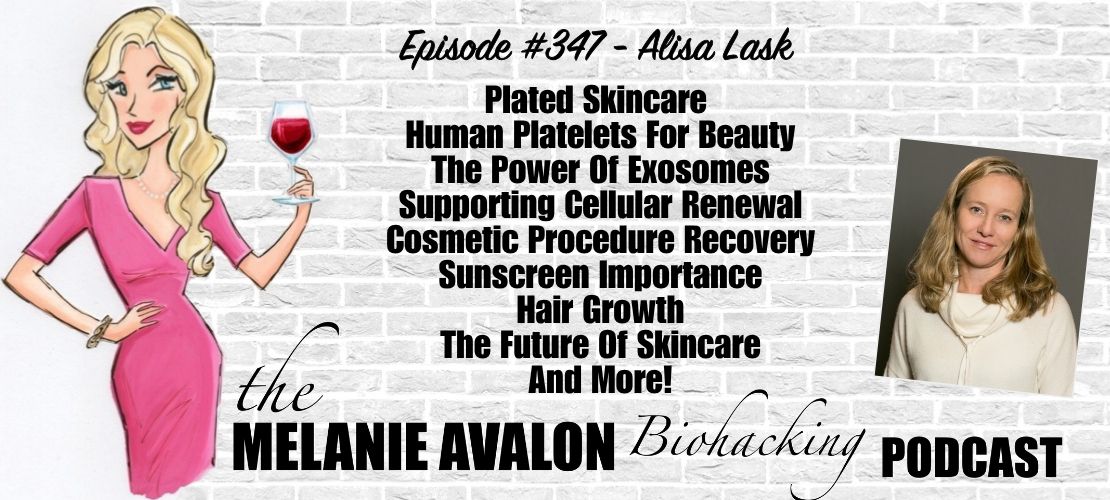
Alisa Lask - CEO of Plated Skin Science, the market leader in exosomes skin and haircare. Alisa has a proven track record of leading complex organizations in aesthetic, clinical, and cosmetic sectors through leadership roles at Galderma, Allergan, Zimmer-Biomet, and Eli Lilly. Most recently, Alisa led Aesthetics at Galderma as Vice President and General Manager in the US. During her tenure, she oversaw 10 FDA approvals and several sales force expansions.
LEARN MORE:
SHOW NOTES
SPONSORS & DISCOUNTS
GLOW:
Melanie Avalon created Glow to be her ideal coffee. Made from 100% specialty grade Arabica beans, Glow is organically grown, rigorously tested to be mold free and free of contaminants, and thoughtfully sourced from sustainable, women led farms. Glow is thoughtfully sourced and roasted to preserve high levels of coffee’s primary antioxidant, chlorogenic acid (CGA), to support metabolic health and helps you glow inside and out! Get it at glowcofeeco.com
FACEBOOK: Join Melanie's Facebook group for a weekly episode giveaway and to discuss and learn about all things biohacking. All conversations are welcome! IF Biohackers: Intermittent Fasting + Real Foods + Life
INSTAGRAM: Follow Melanie on Instagram to see the latest moments, products, and #allthethings! @melanieavalon
AVALONX: AvalonX Spirulina is out now! AvalonX supplements are free of toxic fillers and common allergens (including wheat, rice, gluten, dairy, shellfish, nuts, soy, eggs, and yeast). They are tested to be free of heavy metals and mold and are triple-tested for purity and potency. Get on the email list to stay up to date with all the special offers and news about Melanie's new supplements at avalonx.us/emaillist! Get 10% off at avalonx.us and mdlogichealth.com with the code MELANIEAVALON. Plus, text AVALONX to 877-861-8318 for a one-time 20% off code for avalonx.us.
FOOD SENSE GUIDE: Get Melanie's app to tackle your food sensitivities. Food Sense includes a searchable catalog of 300+ foods, revealing their gluten, FODMAP, lectin, histamine, amine, glutamate, oxalate, salicylate, sulfite, and thiol status. It also includes compound overviews, reactions to look for, lists of foods high and low in these compounds, the ability to create your own personal lists, and more.
EMF: Stay up to date on all the news on Melanie's EMF collaboration with R Blank, and get the launch specials exclusively at melanieavalon.com/emfemaillist.
TRANSCRIPT
Alisa Lask
you have thousands of exosomes. They're like, think about it, in today's world, it's like text messages cells send to each other and tell them what to do.
We have built a new category in skincare with gliated skin science. Like we have absolutely built a new category. Now everyone's jumping into our category, so I think we're just trying to set the bar high so you can't just like come in and say you have exosomes. Beauty isn't about products, it's about consistency. Like your skin remembers every habit and like, you know, you're continuing to age, you're continuing to have these stressors. So, you know, it's important that you just have consistency.
Melanie Avalon
Welcome to the Melanie Avalon biohacking podcast, where we meet the world's top experts to explore the secrets of health, mindset, longevity, and so much more. Are you ready to take charge of your existence and biohack your life? This show is for you. Please keep in mind, we're not dispensing medical advice and are not responsible for any outcomes you may experience from implementing the tactics lying herein.
So friends, are you ready to join me? Let's do this. Welcome back to the Melanie Avalon biohacking podcast. Oh my goodness friends, I am honestly blown away by the science of the skincare that is found and plated. This is the only skincare on the market, yes the only one, which uses exosomes from human platelets to support the cellular regeneration of your skin, reduce senescence, fight aging, all the things. Like I talk about in this episode, I was a little bit suspicious of the products because as you guys know I am obsessed with clean beauty and safe skincare and I have very stringent standards. Plus the word exosomes can be a little bit of a buzzword, so I didn't know if this was the real deal. It is.
Prepare yourself to be mind blown by what goes into these products. I use them every single day of my life and expect to do so indefinitely. You can get them at melanieavalon.com slash plated that's P-L-A-T-E-D and in today's episode we talk about so many things, including what exosomes actually are, how they work in the body, how plated gets them from human blood, the sourcing of it, and how it actually stops blood from going to waste, how to use these products to support your skin, or for specific things like recovering from cosmetic procedures, and how to use them to support hair growth. We also talk about the importance of sunscreen, the best cosmetic procedures to do, the future of skincare, and so much more. I am so grateful for this conversation with Alyssa Lask. It truly blew me away. The show notes for today's episode will be at melanieavalon.com slash plated skincare. Those show notes will have a full transcript as well as links to everything that we talked about, so definitely check that out.
I can't wait to hear what you guys think. Definitely let me know in my Facebook group, IF biohackers, intermittent fasting plus real foods plus life. Comment something you learned or something that resonated with you on the pinned post to enter to win something that I love, and then check out my Instagram, find the Friday announcement post, and again comment there to enter to win something that I love. All right, I think that's all the things. Without further ado, please enjoy this fabulous conversation with Alyssa Lask. Hi friends, welcome back to the show. I am so incredibly excited about the conversation I am about to have. I've been looking forward to this for months and months. I've been personally trying the products. I have so many thoughts and it's about a topic that I know you guys are super obsessed with just as much as me and that is effective, clean skincare.
Melanie Avalon
And so the backstory on today's conversation, I had been hearing about a brand called Plated. Actually for a while, I'm trying to remember when I first heard about it. I think my, I was hearing about it primarily from two sources. A friend was telling me that it was the most effective skincare she had ever tried, even way better than other brands I would talk about. And then the second was actually my esthetician. Every time I would go in, she was like, you need to try these products. And to be completely honest, I have been so fixated on the problems of endocrine disruptors and conventional skincare makeup and the issues of what we're putting on our bodies all the time that I had become so wary of other skincare brands that I probably, to a negative extent, wasn't really even considering other skincare brands because I had found my pillar ones that I knew were founded on safety. And I was like, I'm just gonna work with these brands. So even though I kept seeing this brand Plated, I wasn't really looking into it.
And then I got an email from, I don't know if it was direct from the company or the PR firm, probably the PR firm. And I was like, okay, I'm gonna sit down and actually look at this brand and see what's going on. And I was very intrigued because they use, the word Plated is referencing platelets and exosomes. And oh my goodness, friends, I was blown away. First of all, the ingredients are super amazing, super clean, no problematic toxins or endocrine disruptors or anything like that. But then on top of that, the science of what is in these products is really profound. We're gonna talk all about it in today's conversation. I know it's something that people probably have a lot of questions about and can be a little bit seemingly controversial because it is human-derived platelets that is the source material here. So in any case, I was all on board then, I got the products myself, I've been using them for I think about three months now. And I'm addicted and obsessed, not gonna stop using them.
So it is such an honor to be here today with Alyssa Lask. She is the CEO of Rion Aesthetics, which is the parent company doing this incredible technology. So we'll talk about what all she's doing, but Plated is the skincare line and then there is another line where they're working on injectables and then another future line, which I will let Alyssa talk about as well. But I have so many questions. I am so excited about this. Alyssa, thank you so much for being here. Oh, and I will say, by the way, you have a really insane resume working at other major companies. So you've been senior leadership roles at, let's see, Allergan, Zimmer, Biomat, Eli Lilly, and you have a love of equestrianness, which we can talk about. And you're currently in Kentucky with the horses. So in any case, back to you. Thank you so much for being here.
Alisa Lask
Well, thank you for such a kind introduction. And it's just so exciting for me.
After I've worked, like you said, I worked at Allergan, I worked at Gell-Durham, a big brands. Gell-Durham, you know, Dysport, Restylane, brands we've all known in injectables. And now, like I've always said, like, shouldn't we just restore biology, not just mask it? So it's so fun to be able to bring this brand to life in the U.S.
Melanie Avalon
Oh my goodness, I love this so much. And also, that's a, I'm just gonna start with that topic in general. I've been a little bit haunted by this whole world of anti-aging. Well, I mean, in general, the biohacking world, a large part of it is this pursuit of longevity and, you know, increasing our health, increasing our lifespan, our health span, reducing the signs of aging.
I'm really fascinated by the overlap of the world of aesthetics. So like in the intro, I mentioned that my esthetician first told me about plaited. So like, full disclaimer, I go, I go to her for, I mean, I use wrestling for lip filler and I get a ZMN for, for the equivalent of Botox. I love like enhancing my features with that stuff. And I'm also super obsessed with preventative and effective and scientific skincare. And I guess the question here is, I'm curious what you think, because I love what you just said about, you know, shifting from like that arm to more of, you know, what's actually preventing and, you know, helping our skin. How do you feel about the overlap of those two different arms? Because I feel like there's like this bit of like guilt that people have in the injectable world, that that's not, you know, like an okay thing to do, especially like in our, in the biohacking health sphere. I don't know if you can hear the question that I'm getting at here, but I'm curious what you think about those two different approaches to beauty.
Alisa Lask
Yeah. And listen, I've worked in the medical aesthetic space for over 10 years now. So I think we've had a lot of great innovation and a lot of incredible products along the way and what, you know, great discoveries, right? Botox, how it was discovered with, you know, you know, not a cosmetic use, but then kind of moved on and did all these wonderful things. But I think what people are asking for now is they want biotech and beauty to merge.
Right. They want that idea of beauty is regenerative, you know, not that, you know, you're just kind of, you know, putting something in that's a filler or things like that. And I think that's where the mindset is really shifting across consumers, which makes it so exciting.
Melanie Avalon
time. You said that so much better than I did.
Yes, I love it so much. Okay, so was there like, what was the moment that led to this pivot and diving into this world of platelets and exosomes? Was there a discovery or what happened with that?
Alisa Lask
a big discovery at the Van Cleve Regenerative Medicine Center in Rochester at Mayo Clinic, so in Minnesota. And they had been studying stem cells, these physician scientists and internationally recognized and regenerative medicine, I mean, very well published. And they were studying stem cells and for 20 years they couldn't figure out why patients, you know, there was only five or 10% of them that actually walked across the stage that you got really excited and you said, oh my gosh, the results were incredible. And then the other 90, 95% didn't have those kind of results. And I think they kept saying, gosh, like we need to figure this out.
So they spent a lot of time studying cardiac patients. And what they discovered was these ones that were walking across the stage and doing so well had this high propensity of these regenerative exosomes. And we used to think of exosomes as trash. So it's really that trash to treasure, right? We thought it was all about stem cells. And the discovery was that it's actually not the stem cells, it's the exosomes that are the secret. They're what's actually giving the messages to the cell that tell each other how to heal. So what we've been able to do is learn from all that heart tissue work in the lab. And, you know, I think what I realized when I saw all of that was that this science is too good. We could use that same intelligence to repair skin.
Melanie Avalon
And that actually speaks to definitely the vibe in the stem cell world because we were talking before this, you were asking if I had, like if I had experience with exosomes. And I was saying that the closest I had come was I got stem cell injections. And I remember when I got stem cell injections, people were saying, make sure it's actually stem cells, make sure it's not just exosomes because the idea was people think they're getting stem cells, but actually they're getting exosomes. And then the idea there was that that wasn't as good.
So it's really interesting to hear what you're saying now, which is that the exosomes might be where a lot of the magic is. Can you just for listeners, so my understanding was that exosomes, like the idea in my head is that they're like this shell carrier thing. But what actually are exosomes compared to like the stem cells?
Alisa Lask
a great question we get asked that all the time because there's all kinds of you know it's just like a buzzword now and people aren't really understanding but in your body you have thousands of exosomes they're they're like think about it in today's world it's like text messages cells send to each other and tell them what to do and you have exosomes that signal cell death you have exosomes that signal inflammation and then in particular the one we're really interested in is this exosome that we get from platelets that sends the signal about renewal and that's what's really exciting is that we figured out platelets are such a great source for this because when you slice your hand what's your first responder you see blood you see platelets which you know and the platelets are the first responder to that site of injury and so they have a very unique ability to produce these renewing exosomes at very high quantities that allows us to again have biotech meet beauty and have them in you know a bottle that we can take home that's off the shelf which we've never been able to do i mean exosomes are very they have like a lipid bilayer around them so if you think about it i'm a farm girl like you said so if anyone you know gets farm fresh eggs you can leave those on the counter you don't have to put them in the refrigerator you don't do anything to but if you would crack them the contents actually spill out and the egg is no longer good so this exosomes are like that they have this amazing lipid bilayer that protects them but if it's damaged then you know that's when you need to do refrigeration and all these things to make sure that it you know is still viable so
Melanie Avalon
So the platelets themselves create the exosomes and the exosomes are like the message that is sent?
Alisa Lask
It's just like a message in the bottle and so if you think about the other nice thing about platelets because a lot of people go Ooh platelets are a cellular. So you're not Transferring DNA.
There's there's nothing they literally just we have a very special proprietary way that we condition them to produce these Special what we call renewisms that we use in platelet, which are those renewing exosomes
Melanie Avalon
So the source material, you're getting it from people's blood?
Alisa Lask
We are. So FDA approved blood centers. We take it at the end of its viable life. So we wouldn't ever be taking it away from patients in need.
We're actually helping the blood centers because we're purchasing something that they would have to pay to throw away. So it's a wonderful, you know how you said you love this idea of like, you know, that we're trying to do everything we possibly can. This is something that's incredible, right? Because we're giving this wonderful center money for things that they can, you know, do to continue to advance what they, you know, all of the platelets and the blood and all the things they collect. And then it's perfect for our process. So we freeze it and we send it to Rochester, Minnesota, where we have our manger
Melanie Avalon
infection. That is so cool. Oh my goodness. That's like the coolest fun fact ever.
Okay, so we can get these platelets from anybody's blood or the does the filtering process only take certain platelets from certain parts of the blood. Like how does that how does that work the source material.
Alisa Lask
Yeah, so I mean, a lot of this is proprietary, but just at a high level, we have a certain age range. You know, so I think it's a misnomer that very young people are good for this. They're not.
And then obviously, as we get older, not as good either. And I think I often get asked, well, gosh, Alyssa, why can't you just hook me up to a needle and extract my own blood? Well, it's the problem with that is it's just like with PRP, right? You don't, when you get older or you don't sleep well, or you actually really need true, you know, renewing exosomes, you're not, your body's not producing them. And so what we found from all, I mean, we have $150 million in research, 20 years of studying all this. And what we found is it's better to pull these platelets and then produce, you know, exosomes from these pool platelets because we can get consistent levels every single time and make sure that we've got the exact same thing.
Melanie Avalon
Wow, okay, this is a little bit of a nuanced question, but is there only like one type of exosome that comes from platelets or is there a lot of different potential messages that it can send?
Alisa Lask
Yeah. So actually it's a really good question because platelets can send inflammatory messages as well.
And so that's why our proprietary process, you know, is that we condition them to send these renewing platelets exosomes. So yes, you are correct that. And again, you, in your hand, you have, there's thousands of exosomes in your body. And so that's why it's just really important that, you know, when you see people using this word, exosome, like it is very difficult, like this is truly biotech meets beauty to extract exosomes, human exosomes, and get them in a bottle that you can use in a cosmetic that shelf stable. So this is why this is an incredible technology that came out of all these years of research and these, you know, internationally recognized regenerative medicine experts.
Melanie Avalon
So like for a normal person, you're mentioning the role of platelets in the body and say a person cuts themselves. Does the amount of time for that cut to heal, does that really come down to the effectiveness of the platelets and or the exosomes involved?
Alisa Lask
Yeah, I mean, okay, it's complicated, right? Because it also depends on are you taking aspirin or blood thinners and how old are you as you think about it when you have a child that falls down or when we are younger, we remember we had bad accents and how quickly we healed and now like I sliced my hand chopping something and two weeks later, I'm still managing the thing just as you age, like your body just doesn't have as strong of regenerative, you know, exosomes that are, you know, coming to these sites of need.
And that's why we pool these and are able to get kind of what, you know, be so successful. That's what we're doing.
Melanie Avalon
Okay, because normally, if you get a cut or something like that, you are getting the exosomes endogenously from your body, like it's coming from the inside. So putting it on the exterior, does it work the same way?
Does the signaling get into the cells the same way? So that's a wonderful question.
Alisa Lask
So we in with places can science we have done some really good studies that showed penetration to the reticular dermis And so what we do know is they don't just go to any cell they go to the cells that are in need And so that's what's so cool about the technology, right? It's it's very intelligent You know, we always talk in cosmetics how we're chasing actives Like what's the new active ingredient this year and I think about exosomes or intelligence
Melanie Avalon
So they go intelligently to the local part that needs it or systemically.
Alisa Lask
No, the local, like these wouldn't travel systemically. So it would be the local part on you as you're applying it topically, which is important, you know, like you're not going to, these are not going to travel systemically through your body.
So, you know, if you only applied on your face, it's not going to, your neck's not going to suddenly start looking.
Melanie Avalon
looking better, right? Okay. Gotcha. That's like a whole side note tangent.
I'm haunted by that concept as well because, you know, I've had a lot of episodes on, you know, like topical glutathione or like topical other things and I don't understand like how it goes everywhere. And so that's the whole thing. How many exosomes are actually in the products themselves? Yeah. Yeah. So we.
Alisa Lask
a lot of work on this and this is also what's important because it's not just the source, it's the quantity. So if you think about exosomes, you need a certain decibel level in order to have the renewal that you need, right? So if you only have a few exosomes, it's not going to have the impact that you need and you can't just apply it once.
So we have trillions of exosomes within our bottle. So obviously depending on which formulation and which size, et cetera, et cetera. But what we've done is we've really tried to biohack and understand, you know, what is it that your skin needs and what level in order to get the results that you want.
Melanie Avalon
Okay, yes. And because we can talk about, you know, the different product skews and lines that you have. And just another question while we're talking about putting this on and using it and the effect.
So is there a difference between the effects of these products when you actually have some sort of imbalance in during the skin? So I like I was reading last night, one of the studies that you guys had done on like reducing redness in the skin. So is there a difference between like if there's like an inflammatory issue, you know, be it redness or, you know, even like a cut or like recovering from some sort of cosmetic procedure compared to just aging. So like wrinkles, I'll say wrinkles and then compared to just like baseline, maybe like young skin, nothing from the outside that we see is wrong. What is the role of like the state of the skin that you're putting it on? Because I would assume what I'm trying to get to and I'm wondering is like, what is the difference between like the message that the exosome has versus the message the skin is sending about what it needs?
Alisa Lask
Yeah, yeah, I mean wonderful question because you're right when you don't have as much damage You don't have as much needs but I like to think most of our clinical trials have been on patients over 45, right? They've had you know, every day we walk outside.
We have some type of oxidative stress on whatever environment So if you think about it the exosomes, you know, the goal is to how do you restore homeostasis? how do you kind of get back to that that sort of you know, happy level and I think that the exosomes, you know These these platelets arrived exosomes that I and I really do believe it's not just any exosomes these platelets arrived exosomes So we have the renewal sums and plated skin science, you know, really have this unique ability to kind of go to I guess the best way to say this is that what we've seen this clinical studies is that they there's varying results So if you have you're worried about the appearance of brown spots Like we see improvement of brown spots if you're worried about skin luminosity we see improvement in skin luminosity Obviously we see the most impact when people are you know Have had the most problems right or the most challenges so some of the didn't wear sunscreen was outside all the time Obviously they're going to have a lot more challenges than someone that you know Has been very good about sunscreen doesn't have a lot of stress is younger that sort of thing So we've seen it across a lot of areas not just damaged skin, you know after you know If you're using the word damage, but you know post cosmetic procedure So we have done studies there and had incredible results You know the big hack there is if you're going to get a procedure and use platelet Dried exosomes and plated you should pre-treat the skin to really rev up the fiber blast, but we've seen you know Very remarkable recovery sort of that return to normal life and getting you know That downtime that you have post blade of laser or post any type of laser
Melanie Avalon
So you have the calm product, is that for mostly for recovery from procedures?
Alisa Lask
So plated calm was developed for post cosmetic procedure. And that's the one I said the hack is just, you know, start using it as much as you can, a few weeks, a week, whatever it is, before you get your, whether you're going for microneedling, you're going for halo moxie, you know, whatever that may be, because I think you're going to see much better results and you're going to have really an improvement in that downtime.
Melanie Avalon
Yeah, just as a quick rabbit hole tangent, is there any one sort of those types of procedures that you personally believe is most effective for people, like the microneedling, PRP, all the different things?
Alisa Lask
Yeah, that's a very good question. I would say that I'm not as big of a microneedling fan.
I love Cyton. I love the Cyton laser. So halo moxie, you know, I mean, all of that. So I think there's a place for all of those, but I, you know, I think the RF microneedling, I've seen a couple examples where people have gone too deep, they've lost fat pads, especially patients on GLP ones. So I haven't, you know, that's, that's not kind of me, but I do believe people should be doing some sort of laser resurfacing. I think it's really important as a part of multimodality for your skin. What about IPL? So I have done IPL. Absolutely. I have a, I'm an Irish, so I have a lot of skin, you know, like spots and stuff. So I do, do IPL, yes.
Melanie Avalon
So you have also the intense and the daily serum. And my understanding is that people can start with the intense and then transition to the daily. So is that correct?
And or what is the difference between those two products?
Alisa Lask
Intense was really developed for those with more skin challenges. So someone like myself, Irish skin, been in the sun a lot, and the daily was meant to be a lesser concentration, a lower concentration of our platelet-derived exosomes and plated, and for those that are younger, or perhaps less damaged skin, the daily is also a bigger bottle, so it lasts longer.
We do see patients that buy the Intense and transition to the daily. I think this is why it's really working with your provider and understanding your skin and your needs and really developing something that works for you. But listen, I use Intense every single day. I've been doing that since we started, and I haven't switched to daily.
Melanie Avalon
Okay, so when did the brand launch? So we've been around just about four years now.
Okay, how long was the like the R&D leading up to that process? About 15 years. Oh my goodness. I'm really curious, just the product iterations when you were formulating, because I imagine there was, I mean, there's the whole thing with the technology you have to purify the platelets, the exosomes, all of that, but then also just like the formulation of the product itself. And I know like hyaluronic acid is used as a carrier and the ingredients are relatively pretty minimal, which is something that I appreciate, because I don't like seeing like this massive list of things that I don't know what they are. What was the evolution of actually creating the serums themselves? Was there a lot of different iterations of it? Or was it pretty intuitive? Which route to go with the other ingredients? Or what was it like?
Alisa Lask
So you're right, plated, you know, depending on the skew, it's like 12 to 14 ingredients. So it's really, if you have sensitive skin, it's a great option.
And the story behind this is quite interesting. So imagine the scientists in Rochester, Minnesota, they're working in the labs, and if anyone's worn gloves, latex gloves or lab gloves, your skin gets a bit aggravated, right? It's a bit annoyed. And so they were starting to put this human platelet extract, these platelet-derived exosomes on their skin, and they were starting to realize like, wow, the skin is looking a lot better. And the founder and his wife were like, wow, we should like think about making a skincare. And so they started just playing with formulations and trying to keep it really simple and just, again, focus on the hero, which is the platelet-derived exosomes and what environment it needed. I think that's the big thing is exosomes like a certain pH. They don't like a lot of ingredients. So the most of the things that we use in my sunscreen and my cosmetics aren't ingredients that are good for exosomes. They actually destroy them. And so that's why with plated skin science, you have to put it on first on clean skin and you have to wait five minutes for it to dry. And that is critical because you can destroy the exosomes if you just whip on a bunch of sunscreen or whatever other things you use.
And that's why I put it on last thing before I go to bed or first thing in the morning, brush my teeth and do a few other things, and then you're ready to layer. It layers very well.
Melanie Avalon
I just I love the ingredient list.
I love the way it like feels and smells like it just feels so like I just feel like I'm getting like the the ingredient that I need it doesn't feel like it has all this like filler and stuff in it which it doesn't and you mentioned clean skin and layering other products which I do do as well is there a difference between well should you do it because I think I saw somewhere recommended twice a day is that significantly better than once a day and if you're just doing it once a day is there a difference between first thing in the morning versus at night like I've heard that I've heard that when you're sleeping that your your skin goes through more like renewal type processes so that you know maybe that could be more beneficial then but I have no idea if that's accurate or not so like timing and dosage.
Alisa Lask
Yeah, so in our studies, we did look at it twice a day. I think people could argue either way. At night, it's like you said, or in the morning, you have so much oxidative stress. And this is like 10 times the power of vitamin C from what we've studied in terms of that oxidative stress reduction. So I think that it just really depends on your routine. I don't think there's a right or wrong. And really, you can start with one bottle and do twice a day. You can go once a day. Just how fast you want to see results, right? That's really it.
So if you're a patient, once a day is fine. And like I said, if you have a affordability, then you do it three times a week instead of every day if you're worried about costs. But it's better than not doing it. I think the most important thing is your skin likes consistency. So it wants it every day, right? Not just one time. What we've definitely seen is you can't just have it be one and done. That's not going to get you what you want. So.
Melanie Avalon
By one and done, you mean like one application or one bottle's worth? Correct.
Alisa Lask
One application yeah yeah so that's not you know it's beauty isn't about products about consistency like your skin remembers every habit and like you know you're continuing to aid your continue have these stressors so you know it's important that you have consistent.
Melanie Avalon
Do you personally layer it with other products yourself?
Alisa Lask
I do. I do. I absolutely do. So my anti-aging hack is not too complicated.
I'm a Midwest girl. I grew up in St. Louis. So I really believe in hydration, sleep, sunscreen. And I get my sunscreen from the EU because there's three ingredients that are not approved in the US. And so when I come back, my husband thinks I'm a nut, but I make sure that I get my sunscreen there because it lasts longer. And then I think the skincare and then we talked about the lasers.
Melanie Avalon
Sorry the ingredients are not approved here, but they are approved in the in Europe so for the sunscreen that I use yeah Oh, wow, okay normally the other way around with things
Alisa Lask
Yeah. Yeah. Normally it is the other round, but sunscreen that there's, yeah. And it's not all sunscreens in Europe. You have to look and like do your research, but there's, you know, the higher brands like Vichy and the Roche, we say in Europe, not here, have these other ingredients that allow it to last a little longer, which for me, cause I'm outside a lot, walking the dogs, playing with the horses. It's important.
And so that's why I get every time I go to Europe, that's I'll like throw clothes away to make room for my skincare for my sunscreen.
Melanie Avalon
I do wear sunscreen every day, like of the year.
Alisa Lask
every, every day, but I, you know, I do, I think it's important for your skin to get some, some amount of light. And so, you know, I walk the dogs early in the morning before like the, you know, the sun is up.
So you're getting some natural vitamin D. Otherwise, you know, you're getting anything because I wear long sleeves and no wear gloves and things like that if I'm out a long time, but you know, I do get some.
Melanie Avalon
the ingredients that are approved in the europe and not here are they like a zinc oxide type thing or they like a chemical block
Alisa Lask
Yeah, if you just Google one of the three ingredients, I don't remember what the names are, but it'll come up.
Melanie Avalon
Gotcha. Yeah, sunscreen is something where, cause I don't really wear sunscreen and I also don't go outside that much, but I just know, I don't know.
I've like thought a lot about that. I'm like, should I have been wearing at least like a zinc oxide type sunscreen like every day for a long time? Like how different would my skin look now? I'm not sure.
Alisa Lask
Well, we have an interesting, you know, I've been in aesthetics. Well, we had an interesting photo come in.
It was a female track driver and she didn't wear sunscreen and her left side of her face had so many more wrinkles in the right side because she was in the car all the time. And just that light, you know, was, was aging her skin. So I believe in sunscreen every day, every day, you know,
Melanie Avalon
No matter what. I've seen that. Yeah, that picture. It's wild.
And then so the eye cream, so you know, the eye area is extremely delicate, like the skin around that area. So how is it specifically formulated to support that? And I love it, by the way, just, just to like fangirl on it a little bit. I love the applicator. It's the best applicator for an eye cream ever. Because normally you're like, I don't know, my other eye creams, you have to like, they're in like in a jar and you have to like get the stick and like, I don't know, they're just not easy to apply. This is like a pump system and it comes out so easily. And I just love putting it around my eyes. And I've definitely seen a difference using it.
So I love the eye cream or serum. I keep seeing cream. I love the eye serum. How is it specifically formulated for the eye?
Alisa Lask
Yeah. So the plate of eye serum, like the whole idea was, you know, so many people are concerned about sort of that puffy, you know, your eyes get puffy and things like that.
So we do have caffeine in it. We've got a vitamin E, nine minutes, nine minutes sides. So there are other ingredients that really target the area that's around your eye. That's just very, very thin skin. Okay.
Melanie Avalon
Awesome. And then the hair product, how is it different?
Alisa Lask
Yeah, so I, in the beginning, we really focused on skin and then we had a lot of people saying, gosh, why don't you guys look at hair science? Cause we're actually working on some broader things on the FDA side for the hair. And so we decided, and I think this is a big thing for people to know, we don't put the plated name on it unless there's proof. So it's not promise proof.
So we formulated it. We did a double blind, randomized placebo controlled trial just like you do in pharmaceuticals. This is not common in cosmetics. Cosmetics days are usually five patients and it's open label. So we did that with people with problem areas. Now these are not people with shiny scalp. So I just want to make sure we're setting the stage here. Right. This is, you know, post-menopausal, postpartum men earlier, you know, and I also want to say hair is multimodality. Like it's not always one thing, but we developed the hair serum. We did the clinical trial. The results were phenomenal, published in a peer reviewed journal. And so what we saw was that, you know, even the patient that was in the control group. So again, this person got placebo for six months. His hair worsened. If you just look at the photos, it was like, wow. And then what they have is called a crossover, which means that they cross over to get plated skin science. So we went from six months of placebo, very frustrated because his hair was not getting better, switched to plated. And then at the three and six month mark, so you can see how much better he looks. So, you know, just those kinds of things and the results just across the board. As you look at, you know, really tight photographs of the scalp and kind of the condition of the scalp and just the hair thickness, the breakage, all the things people complain about and we're just across the board improvement, but hair takes four to six months. So the big secret there is you have to be patient.
It is, you know, you want to like increase that growth phase and it just, it seems like forever with hair, but it does take a while. And the other really important thing is, you know, it's, you don't need to do too much. I think people with hair issues like want to dump the whole bottle. It's one droplet. One, there's eight, one dropper, eight droplets. So just tiny little areas, spread it around. You don't need to go crazy, like soaking your scalp. A little goes a long way. There's, there's almost only so much these cells can uptake these exosomes. And so at some point you're just wasting it.
Melanie Avalon
Wow, okay. Yeah, I've been fascinated by just the hair renewal process. Actually, now that I think about it, way back in the day, like how long ago was this? I don't know, over a decade ago, I think I first started experimenting with red light before it was like super popular because of the hair growth potential. I forgot about that.
The thing about hair that is, I don't know if it's like sad or it's kind of stressful, which is perfect because that's what it is, is the fact that I know that if you have a really stressful event or something or time, then because of the hair growth cycles, the effects of that might show up later. There's this whole waiting game thing that you just can't get away from. Yeah, it's really, really interesting to hear about that with the hair growth cycles and the effects of it. Wow, that is super cool. What would happen if you put it on your eyebrows or your eyelashes?
Alisa Lask
So, you know, that someone asked us that great question. And so we are doing a postmenopausal postpartum study right now and they are actually applying it to their eyebrows. So again, we don't put the plated name on it unless we have proof, not promise. So we're waiting for the study results and you know, we'll see how that goes.
So, you know, I think as you get around the eye area, I think it's important that we, you know, really make sure, you know, it's safe and things like that before we brought it to market, but it's definitely something we're studying.
Melanie Avalon
And what about eyelashes?
Alisa Lask
So again, another area we are, I think we're going to wait and see how the eyebrow goes. And then I think we'll try to tackle that with a different type of formulation that's just, you know, safe if you got it in your eye and things like that. Because people don't like, you know, some of these products can, you know, get the red lines and irritations around the eye and they work, the eyelashes grow, but you know, you have all these other issues that develop for, you know, taking them. So I think there's a big market there.
And I think, you know, even for men too, beards, right? We've gotten a lot of ideas about that. The poor men that get forgotten that have, you know, some patchy areas in the beard. So I think there's so much opportunity.
This is again, we're just, we're so early into this that we have so much more to study and learn.
Melanie Avalon
I would be so excited about an eyelash one. When was it? Maybe like a year and a half ago, maybe two years ago I experimented with eyelash extensions and they were so great and I really liked them and then I stopped doing them and it was so scary. I was like, I have no more eyelashes. So then I was looking for like the perfect growth serum and things like that. So yeah, I mean, they're back to normal now, but I would be really excited if there was you know, a eyelash serum here.
What has been the, because this is just so interesting and what I really, really love about all of this is all of these clinical trials that you're doing and the science and the research. What has been the biggest barrier to creating these products? Is it the technicalities and funding of doing studies? Is it actually like the, I don't know, the controversy or the consumer perception of using human derived platelets? Like what is the biggest barrier for you guys?
Alisa Lask
So it definitely hasn't been like consumers are worried about reset. I mean, their consumers are really like excited about this.
I mean, again, we're taking biology and bringing it to beauty. I think the biggest challenge for us was just early on. And, you know, these are like we talked about before, you know, these, this is biology, right? This is not just adding chemicals or plant X is all plant, you know, whatever. We're doing human derived ingredients into your, you know, skincare. And so it was just understanding the quality, you know, what measures we're taking. And I will tell you, normal cosmetic projects have one like batch of quality control, right? We do six different things, not to mention everything we're doing in terms of screening and all of that. So it's 100% safe when a consumer uses it.
Melanie Avalon
Awesome, actually I was having a call literally yesterday about you mentioned plant exosomes. Do you have any thoughts on plant exosomes?
The person that I talked to was saying that they were essentially like the equivalent of human exosomes and are being underused. Yeah.
Alisa Lask
Yeah, so that's nice to talk about, but I haven't seen a shred of evidence that shows that any type of plant exosome can communicate with a human cell. So if you think about it, plants, you know, exosomes are probably like you eating a carrot, get nutrients, but it's totally different from human-derived exosomes that we're talking about and the kinds of things that they can do.
Like we are not a plant, and most of the time when they say plant exosome, it's like extract. It's not even like truly exosomes, because this is complicated. You can't just like make exosomes in your backyard, right? Like this is not something someone can just open a factory and say, we have exosomes. And that's why we need a lot of education in the consumer market, because everyone's slapping down their label. And I will tell you, like, you know, there's just a lot that needs to be done to kind of level set on what it takes to do this.
Melanie Avalon
Like is there a worry at all about running out of exosomes or because you guys are using that blood that would be thrown away at the end? Is it pretty good ingredient source wise but like amounts and quantities that you guys need?
Alisa Lask
Yeah. So we're able to take a very small level of platelets to produce these trillions of regenerative exosomes. So it's not really a concern.
I think it's more, you know, just making sure that we know we're transporting, we're doing everything that we can to, you know, get them to our facility in the best condition. Okay.
Melanie Avalon
So what is the future of everything that you're working on now so we talked about plated and then i mentioned briefly so what is the arm that does that is working on the inject that does the injectable stuff that you working on.
Alisa Lask
Yeah. So, and again, this is really important not to confuse because this is a totally different product, right? This is not clean skin science. There are no exosomes approved by the FDA for injections in the US.
So what we're doing is with our purified exosome product called PEP, we are starting some initial studies, some dose ranging and safety studies. And our goal is to eventually, you know, kind of once we get through all the FDA process is to have an option for consumers for injectable hair loss, as well as like an injectable skin booster. So something that's truly, you know, reducing cellular senescence, you know, building collagen, building elastin, not just putting a filler in of HA, but like true regenerative aesthetics in an injectable form. So these are probably three to five years away, but I think it's exciting to signal the future. And I think relative, if you just pivot, I don't run this division, but we also have a medical division, Rion, and you can go on RionTX.com and look at all the things they're studying. They kind of, I call them the noble cause side, but they're looking at, you know, orthopedics, wound healing, heart attack patients. So I think there's just so much, you know, we've made a huge discovery. This is a platform technology, and I think you're going to see it kind of come to light in a variety of areas in the future.
Melanie Avalon
And then you're working on a pet-related product line as well.
Alisa Lask
Yes, I'm not working on that, but we have another division called Rian Vet that is working on platelet derived exosomes for equine. And then probably a year or so later, we'll work on canine.
But I've personally seen some of these results in the trials and very, very excited as a horse owner myself for soft tissue joints, things like that. And these are coming from horses, so they have their own donor herd and all of those things. It's wonderful.
Melanie Avalon
Amazing. I'm super curious with the trials and things that you guys do and working with the FDA and approvals is doing trials, especially because you have a history working at more like pharmaceutical type companies and such trials for like pharmaceuticals versus cosmetic industry versus food.
Do you find that cosmetic trials are easier to conduct, more difficult to conduct as far as like going through the phases and safety and barriers and things like that?
Alisa Lask
Yeah. I mean, we're doing more robust cosmetic studies than most, but I would say absolutely the FDA study and the process is incredibly robust. And that's why it's important that we wait and believe in the process and we don't use products that are not approved.
So yeah, I mean, there's three phases. It's very complicated. It's a lot of science, a lot of data analysis, and this is to make sure when we get something, it's safe, right? We don't want to find out, you know, two years later when they get into, you know, more people that there's problems. So I truly believe in the process. And I, you know, I think the FDA is really trying hard to get some of these things out for, you know, you know, get things out faster and really move quicker. So we'll see where that.
Melanie Avalon
That ends up. Awesome. And what are you most excited about right now with what you're working on?
Alisa Lask
I think for me, the injectable hair loss, I just think it's so, of course I've worked in skin for so long. Maybe it's just because I'm interested in hair now too, but I just feel like it's an area that's so, you know, there's nothing out, so much snake oil. And I just, I'm, again, I believe proof, not promise. And I want to have proof, not promise in hair where people can really have results and not spend thousands of dollars on, you know, all these supplements and, you know, like you said, red light there, but all these things that maybe work a little bit, but not like a lot and they're spending thousands and thousands of dollars and not seeing results.
So I think I'm really fired up about kind of when we get going on those trials and kind of seeing what we see there. Awesome. Right now I'm just trying to have inventory and like keep up with this incredible demand. So I'm just, I'm very grateful. I'm grateful to work like around such incredible scientists and physicians that, you know, in Rochester, Minnesota, and just work on this technology. Like we have built a new category in skincare with plated skin science. Like we have absolutely built a new category. And now everyone's jumping into our category. So I think we're just trying to set the bar high. So you can't just like come in and say you have exosomes.
Melanie Avalon
I'm actually curious about that, like, do you see other brands, like, because, you know, having established, you know, like you, like you just said, this incredible baseline and thing to aspire to, like, are you worried about other brands kind of taking the concept, but not actually, you know, doing it, like creating a lot of, you know, less than ideal other brands trying to steal the, the glory and thunder.
Alisa Lask
Listen, I think it's the biggest compliment when everyone tries to copy you, but they're not gonna catch us. Not with 15 years of studies, $150 million in research. And we have 30 INDs with the FDA, I believe. So the science that we're on the medical side, we're applying to the beauty side. So we're so much more advanced. All the things we're doing are just levels and levels above it of what anyone else can do. And I just think it would take a lot. You couldn't catch up right now with the science.
I think we're gonna continue to innovate and we have a lot of exciting things in the future, not just what we have now. So I think it's a new category. And I think our goal now is to show that this is really a gold standard everyone should have platelet-derived exosomes as a part of their skin regimen. Yeah, and I think we're definitely the leader for sure in the space.
Melanie Avalon
Well, I am just I am so grateful and so excited. And like I said, it's I mean, I'm looking back, I'm kind of embarrassed about how it took me a second to come around, like how I I don't know why I dismissed it so much at the beginning. But diving into it, I'm just overwhelmed, I'm grateful about the science and the products have been absolutely amazing. So they are now a permanent part of my routine for sure.
So listeners, you can go to Melanie Avalon.com slash plated. So p l a t e d. All of the products are there. And I just can't recommend them enough that they're truly, truly game changers. So Alyssa, thank you so much. Was there anything else you wanted to touch on or share with listeners that you think that they should know about about these products and science?
Alisa Lask
Now I just encourage them to continue to learn because I think education is powerful and this thing especially because there's so much noise and just really ask the right questions. What is the source? What is the quantity? Understand because it's easy to be a charlatan in a hot space like exosomes.
Melanie Avalon
I think that really does capture why it took a while for me because there is so much noise, you know, and like, and it is a buzzword maybe, you know, which is kind of a good thing that you created this incredible foundation and products that people can get, but it is like this word that people throw around. So it's so nice to know that like, this is the real deal.
This is legit. Like you said, keep doing your research and the results will speak for themselves. The last question that I ask every single guest on this show, and it's just because I am so aware of the importance of mindset. So what is something that you're grateful for?
Alisa Lask
I'm grateful to work in this incredible industry with this amazing group of scientists on this cutting edge technology. Awesome.
Melanie Avalon
Well, thank you, Alyssa. I cannot thank you enough for what you're doing. And I cannot wait to see the future of all the products. I'm sure there's so much more incredible things to come.
Alisa Lask
Yeah, we're very proud of what we've done with the plated skin science line and hair science line. So I look forward to bringing you new innovation coming back in a year or two and bringing you even new stuff. Oh, I will.
Melanie Avalon
love that so thank you so much have a good rest of your day thank you thank you so much for listening to the Melanie Avalon biohacking podcast for more information and resources you can check out my book what when wine as well as my supplement line Avalon X please visit Melanie Avalon comm to learn more about today's guests and always feel free to contact me at contact at Melanie Avalon comm and always remember you got this